TLDR;
- Stop chasing average CPLs; your true cost per lead should be based on your Customer Lifetime Value (LTV), not some industry benchmark. We've included a calculator to help you figure this out.
- Most B2B ad campaigns fail because the offer is poor. Delete the "Request a Demo" button and offer undeniable value upfront, like a free tool or audit.
- Define your Ideal Customer Persona (ICP) by their deepest, most urgent pain and not just generic demographics. This will dictate your targeting and messaging.
- Focus on conversion objectives, not awareness. You are paying ad platforms to find the cheapest attention, not customers, with awareness campaigns.
- Your website or landing page is usually the biggest conversion killer. Fix that first with persuasive copy and a clear path to action.
Right, let's get into it. B2B paid advertising and lead generation, it can be quite challenging out there, isn't it? Everyone is throwing money at ads, hoping for the best, and often ending up with nothing but high costs and dead-end leads. The thing is, most of what you hear about B2B ads is just plain wrong, or at least, it's only telling you half the story. You are probably getting bogged down in vanity metrics and chasing averages that mean absolutely nothing for your unique business.
Why Do Most B2B Ad Campaigns Just Burn Cash?
Honestly, the biggest reason B2B ad campaigns fail is that businesses don't actually know who they're selling to, or what problem they're truly solving. You've probably got a client persona doc somewhere that says "Companies in the finance sector with 50-200 employees." That sort of demographic-based profile, while it feels official, tells you absolutely nothing of real value. It leads to incredibly generic ads that speak to no one, and ultimately, you just end up burning cash faster than you can say optimise.
To stop that money haemorrhage, you have to define your customer by their pain. Seriously, you need to become an expert in their specific, urgent, expensive, and often career-threatening nightmare. Think about it: your Head of Engineering client isn't just a job title; she's a leader terrified of her best developers quitting out of frustration with a broken workflow. For a legal tech SaaS, the real nightmare isn't needing document management; it's a partner missing an urgent filing deadline and exposing the firm to a malpractice suit. Your Ideal Customer Persona (ICP) isn't a person; it's a problem state. We find that when we start a comprehensive consultation, often clients don't actually know who their true target audience is or what core problem they are solving. Without that, you can't build effective messaging.
Once you've got that nightmare isolated, that's when you start looking for where these people actually hang out. What niche podcasts do they listen to on their commute, like 'Acquired'? What industry newsletters do they actually open, like 'Stratechery'? What SaaS tools are they already paying for, like HubSpot or Salesforce? Are they members of the 'SaaS Growth Hacks' Facebook group? Do they follow people like Jason Lemkin on Twitter? This intelligence isn't just data; it's the actual blueprint for your entire targeting strategy. Do this work first, or you honestly have no business spending a single pound on ads. If the targeting isn't right, you'll be getting the wrong type of traffic, which means your ads just aren't a good fit. A clear LTV and pain-point targeting is what really fixes failing B2B ad campaigns.
Is Your Offer Actually Worth Their Time?
Now, we hit the most common failure point in all of B2B advertising: the offer. I'm going to be brutally honest here. The "Request a Demo" button is probably the most arrogant Call to Action ever conceived. It presumes your prospect, who is likely a busy C-level decision maker, has nothing better to do than book a meeting to be sold to. It's high-friction, it offers low-value upfront, and it instantly positions you as a commoditised vendor. It's why so many B2B campaigns get clicks but no actual conversions – the offer just isn't compelling enough.
Your offer's only job is to deliver a moment of undeniable value—an "aha!" moment that makes the prospect sell themselves on your solution. For SaaS founders, this is your unfair advantage. The gold standard is a free trial (no card details needed) or a freemium plan. Let them use the actual product. Let them feel the transformation themselves. When the product itself proves its value, the sale becomes a formality. You aren't generating Marketing Qualified Leads (MQLs) for a sales team to chase; you are creating Product Qualified Leads (PQLs) who are already convinced.
If you're not a SaaS company, you're not exempt from this. You absolutely must bottle your expertise into a tool, a piece of content, or some asset that provides instant value. For a marketing agency, this could be a free, automated SEO audit that shows them their top 3 keyword opportunities. For a data analytics platform, it could be a free 'Data Health Check' that flags the top issues in their database. For a corporate training company, it could be a free 15-minute interactive video module on 'Handling Difficult Conversations' for new managers. For us, as a B2B advertising consultancy, it's a 20-minute strategy session where we audit failing ad campaigns completely free. You must solve a small, real problem for free to earn the right to solve the whole thing. It's how you get people in the door, demonstrate value, and build trust.
Offer Effectiveness Benchmarks for B2B Leads
Comparing "Request a Demo" vs. Value-First Offers
Significantly exceeds typical demo request conversions.
Higher quality leads reduce sales cycle significantly.
How Do You Craft a Message They Can’t Ignore?
Once you know their nightmare and have a compelling offer, your ad copy needs to speak directly to those problems. For a high-touch service business, you'd deploy a Problem-Agitate-Solve framework. You're not selling "fractional CFO services"; you're selling a good night's sleep to a stressed founder. Your ad would say something like, "Are your cash flow projections just a shot in the dark? Are you one bad month away from a payroll crisis while your competitors are confidently raising their next round? Get expert financial strategy for a fraction of a full-time hire. We build dashboards that turn uncertainty into predictable growth."
For a B2B SaaS product, the Before-After-Bridge framework works a treat. You're not selling a "FinOps platform"; you're selling the feeling of relief. An ad might read, "Your AWS bill just arrived. It’s 30% higher than last month, and your engineers have no idea why. Another fire to put out. Imagine opening your cloud bill and smiling. You see where every dollar is going and waste is automatically eliminated. Our platform is the bridge that gets you there. Start a free trial and find your first £1,000 in savings today." It's all about framing your solution as the answer to their biggest headache.
Which Ad Platform Should Your B2B Business Be On?
This is where things get tricky, and a lot of businesses make the wrong call. The best ad platform is simply where your target audience can best be reached with the ad platform’s available targeting options. A wrong ad platform means wrong targeting, and that makes it incredibly difficult to achieve any sort of meaningful results. As a rule of thumb, you need to think about your ideal customer: are they actively searching for a solution, or are they unaware they even have a problem you can solve?
Choosing the Right B2B Ad Platform
When Google Search Ads are Your Best Bet
If your ideal customers are actively searching for a solution to their problem, then Google Search Ads will very likely be your best option. Most business services are pretty difficult to sell unless the company already has an urgent need they are looking to solve. People go to Google when they have an intent – they're looking for something specific. So, you'd do some thorough keyword research to find what your ideal customer persona might be searching for when they need your services. For example, for an AI implementation service, you could target keywords like "AI implementation service," "AI agency near me," or "software agency near me." This way, you're hitting people who are already "prequalified" because they're actively seeking your kind of solution.
When LinkedIn Ads Are the Way to Go
If your audience isn't actively searching, but you need to reach specific decision-makers in specific industries, then LinkedIn Ads are generally your best option. LinkedIn offers really narrow B2B targeting options that other platforms can't match. We find that defining your ICP's nightmare is necessary for driving conversions on LinkedIn. You can target by job title, company size, industry, seniority, and even specific companies. This is ideal for high-ticket B2B offers where you need to get in front of the right person. For example, if you're selling contact data enrichment software, you'd target CMOs, CSOs, CTOs, heads of marketing, sales, or IT at SMEs with 50-200 employees in business services, software, or financial services. You can even create a list of target companies and upload it to LinkedIn to specifically target decision-makers at those companies.
For objectives on LinkedIn, if your goal is lead generation, then LinkedIn Lead Gen Forms usually work best. They pop up after someone clicks your ad and autofill their details, which often results in lower cost per lead. Alternatively, you can point sponsored content ads to a landing page, which might result in higher costs but potentially more qualified leads, especially if your landing page does a good job of pre-qualifying. Video ads can work well if you need more qualified leads that have seen the info in the video before submitting a lead form, as a persuasive video can help lower costs. Image ads are quick for driving traffic, while carousel ads are good for relaying more information about multiple products or services.
Can Meta Ads Work for B2B? (The Uncomfortable Truth)
Meta (Facebook/Instagram) ads for B2B is a contentious one. While LinkedIn gives you precision, Meta gives you scale and often lower costs, but with limited B2B targeting. Small businesses can sometimes be reached with options like "small business owners" or "business page admins." However, here is the uncomfortable truth about awareness campaigns on platforms like Meta: when you set your campaign objective to "Reach" or "Brand Awareness," you are giving the algorithm a very specific command: "Find me the largest number of people for the lowest possible price."
The algorithm, in its infinite wisdom, does exactly what you asked. It seeks out the users inside your targeting who are least likely to click, least likely to engage, and absolutely, positively least likely to ever pull out a credit card. Why? Because those users are not in demand. Their attention is cheap. You are actively paying the world's most powerful advertising machine to find you the worst possible audience for your product. The best form of brand awareness for a startup or small business is a competitor's customer switching to your product or service and raving about it online. That only happens through conversion. Awareness is a byproduct of having a great product that solves a real problem, not a prerequisite for making a sale. That is why, to find customers that will actually buy from you, you should always switch your campaign to optimise for a conversion objective, like sales, leads, or appointments.
Meta Ads: CPL by Audience Temperature
Example Cost Per Lead (CPL) for B2B Software Campaigns
Avg B2B CPL (Meta)
For Meta ads, when you're targeting B2B, you really need to prioritise your audiences. For new accounts, start by testing detailed targeting, interests, and behaviours that are specific to your target audience. I usually group them into themes of related interests. The primary objective here is to ensure that the interests you're targeting contain a significant number of people that fit your buyer persona. For instance, if you're targeting owners of eCommerce stores, simply targeting "Amazon" isn't great, as it'll include loads of consumers. Instead, aim for things like retail page owners, pages of Amazon agencies, eCommerce software like Shopify or WooCommerce, or retail-related interests. These are far more likely to be liked by people in your target audience than by those who are not. Once you've got enough data, you move to retargeting and lookalike audiences, starting with those closest to your conversion event, like purchasers or people who initiated checkout.
The Real Question: How High a CPL Can You *Actually* Afford?
This is where most businesses get it completely wrong, and it leads to a lot of frustration. The real question isn't "How low can my CPL go?" but "How high a CPL can I afford to acquire a truly great customer?" And the answer to that question lies in its counterpart: Customer Lifetime Value (LTV). Chasing generic B2B tech CPL benchmarks is a common mistake; you need to calculate your unique, profitable CPL by focusing on LTV:CAC. Stop wasting money on averages and understand your own numbers.
Let's do the maths. You need three things:
- Average Revenue Per Account (ARPA): What do you make per customer, per month? Let's say it's £500.
- Gross Margin %: What's your profit margin on that revenue? Let's say it's 80%.
- Monthly Churn Rate: What percentage of customers do you lose each month? Let's say it's 4%.
Now, the calculation:
LTV = (ARPA * Gross Margin %) / Monthly Churn Rate
LTV = (£500 * 0.80) / 0.04
LTV = £400 / 0.04 = £10,000
In this example, each customer is worth a whopping £10,000 in gross margin to your business over their lifetime. Now you have the truth. With a £10,000 LTV, a healthy 3:1 LTV:CAC (Customer Acquisition Cost) ratio means you can afford to spend up to £3,333 to acquire a single customer. If your sales process converts 1 in 10 qualified leads into a customer, you can afford to pay up to £333 per qualified lead. Suddenly, that £250 lead from a CTO on LinkedIn doesn't seem expensive, does it? It looks like a real bargain. This is the maths that unlocks aggressive, intelligent growth and frees you from the tyranny of cheap leads that don't convert. This is why calculating LTV and crafting irresistible offers will actually drive ROI.
Calculate Your True B2B Customer Lifetime Value (LTV)
Understand how much you can truly afford to spend on acquiring a B2B customer by calculating their lifetime value to your business.
How Do You Optimise B2B Campaigns for Sustainable Growth?
Once you've got your ICP, your killer offer, and you're on the right platforms, it's not just set-and-forget. Optimisation is a continuous process. I'd always optimise for conversions if conversions are the goal, which for B2B lead gen, they absolutely should be. A common problem we see with software campaigns is that they plateau. Your ad spend will hit a wall where you can't scale further without lower ROAS or higher CPA, simply because you're selling one product and there's a finite pool of people likely to convert. So, as you scale, costs naturally increase. You can get around this in a few ways:
Improving Your Funnel
- -> Boost Website/Funnel Conversion Rates: Any increase here will mean you convert more of the traffic you're already getting, which directly lowers your CPA. Even a few percent makes a huge difference.
- -> Increase Customer Lifetime Value (LTV): If your users bring in more money over their lifetime, you can afford to spend more to acquire them and still be profitable. This often means improving onboarding, retention, or upsell strategies.
Improving Your Ads
- -> Split Testing and Campaign Structure: Proper split testing of creative and targeting within the same campaign goes a long way. This includes testing different ad formats and messaging.
- -> Targeting Matters Most: There are usually loads more audiences you could test out. Keep on testing until you find new winners. For example, we've found that lookalike audiences of your highest value previous customers tend to perform exceptionally well once you have enough pixel data.
- -> Creative Testing: Mix things up with more creative formats, different messaging angles, and varied visuals. We've had several SaaS clients see really good results with UGC videos for B2B, which gives you lots of angles to test.
- -> Retargeting: This is very helpful for B2B, given the longer sales cycles. It helps activate more users, reduces abandoned registrations, and converts more of your website visitors who might not be ready to buy on first contact. All of which works to lower your overall acquisition costs.
- -> ROAS Optimisation: Once your campaigns are eligible and you have enough conversion data, switching to ROAS (Return On Ad Spend) optimisation can help the system try to keep your ROAS stable even as you increase ad spend.
Expanding to Other Ad Platforms
There's a limited number of people most likely to convert within each audience on a single platform. If you've maxed out that pool on, say, Meta ads, you could try a new ad platform to tap into a different audience. This usually only makes sense once you've scaled to a higher ad spend on your primary platform and exhausted many other optimisation avenues.
Reducing Your Cost Per Result Further
Let's say you're after sign-ups and you're seeing a cost per result of about £4 per signup. That's actually quite normal and falls within expected ranges. But if you want to lower that cost, beyond what we've already discussed, you can:
- -> Run Separate Campaigns for Different Countries: We always run separate campaigns to target different countries, e.g., all developed countries versus all developing countries. Or all English-speaking countries versus all developed countries. We usually start with the country where most of your existing customers are located to get better quality sign-ups first. If you expand, test with a small budget initially, as quality can vary wildly.
- -> Focus on Quality Over Quantity: It might be tempting to run a worldwide campaign to reach as many people as possible, but this often leads to lower quality sign-ups. It's better to pay a bit more for sign-ups who are more likely to engage and convert into paying customers. If you don't care about quality, run a worldwide campaign but install a CAPTCHA on the landing page or an email verification step to weed out the bots. Though we normally suggest excluding the top 30 or so lowest-income countries as there are loads of bots there.
Is Your Website Killing Your Ad Performance?
I can't tell you how many times we've looked at client websites and immediately understood why their ads weren't working. Your website, or more specifically, your landing page, needs a lot of work if it's not converting. This should be your first priority. With a poor website, you'll see very low conversion rates, if any, and that means incredibly high cost per lead, wasting all your ad spend.
Think about your sales process. What do you want people to do to become a qualified lead? Usually, it's to fill out a lead form or to schedule an intro meeting or consultation. You could also offer a free audit or strategy review. Whatever that first step is, your website's landing page should lead people directly to it. Optimise this page with persuasive sales copy and make it incredibly clear and compelling to take that first step. Some professional copy can really go a long way here.
I remember one client, a B2B accounting system SaaS. They were struggling massively. Looking at their website, it was clear why. They weren't offering a free trial, which is pretty much essential for accounting software given the huge effort it is for businesses to change systems. Their competition offered months of trials. Plus, their value proposition was "Where business meets privacy," which businesses probably care less about than reliability and features, especially when everyone else already has privacy built-in. For B2B SaaS, a completely free trial usually works best to get people in the door, then you can onboard and nurture them. To get people interested, you need a landing page with persuasive copy – we often use a copywriter for this with experience writing for SaaS.
The Impact of a Poor B2B Website
Conversion Rates on Suboptimal Landing Pages
A poorly designed B2B landing page, lacking clear value, persuasive copy, or a compelling offer, can drastically reduce lead generation efficiency, turning potential customers away and inflating ad costs.
What Does Real B2B Paid Advertising Success Look Like?
It's easy to talk theory, but what about actual results? We've seen firsthand how a holistic, full-funnel approach can deliver serious numbers for B2B clients. Here are a few examples from our experience:
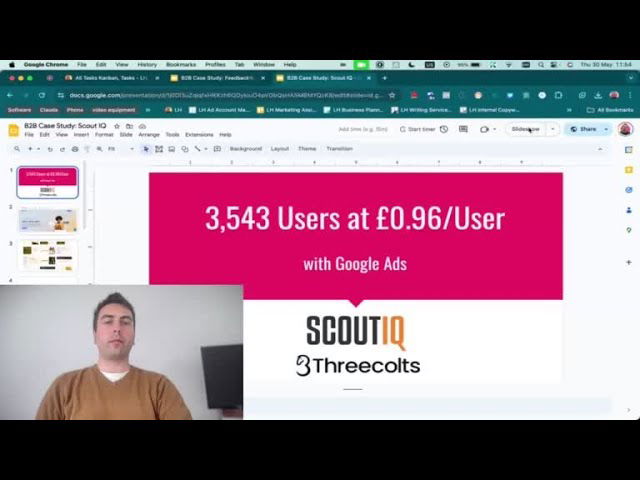
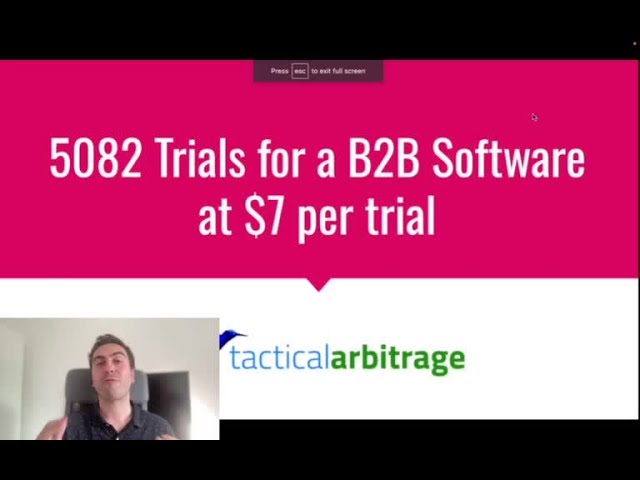
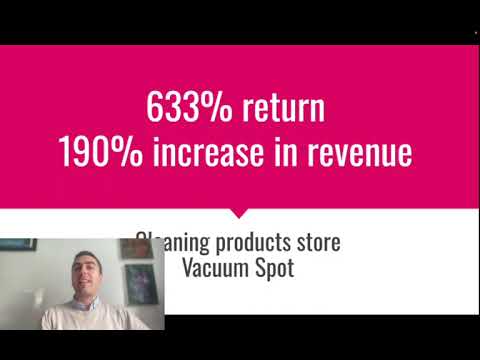
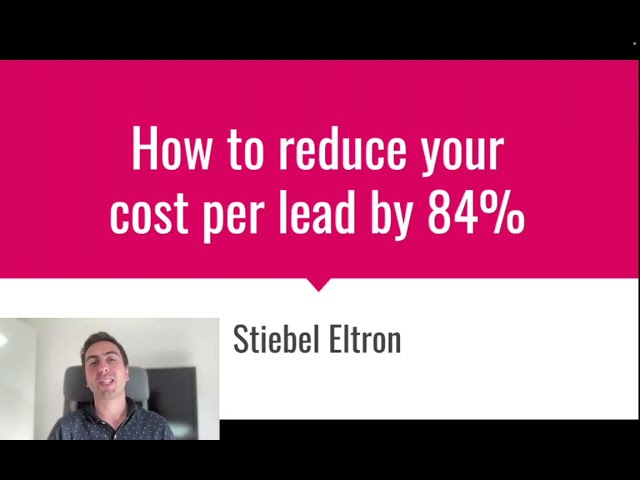
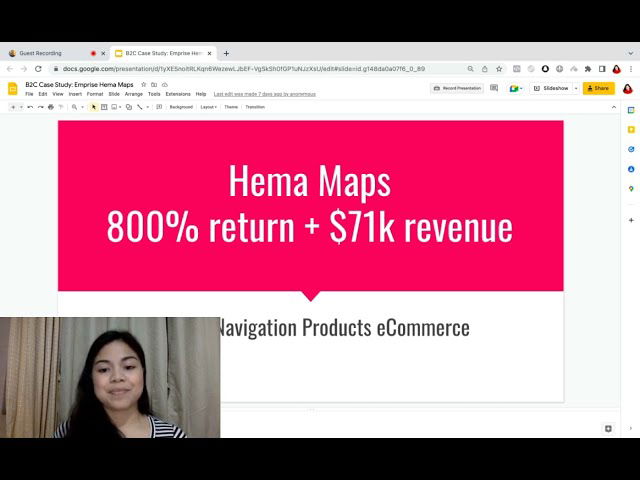
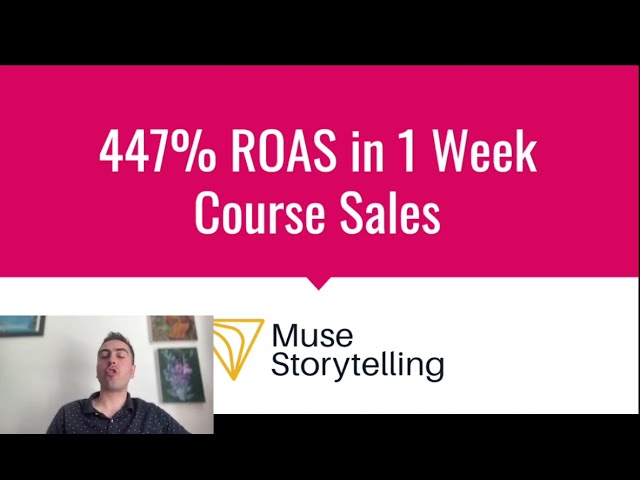
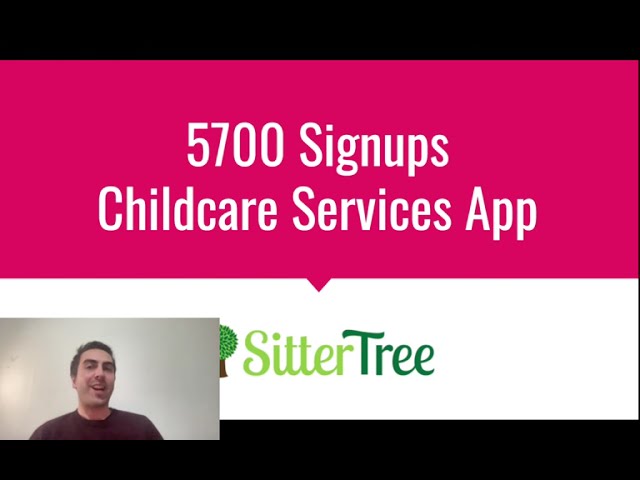
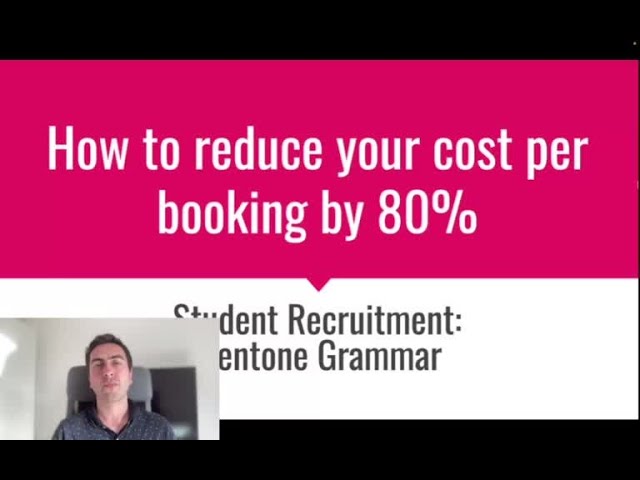
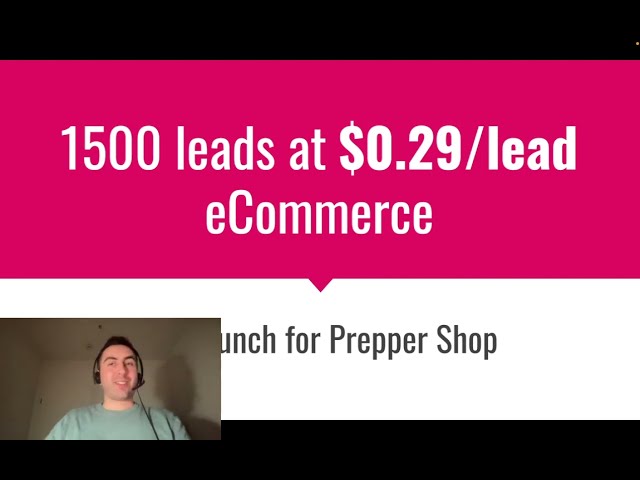
For a B2B SaaS in the software space, we've achieved 4,622 Registrations at a low $2.38 Cost Per Registration using Meta Ads. Another software client saw 5082 Software Trials at a $7 cost per trial on Meta Ads. In a particularly competitive niche, we reduced the Cost Per User Acquisition from £100 down to £7 for a Medical Job Matching SaaS, using both Meta Ads and Google Ads. For B2B decision-makers, we've consistently driven leads at $22 CPL using LinkedIn Ads, which is excellent for that platform and audience quality. These aren't just clicks or impressions; these are tangible, measurable conversions that translate into pipeline for our clients.
The common thread across all these successful campaigns is that we didn't just focus on the ad platform. We dug deep into the offer, refined the landing pages, honed the messaging, and ensured the entire customer journey was optimised for conversion. It's the difference between being a media buyer and being a true growth partner.
Ready to Generate Predictable B2B Leads?
Getting B2B paid advertising right in 2026 is no easy feat. It's not just about setting up a few ads and hoping for the best. It's about understanding your audience's deepest pain, crafting offers they can't ignore, choosing the right platforms strategically, and ruthlessly optimising your entire funnel from click to conversion. It's a complex, nuanced process that requires deep expertise and constant attention.
Many founders think "money first, value later," but if prospective buyers don't see enough value, they simply won't pay the asking price. That's why it's not just about running campaigns; it's about managing ROI, understanding unit economics, and sometimes, having those difficult conversations about your core offer or website. We treat marketing budgets like capital allocation, constantly shifting investment to maximise total portfolio yield. When you frame marketing as a mathematically sound investment rather than an expense, securing budget becomes a very logical conversation.
If you're feeling overwhelmed by the complexities, or if your current campaigns are just not delivering the quality leads and ROI you need, it might be time to consider bringing in expert help. With years of experience and a deep understanding of the B2B advertising landscape, we can help you identify precisely what's holding you back and implement strategies that drive real, predictable growth. We can provide insights you might not have thought of and take over the entire optimisation process, ensuring every pound you spend is working to grow your business.
If you're curious to see how a strategic, full-funnel approach could transform your B2B lead generation, we offer a free initial consultation. We'll review your current strategy and ad accounts together, providing actionable insights that can give you a real taste of the expertise we bring to the table. No strings attached, just a straightforward chat to see if we're a good fit to help you achieve your growth goals.
{{LEAD_MAGNET_MAIN_CTA}}
Lukas Holschuh
Founder, Growth & Advertising Consultant
Great campaigns fail without expertise. Lukas and his team provide the missing strategy, optimizing your entire advertising funnel—from ad creatives and copy to landing page design.
Backed by a proven track record across SaaS, eLearning, and eCommerce, they don't just run ads; they engineer systems that convert. A data-driven partnership focused on tangible revenue growth.