TLDR;
- Stop defining your ideal customer persona by generic firmographics like company size; target their specific, urgent operational nightmare instead.
- Throw out industry average CPL benchmarks—your maximum permissible cost per lead is strictly governed by your Customer Lifetime Value (LTV) and sales conversion rate.
- Kill the "Request a Demo" button on top-of-funnel ads; high-intent B2B buyers respond to immediate proof of value like free audits, calculators, or ungated friction-free assets.
- LinkedIn works best for precision B2B targeting, Google Search captures active buying intent, and Meta scales retargeting and broad problem-aware audiences at a lower cost.
- Includes an interactive LTV to Max CPL calculator and full account architecture diagrams below to map your paid advertising strategy.
Most B2B paid advertising campaigns fail long before an ad ever goes live in Meta Ads Manager or LinkedIn Campaign Manager. The fundamental breakdown rarely comes down to a missing toggle in account settings or a minor bidding tweak. It stems from a basic misunderstanding of buyer psychology, unit economics, and campaign architecture. B2B decision makers do not scroll social media or search Google looking to spend £50,000 on software or professional services simply because an ad hit their demographic profile.
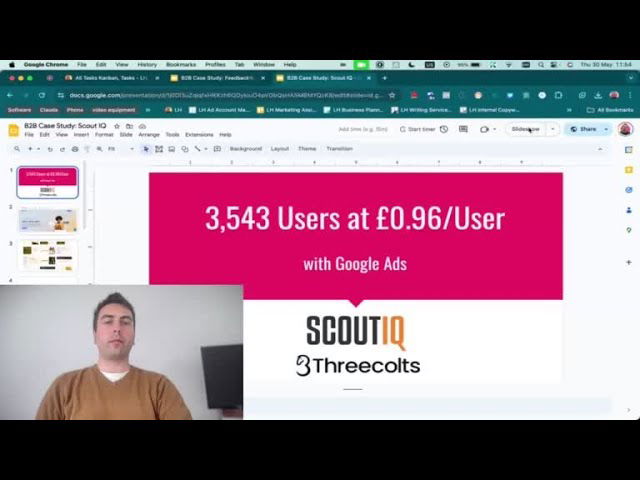
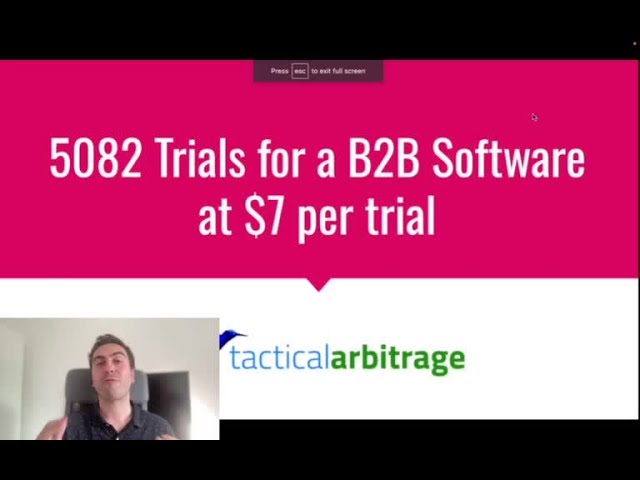
If you're running ads for a software platform, a professional services firm, or high-ticket B2B services, relying on generic lead generation tactics will rapidly incinerate your budget. To build a system that predictably turns ad spend into closed-won revenue, you have to align your targeting, copywriting, offer structure, and landing page experience into a single, cohesive engine. For instance, when we worked with a B2B software client, we successfully generated 1,535 trials by restructuring their funnel and aligning messaging around core user pain points. Below is the blueprint for building and scaling high-performing B2B advertising campaigns based on real account performance and proven unit economics.
Why Demographic ICPs Fail (And What to Do Instead)
The standard practice in B2B marketing is to hand media buyers a buyer persona built around firmographics: "Companies in the IT sector with 50 to 200 employees, targeting Vice Presidents of Technology." This framework is fundamentally flawed. A job title and employee headcount tell you nothing about whether that company has a problem worth solving today, whether they have budget allocated, or whether the decision maker is actively looking for help.
Instead of defining your Ideal Customer Persona (ICP) by demographic averages, you must define it by their primary, career-threatening pain point. A Chief Information Security Officer isn't lying awake at night thinking about "cloud infrastructure management." They are terrified of a data breach occurring on their watch that lands their company in the national news and ends their career. A Head of Sales isn't looking for "CRM pipeline reporting software"; they are frantic because half their reps are failing to hit quota and revenue forecasting is pure guesswork.
The ICP Definition Shift
Targeting Pain vs Demographic Profiles
Ads targeting specific operational emergencies pull up to 4x higher CTR and produce significantly better qualified sales pipelines compared to broad firmographic filters.
Once you isolate that nightmare, you can pinpoint where these buyers gather and what language they use. What niche industry newsletters do they read every morning? Which specific creators or consultants do they follow on LinkedIn? What software platforms do they already use daily? Mapping these touchpoints gives you concrete inputs for detailed interest targeting, custom intent keywords, and account-based marketing lists. Do this foundational work first, or you're simply paying ad platforms to reach people who have zero interest in what you sell.
The Math of B2B Lead Gen: LTV, CAC, and Permissible CPL
A common mistake team leaders make is fixating on keeping Cost Per Lead (CPL) as low as possible. A £20 CPL sounds fantastic on paper, but if 99% of those leads are low-quality contacts who never book a call, that ad spend is wasted. Conversely, a £250 CPL might seem terrifying to an inexperienced marketer, but if 1 in 5 of those leads turns into a £50,000 enterprise contract, it is an astonishingly profitable return.
You cannot judge campaign performance without knowing your Customer Lifetime Value (LTV) and calculating your maximum allowable Customer Acquisition Cost (CAC). To figure out what you can actually afford to pay for a lead, use the standard LTV formula:
LTV Formula: (Average Revenue Per Account × Gross Margin %) ÷ Monthly Churn Rate
Let's look at an example. If your B2B SaaS platform charges £600 per month, your gross margin is 85%, and your monthly customer churn is 3%, your math looks like this:
LTV = (£600 × 0.85) ÷ 0.03 = £510 ÷ 0.03 = £17,000
If your target LTV:CAC ratio is 3:1 (a standard benchmark for healthy B2B growth), you can afford to spend up to £5,666 to acquire a single paying customer. If your sales team closes 10% of qualified leads into deals, you can easily afford to spend up to £566 per qualified lead. If you are struggling with setting benchmarks for your team, see our detailed breakdown on why you must stop chasing average B2B tech CPLs and focus on unit economics instead.
B2B Max Permissible CPL Calculator
Adjust the parameters below to determine the maximum cost per lead your business can profitably sustain based on your unit economics.
Choosing the Right Ad Platform for B2B
One of the biggest causes of wasted ad spend is choosing an ad platform that doesn't match how your buyers make decisions. Every major platform has distinct strengths and targeting mechanisms. Running an identical strategy across all of them will destroy your margins.
Google Search Ads: Capturing Active Intent
Google Search is unmatched when buyers are problem-aware and searching for solutions. Keywords like "enterprise accounting software" or "B2B SEO consultant" represent active buying intent. The cost per click (CPC) on these terms can be steep—often £15 to £50+ in competitive markets—but the conversion rate on these visitors is usually high because they are actively trying to solve an urgent issue right now.
LinkedIn Ads: Precision Account & Role Targeting
LinkedIn is the premier choice when you need to reach specific job titles, seniority levels, or company sizes. It shines when your target buyers aren't actively searching on Google because they don't realise a specialized solution exists. While LinkedIn CPCs are famously expensive (often £6 to £15+ per click), the platform's ability to narrow down to exact decision-makers makes it worth the investment. To explore optimization strategies on this platform, review the ultimate guide to B2B LinkedIn ad performance.
Meta (Facebook & Instagram) Ads: Scale, Creative & Retargeting
Many B2B marketers dismiss Meta ads, assuming decision makers don't use Instagram or Facebook for business. That is a massive mistake. Executives spend plenty of time on social media. Meta's algorithms excel at broad audience delivery and visual storytelling at a fraction of LinkedIn's CPM cost. While direct cold targeting for niche B2B roles on Meta requires creative pre-qualification, it is hands down the best channel for retargeting website visitors and scaling volume once your pixel has collected conversion data. For instance, in one of our campaigns for B2B software on Meta, we achieved 4,622 registrations at a $2.38 cost per registration.
Average B2B Platform CPC Comparison
Benchmark Cost-Per-Click Across Primary Channels
Blended Avg CPC
Killing the "Request a Demo" Call-to-Action
The single biggest failure point in B2B advertising is expecting a cold prospect to click an ad and immediately book a sales call. "Request a Demo" is one of the highest-friction calls-to-action in marketing. It presumes a busy executive wants to give up 30 minutes of their day to be pitched by a sales representative. Unless your prospect is experiencing an absolute emergency and actively searching for vendor pricing on Google, this offer will yield abysmal conversion rates.
Your offer must deliver immediate, tangible value upfront. You need an asset or low-friction entry point that solves a micro-problem for free, earning the right to pitch a full solution later. If you run a SaaS company, this could be a completely free trial with no credit card required, or a freemium plan. For service businesses, this might mean an automated interactive tool, a free audit, or a concise strategy roadmap. For additional frameworks on scaling B2B accounts profitably, check out our guide on scaling LinkedIn ads without burning cash.
| Offer Level | Typical Call-to-Action | Prospect Friction | Expected Landing Page CVR |
|---|---|---|---|
| High Friction (Traditional) | "Book a Demo" / "Speak to Sales" | Very High | 1% – 3% |
| Medium Friction | "Gated Whitepaper / eBook" | Medium (Low Intent) | 5% – 12% |
| High-Value / Low Friction | Free Trial (No Card) / Interactive Audit | Low (High Value) | 15% – 35% |
Designing a Full-Funnel B2B Account Architecture
High-performing accounts separate campaign structures by funnel stage and user intent. Trying to force cold prospecting and retargeting into a single campaign structure almost always results in budget misallocation—the algorithm simply chases the easiest clicks rather than building a scalable pipeline.
You need a full-funnel architecture that guides prospects smoothly from initial problem awareness down to a sales conversation. Below is the full process flow detailing how traffic should move through your advertising stack:
Full-Funnel B2B Ad Architecture
When setting up targeting inside Meta or LinkedIn Ads Manager, prioritise audience sets based on historical conversion likelihood. Below is the precise audience hierarchy we use when structuring client ad accounts:
Top-of-Funnel (ToFu) Prospecting:
1. Specific Niche Interests (Industry publications, specific software users, competitor followers).
2. High-Value Lookalike Audiences (Built from 180-day customer lists or high-value conversion events).
3. Broad Targeting (Relies entirely on creative pre-qualification once the pixel has gathered 50+ monthly conversions).
Middle-of-Funnel (MoFu) Engagement:
1. Social Ad Engagers (30-90 days).
2. Video Viewers (50%+ completion rates).
3. High-Intent Landing Page Visitors (Excluding purchasers and demo requesters).
Bottom-of-Funnel (BoFu) Conversion Retargeting:
1. Abandoned Registration / Trial Sign-ups.
2. Pricing Page Visitors.
3. Demo Page Drop-offs (Retargeted with customer video testimonials and case study proof).
Writing Copy That Cuts Through Corporate Noise
B2B ad copy is notorious for being bland, corporate, and forgettable. Phrases like "optimizing enterprise systems" or "streamline your workflow" cause buyers to scroll right past your ad. You must write direct, punchy copy that addresses specific problems. If you run campaigns for specialized verticals or high-ticket courses, look at our breakdown on using LinkedIn ads to solve high-ticket buyer pain points.
Here are three high-converting copywriting frameworks tailored specifically for B2B paid advertising:
1. Problem-Agitate-Solve (PAS)
Best used for service businesses, agencies, and high-touch consulting offers.
Example: "Is your sales team wasting 15 hours a week manually copying lead data into your CRM? Every hour spent on admin work is an hour they aren't closing deals, causing your sales pipeline to stagnate while competitors pull ahead. Our automated data-enrichment tool syncs verified contact info into your CRM in one click. Start a free 14-day trial today."
2. Before-After-Bridge (BAB)
Best used for SaaS platforms and software solutions.
Example: "Opening your monthly AWS bill used to mean bracing for an expensive surprise. Imagine opening your cloud dashboard and instantly seeing exact cost breakdowns per feature, with idle resources eliminated automatically. Our cloud optimization platform acts as the bridge to get you there. Get a free automated savings report in 5 minutes."
3. Feature-to-Consequence Matrix
Best used for technical software or enterprise hardware where features need to translate into business outcomes.
Example: "Our enterprise security tool features sub-millisecond threat detection. What does that actually mean for your business? It means your security operations team stops chasing false positives and catches actual breaches before customer data is compromised."
B2B Performance Metrics Matrix
Healthy Account Benchmarks Across Metrics
Strong ad creative relevance
Friction-free offer converting well
Pre-Qualifying Traffic to Protect Sales Capacity
A major risk when running lead generation campaigns is overwhelming your sales reps with low-quality leads. If an ad campaign brings in hundreds of contacts who lack purchasing power or budget, your sales team will burn out following up on unproductive inquiries.
You solve this problem by introducing strategic friction into the conversion flow. Instead of using a simple two-field lead form, introduce qualification criteria directly into your lead forms or landing page questionnaires:
• Work Email Validation: Block generic free email providers (Gmail, Yahoo, Hotmail) to ensure you capture business email addresses.
• Company Size Dropdown: Require prospects to select their team size (e.g., 1-10, 11-50, 50-200, 200+).
• Budget / Revenue Thresholds: Include a required question asking for annual software budget or company revenue.
• Explicit Copy Callouts: Use clear copy in your ads stating who the solution is built for (e.g., "Built exclusively for B2B SaaS teams with £1M+ ARR").
Yes, introducing these hurdles will raise your immediate Cost Per Lead. However, it will drastically lower your Cost Per Qualified Lead and ensure your sales team spends time exclusively with genuine decision makers. For extra strategies on avoiding wasteful expenditure, explore our breakdown on why wasting budget on average CPLs hurts overall account growth.
Scaling Budgets Without Spiking CPA
Once you have a campaign generating qualified leads predictably, the next challenge is scaling ad spend. Doubling your daily budget overnight often leads to severe performance degradation as ad platform algorithms struggle to find similar high-intent users at scale.
To scale spend effectively without blowing up your CPA, follow these three proven methods:
1. Vertical Scaling (Incremental Budget Raises)
Increase daily budgets by 10% to 20% every 48 to 72 hours on winning ad sets. This allows the bidding algorithm to adjust its audience targeting without resetting the learning phase.
2. Horizontal Scaling (Audience & Platform Expansion)
Instead of simply pushing more money into existing audiences, launch new targeting variations. Test lookalikes built from different seed lists, test new detailed interest stacks, or duplicate successful Meta campaign structures onto LinkedIn or Google Ads to tap into distinct user pools.
3. Aggressive Creative Iteration
Creative fatigue happens quickly when scaling spend. You need a steady pipeline of fresh ad formats—switching between short-form video testimonials, static image stat callouts, carousel breakdowns, and text-only native formats to keep performance stable.
For more detailed technical analysis on optimizing B2B customer acquisition economics, review our study on stopping the chase for generic CPL benchmarks in B2B tech.
Main Recommendations Summary
This is the main advice I have for you to implement across your B2B paid advertising stack:
| Pillar | Action Step | Expected Impact |
|---|---|---|
| Audience Definition | Replace broad demographic filters with specific operational nightmare positioning. | Higher ad relevance, improved CTRs, and reduced wasted spend. |
| Economics & Targets | Calculate LTV and set maximum permissible CPL thresholds using actual win rates. | Clear financial targets anchored in pipeline profitability. |
| Offer Engineering | Replace cold "Book a Demo" CTAs with friction-free assets, free trials, or ungated tools. | Immediate 2x–5x boost in landing page conversion rate. |
| Account Architecture | Separate ToFu prospecting, MoFu engagement, and BoFu retargeting into dedicated campaigns. | Better budget control and predictable pipeline scaling. |
| Lead Qualification | Add strategic friction (work email verification, company size, revenue fields) on forms. | Eliminates junk leads and optimizes sales team capacity. |
Why Professional Execution Matters
Building a B2B advertising machine that scales reliably requires continuous testing, sharp copywriting, technical tracking setup, and ongoing optimization. Small errors in tracking pixel configuration, audience exclusions, or landing page messaging can quickly turn a profitable campaign into an expensive failure.
If your team is struggling to generate qualified B2B leads, or if your cost per customer acquisition is eroding your margins, getting an expert outside perspective can save you months of trial and error. We work directly with B2B companies, SaaS founders, and enterprise service providers to audit, restructure, and scale high-performing ad engines.
Consider requesting a comprehensive, free strategy audit with our team. We will review your current ad accounts, analyse your landing page conversion rates, and map out a tailored strategy to lower your acquisition costs and grow your pipeline predictably.
{{LEAD_SIGNUP_FORM}} {{LEAD_MAGNET_MAIN_CTA}}
Lukas Holschuh
Founder, Growth & Advertising Consultant
Great campaigns fail without expertise. Lukas and his team provide the missing strategy, optimizing your entire advertising funnel—from ad creatives and copy to landing page design.
Backed by a proven track record across SaaS, eLearning, and eCommerce, they don't just run ads; they engineer systems that convert. A data-driven partnership focused on tangible revenue growth.