TLDR;
- The Diagnosis: Your ads are failing because you are targeting demographics instead of pain, optimising for cheap clicks instead of profit, and making high-friction offers to cold traffic.
- The Strategic Fix: A full-funnel system built on unit economics (LTV:CAC), pain-driven targeting, and a low-friction offer that lets the product sell itself.
- What's Inside The Toolkit: Get our LTV:CAC calculator, ICP discovery questionnaire, copy-paste ad templates, and a step-by-step blueprint to re-architect your entire B2B ad funnel.
I see the same story every week. A B2B founder, sharp and ambitious, comes to me after burning through £10k, £20k, maybe £50k on ads with almost nothing to show for it. They have followed all the popular best practices from blogs and gurus, but the pipeline is dry and the board is asking questions. The truth is, most paid advertising advice is generic nonsense that gets startups killed. It is time to stop gambling and start engineering a system that actually works.
Unlock the B2B Startup Ad Diagnostic & Framework
Enter your email below to unlock the LTV:CAC calculator, ICP questionnaire, and ad funnel blueprint.
So, why is your ad budget evaporating?
Let us be blunt. Your campaigns are failing long before anyone ever sees an ad. They are failing because of a deep, structural rot in the strategy. You have been told to focus on the knobs and dials inside Ads Manager—the bidding strategies, the audience sizes, the creative formats. While those things have their place, they are maybe 20% of the equation. The other 80%? That is the real work. It is a thorough understanding of your customer, the cold hard maths of your business model, and the psychological architecture of your offer. This is the stuff most agencies do not want to touch because it is hard. It requires thinking, not just clicking buttons.
When I onboard a new client, we do not start with a creative brainstorming session. We start with a full-blown interrogation of the business. I have found that almost every failing ad account suffers from the same three fundamental flaws. First, they have no real idea who their customer is, relying on useless demographic data. Second, they are obsessed with the wrong metrics, chasing cheap leads that will never convert. And third, their offer is arrogant, demanding a huge commitment from people who do not know them.
You are not just running ads; you are building a customer acquisition machine. And like any machine, every component has to be perfectly calibrated. A faulty piston in one cylinder will bring the entire engine grinding to a halt, no matter how much fuel you pour in. Your ad spend is the fuel. Let us find the faulty parts.
Are you targeting a spreadsheet or a person with a problem?
Forget the sterile, demographic-based profile your last marketing hire made. Companies in the finance sector with 50-200 employees tells you precisely nothing of value. It is a lazy shortcut that leads to generic ads that speak to no one. This kind of targeting is why your LinkedIn campaigns are costing a fortune and generating leads from interns and junior associates. To stop burning cash, you have to define your customer not by their stats, but by their specific, urgent, and expensive nightmare.
Your Ideal Customer Profile (ICP) is not a person; it is a problem state. Your job is to become the world's leading expert on that problem state. The Head of Engineering you are trying to sell to is not just a job title; she is a leader terrified of her best developers quitting out of frustration with a broken pipeline. The General Counsel is not just in the legal industry; he is the person having sleepless nights about a partner missing a filing deadline, exposing the firm to a severe malpractice suit. These are not demographic data points. These are career-threatening fears.
How do you find this information? You get out of your own head and you talk to people. Actual people. Your first ten customers are an incredible source of insights. Get them on a call and ask them to walk you through the day they realised they needed a solution like yours. What was the trigger? What was the enough is enough moment? What were the exact words they used to describe the problem to their colleagues? What other tools did they try that failed? Who had to sign off on the purchase? Their answers are your ad copy, your targeting strategy, and your product roadmap, handed to you on a plate.
Once you have isolated that nightmare, your next job is to figure out where people who have that nightmare congregate. This is where the real intelligence work begins. Forget broad interests like small business owners. That is a category with millions of people, 99.9% of whom do not care about your software. You need to find their digital watering holes.
What niche podcasts do they listen to on their commute? For tech leaders, it is probably something like Acquired or The All-In Podcast. What industry newsletters do they actually open and read, instead of instantly archiving? For strategy-focused execs, that is Stratechery. What SaaS tools do they already pay for and integrate into their daily workflow? If they are in sales, it is HubSpot or Salesforce. If they are in marketing, it is Ahrefs or Figma.
Are they members of a specific Member Group on LinkedIn, like SaaS Growth Hacks? Do they follow industry influencers like Jason Lemkin or SaaStr? Each of these is a targeting option. You cannot target a podcast directly, but you can target people who list the host as an interest. You cannot target a newsletter, but you can target people who follow its author or have an interest in the publisher.
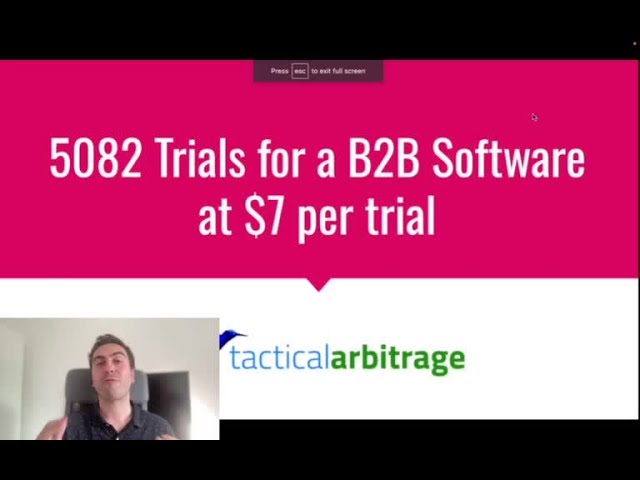
This intelligence is not just data; it is the blueprint for your entire targeting architecture. It allows you to build campaigns that feel less like advertising and more like a helpful recommendation from a trusted peer. You layer these attributes to build a hyper-specific audience. For one B2B SaaS client, we found their best customers were VPs of Sales at companies between 50-200 employees in the software industry who also had an interest in Salesforce. That is a world away from just targeting VP of Sales. One campaign we ran using this layering method for a B2B software client on LinkedIn brought in qualified leads for just $22 each, in a market where competitors were paying over $100 for a click. Do this work first, or you have no business spending a single pound on ads.
The B2B Targeting Layering Framework
Layer 1: The Firmographic Box (Who you sell to)
This is your non-negotiable boundary. Target Company Size (e.g., 51–200 employees) AND Target Industry (e.g., Financial Services, Software Development).
Layer 2: The Decision Maker (Who buys)
Now narrow down to the people with budget and authority. Job Functions (e.g., Information Technology, Finance) AND Seniority (e.g., Director, VP, CXO).
Layer 3: The Nightmare Signal (Why they buy now)
This is the precision layer. Filter for explicit signals of their pain point. Member Groups (e.g., FinOps Professionals) OR Specific Skills on their profile (e.g., AWS Cost Optimisation).
Are you chasing cheap leads or profitable customers?
The second fatal flaw I see is a crippling obsession with vanity metrics, chief among them the Cost Per Lead (CPL). The real question is not how low can my CPL go, but rather how high a CPL can I afford to acquire a truly great customer? If you cannot answer that second question with confidence, you are flying blind, and you are almost certainly leaving money on the table or optimising your business straight into the ground.
The answer lies in understanding your unit economics, specifically the relationship between two numbers: Customer Lifetime Value (LTV) and Customer Acquisition Cost (CAC). LTV is the total profit you can expect to make from a single customer over the entire duration of their relationship with you. CAC is what you spend on marketing and sales to get that customer. The ratio between these two is the engine of your growth. A healthy B2B SaaS business should aim for an LTV:CAC ratio of at least 3:1. That is, for every £1 you spend to acquire a customer, you should get at least £3 back in gross margin over their lifetime.
So, how do you calculate your LTV? It is not as complicated as it sounds. You need three numbers:
- Average Revenue Per Account (ARPA): What do you make per customer, per month on average?
- Gross Margin %: After accounting for your cost of goods sold (COGS) like hosting, support, and infrastructure, what percentage of that revenue is profit?
- Monthly Churn Rate: What percentage of your customers do you lose each month?
The basic formula is: LTV = (ARPA * Gross Margin %) / Monthly Churn Rate.
Let us run a quick example. Say your ARPA is £500, your Gross Margin is 80%, and you lose 4% of your customers each month. Your LTV would be (£500 * 0.80) / 0.04, which equals £10,000. Each customer is worth £10,000 in gross margin to your business.
Now you have the truth. With a £10,000 LTV and aiming for a healthy 3:1 LTV:CAC ratio, you can afford to spend up to £3,333 to acquire a single customer. If your sales process converts 1 in 10 qualified leads into a paying customer, you can therefore afford to pay up to £333 per qualified lead. Suddenly, that £250 CPL from a hyper-targeted LinkedIn campaign that brings in a CTO does not seem expensive at all, does it? It looks like a bargain. Meanwhile, the £15 CPL from a broad campaign that brings in a hundred unqualified people who never convert looks like the massive waste of money it actually is.
This is the maths that unlocks aggressive, intelligent growth. It frees you from the tyranny of cheap leads and allows you to focus on lead quality. When a client gets nervous about a rising CPL, I shift the conversation away from vanity metrics and anchor it in revenue. We integrate their CRM with the ad platforms so we can see which campaigns are actually producing customers, not just form-fills. Once a founder realises that a £200 lead that closes is infinitely more valuable than ten £20 leads that do not, the entire mindset shifts from cost-cutting to investment.
The Allowable CAC Calculator
Stop guessing. Input your own business metrics to find out how much you can really afford to pay for a customer.
Are you asking the algorithm to find customers or cheap clicks?
Here is an uncomfortable truth about platforms like Meta (Facebook and Instagram). When you set your campaign objective to Reach or Brand Awareness, you are giving the algorithm a very specific, and very literal, command: Find me the largest number of people inside my target audience for the lowest possible price.
The algorithm does exactly what you asked. It scours your audience and seeks out the users who are least likely to click, least likely to engage, and absolutely, positively least likely to ever pull out a credit card and buy something. Why? Because those users are not in demand. Nobody else is bidding for their attention, so their attention is cheap. By choosing a brand awareness objective, you are actively paying the world's most powerful advertising machine to find you the worst possible audience for your product. It is a fast track to burning your budget with nothing to show for it.
For a giant like Coca-Cola or Nike, this might make a sliver of sense. For a startup or a scale-up, it is financial suicide. You do not have the luxury of staying top of mind. You need sales. You need revenue. The best form of brand awareness for a new business is a competitor's customer switching to your product and raving about it online. That only happens through conversion.
This is why, for almost all businesses I work with, the only campaign objectives we ever use are conversion-focused: Leads, Sales, or Signups. When you tell the algorithm to optimise for conversions, you give it a completely different directive: Find me people within my audience who look and behave like others who have already taken the valuable action I want. The algorithm now ignores the cheap, passive users and focuses its immense power on finding people who click, who fill out forms, and who buy things. Yes, your CPMs and CPCs will be higher. But your Cost Per Acquisition will be infinitely lower, because you will actually be acquiring customers.
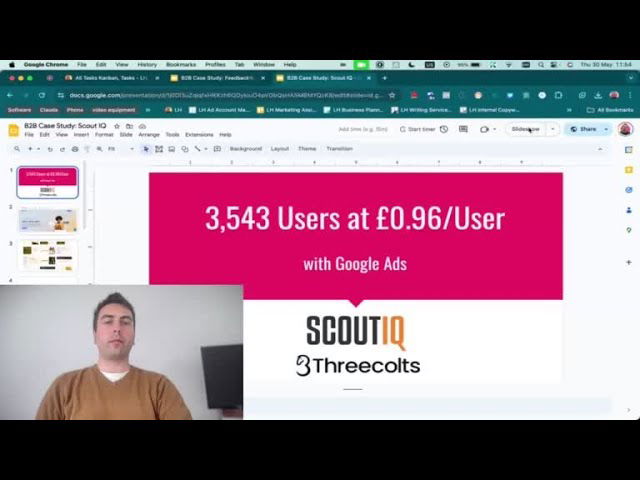
I saw this with a B2B software client recently, running campaigns for Threecolts and their product FeedbackWhiz. They came to me running awareness campaigns, getting a massive reach but zero signups. Their cost per registration was effectively infinite. We paused everything, restructured the campaigns to optimise for Completed Registrations using the exact same audiences and creatives. Within a week, we were generating 4,622 new software registrations at a cost of just $2.38 each. We did not find a magical new audience. We just told the algorithm to stop looking for non-customers.
Is your offer a gift or a demand?
Now we arrive at the most common failure point in all of B2B advertising: the offer. The Request a Demo button is perhaps the most self-serving Call to Action ever conceived. It presumes your prospect, a busy decision-maker who has never heard of you, has nothing better to do than book a 30-minute slot in their calendar to be sold to by a junior sales rep. It is a high-friction, low-value demand. It instantly positions you as a commoditised vendor, just another one of the dozen emails they have already deleted today.
Your offer is supposed to deliver a moment of undeniable value—an aha moment that makes the prospect sell themselves on your solution. You must solve a small, real problem for free to earn the right to solve the bigger problem for money. I call this a sandbox offer. You are giving them a safe, contained space to play with your expertise and experience its value firsthand, with no commitment and no sales pitch.
For SaaS founders, this is your unfair advantage. The gold standard is a free trial or a freemium plan, with no credit card required. Let them use the actual product. Let them feel the transformation when your software solves a nagging problem they have had for months. When the product itself proves its value, the sale becomes a formality. You are not generating Marketing Qualified Leads for a sales team to chase; you are creating Product Qualified Leads who are already convinced and are now asking you how they can pay.
If you are not a SaaS company, you are not exempt from this rule. You must bottle your expertise into a tool, a piece of content, or an asset that provides instant, tangible value. For a marketing agency, this could be a free, automated SEO audit that instantly shows a prospect their top three keyword opportunities. For a data analytics platform, it could be a free Data Health Check that flags the top issues in their database. For us, as a B2B advertising consultancy, it is this very guide, and the 20-minute strategy session we offer where we audit failing ad campaigns completely free of charge. We solve a real problem to earn the right to solve the bigger problem.
The Maths of a Better Offer
Assuming a monthly paid ad budget of £5,000 at an average Cost Per Click (CPC) of £2.50, generating 2,000 clicks to your landing page:
By swapping a high-friction ask for a high-value free tool, your lead volume increases by 650% and your Cost Per Lead drops by over 86%—without changing the ads or spending a penny more.
Does your message speak to a feature or a fire?
Once you have a high-value offer, you need to communicate it with a message that resonates with the nightmare you identified earlier. Most B2B ad copy is a boring list of features and jargon. It is written from the company perspective, not the customer perspective. It talks about what the product is, not what it does for the person reading the ad. Effective ad copy is a bridge from your prospect current pain to their desired outcome.
For a high-touch service business, you deploy the classic Problem-Agitate-Solve framework. You don't sell fractional CFO services; you sell a good night's sleep. Your ad would say something like this: (Problem) Are your cash flow projections just a shot in the dark? (Agitate) Are you one bad month away from a payroll crisis while your competitors are confidently raising their next round? (Solve) Get an expert financial strategy for a fraction of a full-time hire. We build dashboards that turn uncertainty into predictable growth.
For a B2B SaaS product, you use the Before-After-Bridge. You don't sell a FinOps platform; you sell the feeling of relief. Your ad would read: (Before) Your AWS bill just arrived. It is 30% higher than last month, and your engineers have no idea why. Another fire to put out. (After) Imagine opening your cloud bill and smiling. You see exactly where every dollar is going, and waste is automatically eliminated. (Bridge) Our platform is the bridge that gets you there. Start a free trial and find your first £1,000 in savings today.
Notice how none of these examples mentions features like algorithms or complex integrations. It is all about the customer problem and the transformation you provide. The feature is the mechanism, but the transformation is the reason they buy. When we write copy, we map out these angles relentlessly, testing different before states and after promises until we find the one that hits a nerve. This is what takes an ad from a 0.5% click-through rate to a 3% click-through rate.
Are you fixing the ads or the system?
This brings us to the final point. The reason so many startups fail with paid ads is that they see it as a single, isolated function. They hire a freelancer or a junior marketer to run the ads, expecting them to magically produce customers. It never works. As I realised early in my career, you can be the best media buyer in the world, but if you are sending high-quality traffic to a landing page with confusing copy, a broken form, and a weak offer, the campaign will fail. Every single time.
Great campaigns fail without expertise across the entire advertising funnel. That is why we do not just run ads. We engineer conversion systems. This means taking ownership of everything from the ad creative and copy, to the landing page design and A/B testing, all the way to the lead nurturing sequence. It is a holistic approach that ensures every touchpoint is aligned and optimised for one thing: turning a stranger into a profitable customer.
When we work with a client, we become a true growth partner. We have those tough conversations about pricing, positioning, and the offer itself. We have helped SaaS clients double their trial signups simply by removing the credit card requirement upfront. We have restructured entire funnels to replace the Request a Demo friction point with an interactive calculator that pre-qualifies leads and demonstrates value immediately. We treat your budget like our own, allocating capital to the channels and campaigns that produce the highest return, and providing clear reporting that ties every pound spent directly to revenue.
This is the system. It is not a collection of hacks or tricks. It is a methodical, data-driven process for building a scalable customer acquisition engine. It is about diagnosing the root cause of the problem, not just treating the symptoms. The toolkit below is the first step. It contains the exact templates, checklists, and calculators we use to audit and rebuild failing ad funnels for our B2B clients. It is the blueprint for stopping the cash burn and starting to build a system that converts.
Unlock the B2B Startup Ad Diagnostic & Framework
Enter your email below to unlock the LTV:CAC calculator, ICP questionnaire, and ad funnel blueprint.

Lukas Holschuh
Founder, Growth & Advertising Consultant
Great campaigns fail without expertise. Lukas and his team provide the missing strategy, optimizing your entire advertising funnel—from ad creatives and copy to landing page design.
Backed by a proven track record across SaaS, eLearning, and eCommerce, they don't just run ads; they engineer systems that convert. A data-driven partnership focused on tangible revenue growth.