You're burning cash on Google App campaigns and getting nothing but a list of users who install your app, poke around for five minutes, and then disappear forever. Every morning you check the dashboard, the Cost Per Install (CPI) looks just about palatable, but the number of actual, qualified trials is zero. You’re not acquiring customers; you're paying a platform to find an audience of digital window shoppers who have no intention of ever paying you a penny.
Unlock the B2B SaaS App Scaling Blueprint
Enter your email below to unlock the full LTV-CAC calculator, strategy guide, and detailed campaign optimization plan.
Why is your B2B app campaign draining your budget?
Let's be blunt. The problem isn't your bidding strategy or your creative. The problem is you've given a machine a straightforward instruction, and it's following it perfectly. When you set your Google App campaign objective to "Installs," you are telling one of the most powerful algorithms ever built to do one thing: find the absolute cheapest people within your targeting parameters who are most likely to download an app. That's it.
Who are these people? They are not busy B2B decision-makers with budget authority. They are not heads of departments feeling an urgent, expensive pain point that your software solves. They are individuals who are statistically prone to downloading apps. They are conditioned to click 'Install'. They are, by definition, the lowest-value audience segment for a serious B2B SaaS product. The algorithm isn't broken; it's doing exactly what you asked. You're actively paying Google to find you non-customers because their attention is cheap.
This is a trap I see founders fall into constantly. They're obsessed with surface-level metrics like CPI because they're easy to measure and compare. But an install is not a lead. It's not even an indication of interest. It's a click that triggered a download. For a B2B SaaS business, it's a superficial metric that actively destroys your unit economics. You end up with a high volume of worthless conversions that make your reports look busy while your bank account drains.
I remember one client, a medical job-matching SaaS, who came to us in this exact situation. They were spending a fortune on Google Ads and getting installs, but their true Cost Per User Acquisition was north of £100 because almost none of those installs converted into active, paying users. The funnel was fundamentally broken from the first instruction given to the ad platform. We had to bin their entire strategy and start again, not by tweaking the campaigns, but by fixing the math that underpins the whole operation.
Are you tracking the correct financial metrics?
Before you spend another pound on ads, you need to stop guessing what a lead or a trial is worth and start dealing with the actual numbers of your business. The entire game of paid acquisition isn't about getting the lowest Cost Per Lead (CPL); it's about understanding the maximum you can afford to pay to acquire a profitable customer. That number is your Customer Acquisition Cost (CAC), and it's dictated by your Lifetime Value (LTV).
Most founders I speak to either don't know their LTV or they're using a back-of-the-napkin number that's wildly inaccurate. Without this, you're flying blind. You have no way of knowing if that $50 trial from a Google App campaign is a bargain or a heavy loss. Getting this right isn't just a marketing exercise; it's the foundation of a scalable, predictable growth engine.
So, let's work it out. The formula isn't complicated, but the inputs have to be honest.
You need three things:
- Average Revenue Per Account (ARPA): What's the average amount a customer pays you each month?
- Gross Margin %: After your cost of goods sold (server costs, support staff, etc.), what percentage of that revenue is profit?
- Monthly Churn Rate: What percentage of your paying customers cancel their subscription each month?
The calculation is simple: LTV = (ARPA * Gross Margin %) / Monthly Churn Rate.
This single number changes everything. It tells you the true gross margin value of an average customer over their entire lifespan with your business. Once you know this, you can set an intelligent target for your CAC. A healthy, aggressive benchmark for a venture-backed SaaS is a 3:1 LTV:CAC ratio. This means for every £1 you spend acquiring a customer, you should get at least £3 back in gross margin over their lifetime.
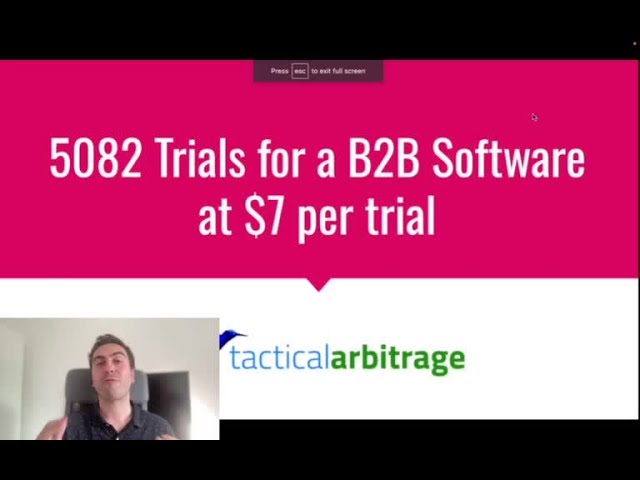
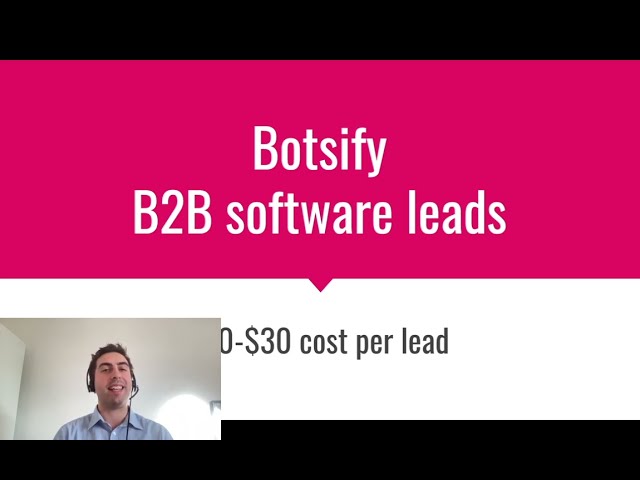
So, if your LTV is £10,000, you can afford to spend up to £3,333 to acquire one new customer. Now, we work backwards. If your sales team, or your in-app upgrade path, converts 1 in every 10 qualified trials into a paying customer, you can now afford to pay up to £333 for a single qualified trial. Suddenly that $7 trial we achieved for one of our software clients on Meta Ads, or even the $22 CPL for B2B decision-makers on LinkedIn, doesn't just look achievable; it looks incredibly profitable.
This is the math that separates professional growth teams from amateurs burning their seed round on superficial metrics. Use the calculator below to find your own numbers. Don't be gentle. Use your real churn rate, your real ARPA. The number it spits out is the truth, and it will become the bedrock of your new advertising strategy.
The SaaS Unit Economics & Allowable CPA Calculator
Input your current business metrics to diagnose your LTV and determine your maximum profitable cost per lead and trial.
How does this shift your advertising approach?
Armed with a real, data-driven allowable CPL, your entire approach to advertising is turned on its head. You're no longer hunting for the cheapest click or the cheapest install. You're now hunting for the highest quality prospect, and you know exactly what they're worth to you.
This frees you from the tyranny of low-cost, low-intent channels. It gives you permission to spend aggressively on platforms like LinkedIn, where you can target a CTO at a 500-person company in the finance industry with absolute precision. A lead there might cost you £150, which would have seemed insane before. But now you know that if just 1-in-10 of those leads converts, you're still acquiring customers at a fraction of your maximum allowable CAC. It's a bargain.
This logic applies to every channel. For the B2B software client selling to Amazon merchants, we stopped caring about the cost of a click from a broad small business owner audience on Meta. Instead, we focused our budget on lookalike audiences built from their existing paying customers and layered interests like Amazon Marketplace and Shopify. This pushed the cost per registration up from a pound to $2.38, but the quality of those registrations skyrocketed. The trial-to-paid conversion rate improved dramatically, which meant the final Customer Acquisition Cost plummeted. We weren't buying registrations; we were buying future revenue.
Look at the economic difference. A campaign focused on cheap installs is a false economy. You spend less per action, but the final cost to acquire an actual paying customer is astronomical because the conversion rate through the funnel is effectively zero.
The False Economy of Cheap App Installs
Scenario based on a £10,000 monthly ad spend for a B2B SaaS product.
These unqualified users have a near-zero trial start rate (0.1%) and a subsequent 1% trial-to-customer conversion rate.
These highly-qualified prospects from targeted channels convert from trial to paid at a much higher rate (10%).
By shifting focus from a cheap superficial metric (installs) to a high-value business outcome (qualified trials), you acquire actual paying customers for a fraction of the cost.
What if your core offer is creating friction?
Okay, you've sorted your unit economics. You know what you can afford to pay for a trial. You've switched your campaign objective from Installs to a lower-funnel event like Trial Started or Registration Completed. And yet... the results are still poor. The volume of trials is tiny and the cost is through the roof. What now?
Now we have to confront the next uncomfortable truth: your offer is probably weak. Or, more precisely, it's asking for too much, too soon. In the world of B2B, the start a free trial button, especially if it requires a credit card, is the modern equivalent of the despised request a demo button. It's a high-friction, high-commitment ask for a prospect who barely knows you exist. They've seen one ad. They don't trust you yet. They don't fully understand the problem you solve, let alone whether your app is the right solution. Asking for a trial is like proposing marriage on the first date.
You have to earn the right to ask for that commitment. Your offer's only job is to deliver a small, undeniable aha moment of value that makes the prospect sell themselves on your solution. You must solve a tiny piece of their problem for free, right now, with as little friction as possible.
For a SaaS founder, this is your unfair advantage. The product itself is your best sales tool. The gold standard is a completely free trial with no credit card required, or a generous freemium plan. Let them get in. Let them use the core feature. Let them experience the before and after transformation first-hand. When we worked with one SaaS client, simply removing the credit card requirement from the trial sign-up form was enough to triple their trial volume overnight, without a single change to the ads. The friction was in the offer, not the advertising.
If you can't offer a free trial, you are not exempt from this rule. You must bottle your expertise into a tool or an asset that delivers that same instant value.
- If you sell a financial planning SaaS, offer a free, interactive Cash Flow Projection Calculator.
- If you sell a developer tool, create a free Code Quality Scanner that audits a snippet of their code.
- If you sell a project management app, offer a free Project Timeline Template for their specific industry.
This is what we call a Sandbox Offer. It gives the prospect a safe, contained environment to play with your value proposition without having to commit to a full trial or demo. They get an immediate win, and you get a Product Qualified Lead (PQL) who has already experienced the value of what you do. The conversation shifts from Why should I try your software? to How do I get more of the value I just experienced?. This is how you stop selling and let the customer start buying.
How do you target the right prospects?
Once you have a low-friction, high-value offer and you know your unit economics, the final piece is targeting. And this is where most B2B advertisers get it wrong. They define their Ideal Customer Profile (ICP) with sterile demographics: Companies in the finance sector with 50-200 employees. This tells you nothing of value and leads to generic ads that speak to no one.
Your ICP is not a demographic. It is a nightmare. It is a specific, urgent, expensive, career-threatening problem. Your job is to become the world's leading expert on that nightmare.
Your Head of Sales client isn't just a job title; she's a leader staring at a sales forecast that's 30% below target, terrified of explaining it to the board next month. Your DevOps lead isn't just an IT professional; he's the one who gets a call at 3 AM because the production server is down again, and he knows his team is one more burnout away from quitting. You don't sell CRM software or monitoring tools. You sell hitting your quota and a full night's sleep.
Once you've defined your customer by their pain, finding them becomes ten times easier. Where do people in this state of pain congregate online?
- On LinkedIn: You don't just target Job Title: Head of Sales. You layer that with Member of Group: SaaS Growth Hacks and Company Industry: Software Development. You're looking for signals of intent and sophistication.
- On Meta: You can't target job titles, but you can target pain. What tools do they already use? You can target interests like Salesforce or HubSpot. What industry leaders do they follow? You can target interests like Jason Lemkin. What events do they attend? You can target SaaStr. You're building a proxy for your ICP based on their professional behaviour.
- On Google: They don't search for synergistic workflow solutions. They search for my sales team hates our crm or reduce aws bill. You target the problem, in their own words.
This pain-centric approach must flow through everything. Your ad copy can't be about features. It must use a framework like Before-After-Bridge. Before: Your AWS bill just landed. It’s 30% higher than last month, and your engineers have no idea why. After: Imagine opening your cloud bill and smiling, seeing where every dollar is going. Bridge: Our FinOps platform is the bridge that gets you there in 10 minutes.
You use this ad to drive traffic not to a generic App Store page, but to a dedicated landing page that expands on that single pain point and presents your high-value Sandbox Offer as the immediate cure. By the time they click Install, they aren't a cold prospect anymore. They've been pre-qualified by the ad, educated by the landing page, and pre-sold by the value of your offer. You're no longer hunting for installs; you're guiding high-intent prospects down a frictionless path to becoming a customer.
The B2B SaaS Precision Targeting Framework
Layer 1: Firmographics (The Sandbox)
Define your playground. Start with broad company parameters that match your ideal customer account. For example: Target Company Size (e.g., 51–500 employees) AND Target Industry (e.g., Financial Services, Software Development).
Layer 2: Role & Seniority (The Decision-Maker)
Within that sandbox, isolate the people with budget and authority. Layer on specific roles. For example: Job Functions (e.g., Information Technology, Finance) AND Seniority (e.g., Director, VP, CXO).
Layer 3: Pain & Intent Signals (The Trigger)
This is the precision layer. Narrow your audience to only those showing signs of the nightmare. For example: Member Groups (e.g., FinOps Foundation) OR Specific Skills listed on profile (e.g., Cloud Cost Management).
This layering method transforms broad targeting into a highly-qualified audience, ensuring your expensive B2B ads are only seen by prospects who fit your ICP and are actively engaged in solving the problem you fix.
How do you build a predictable growth system?
You can see now that fixing your failing app campaigns has almost nothing to do with the Google Ads interface. Trying to solve this problem by tweaking your daily budget or A/B testing a button colour is like rearranging deckchairs on the Titanic. You don't have a campaign problem; you have a system problem. A growth problem.
The generic advice you read on marketing blogs won't fix this. You need to architect an end-to-end acquisition machine that is built on a solid foundation of your own business's economics, is powered by a genuinely high-value offer, and speaks directly to the painful nightmare of a very specific group of people. This isn't about running ads; it's about engineering a system that converts strangers into profitable customers, predictably and at scale.
That's what we do. We don't just run ads. We partner with businesses like yours to build that entire system, from the ground up. We start by auditing your entire funnel, diagnosing the real leaks—whether it's broken unit economics, a high-friction offer, or a vague ICP. Then, we build the missing pieces: the landing pages, the ad creative, the multi-channel campaign architecture, and the tracking that proves the ROI.
To help you get started, we've bundled the core components of this system into a free implementation toolkit. When you sign up below, you'll get immediate access to the interactive calculators we use with our clients, the strategic frameworks we use to design high-value offers, and the exact, copy-paste SOPs we use to structure and scale B2B SaaS campaigns across multiple platforms. This isn't more theory; it's the blueprint for the machine you need to build.
Unlock the B2B SaaS App Scaling Blueprint
Enter your email below to unlock the full LTV-CAC calculator, strategy guide, and detailed campaign optimization plan.

Lukas Holschuh
Founder, Growth & Advertising Consultant
Great campaigns fail without expertise. Lukas and his team provide the missing strategy, optimizing your entire advertising funnel—from ad creatives and copy to landing page design.
Backed by a proven track record across SaaS, eLearning, and eCommerce, they don't just run ads; they engineer systems that convert. A data-driven partnership focused on tangible revenue growth.