TLDR;
- Demographic targeting for B2B is broken; you must target your ideal customer's specific, urgent operational nightmare instead of job titles alone.
- Stop relying on vanity metrics like Cost Per Lead (CPL) and start calculating your true Customer Lifetime Value (LTV) to determine how much you can afford to acquire qualified buyers.
- Ditch the generic "Request a Demo" button and offer instant, high-value experiences like free trials, interactive audits, or ungated tools that build trust.
- Choose the right platform based on user intent: Google Search Ads capture active buyers searching for solutions, whilst LinkedIn and Meta require tailored pain-point targeting.
- Includes interactive calculators for LTV:CAC, B2B ad channel performance benchmarks, and full B2B lead qualification funnel diagrams.
Most B2B advertising campaigns fail long before an ad ever goes live in Ads Manager or Campaign Manager. They fail because marketing teams build campaigns around sterile demographic parameters, send traffic to high-friction "Request a Demo" landing pages, and measure success by how cheaply they can generate contacts rather than how much actual profit ends up in the bank account. Running B2B paid ads isn't about collecting email addresses from window shoppers; it's about engineering an entire conversion system that turns cold attention into profitable, long-term business relationships.
Having audited and managed paid advertising campaigns across B2B SaaS, industrial equipment, professional services, and enterprise software, I've seen the exact same structural errors repeated across almost every industry. Founders and growth leads often assume their paid advertising issue is a bidding setting or a bad copy choice, when in reality their positioning, economic math, or offer structure is fundamentally flawed. In this guide, I will break down the end-to-end strategy required to build, scale, and optimize B2B paid advertising campaigns that generate high-intent buyers rather than useless leads.
Why is defining your ICP by pain better than using standard firmographics?
Forget the generic, demographic-based buyer persona your last marketing agency produced. A document stating you are targeting "Companies in the IT sector with 50 to 200 employees" tells you almost nothing of actual value. It leads directly to bland, corporate ad copy that speaks to nobody and gets completely ignored in crowded social media feeds.
To build B2B campaigns that actually convert, you must define your Ideal Customer Persona (ICP) by their specific, expensive, career-threatening operational nightmare. Your decision maker isn't just a job title on LinkedIn; she is a Head of Engineering terrified of her best senior developers resigning out of sheer frustration with a broken deployment pipeline. For a legal tech software provider, the nightmare isn't "needing better document storage"; it's a partner missing a court filing deadline and exposing the entire firm to a massive malpractice lawsuit. Your ICP is not a person or a company size—it is a problem state.
Once you isolate that specific nightmare, you can map out their daily habits and digital footprint. Where do they look for relief when things go wrong? Which niche podcasts do they listen to on their morning commute? What industry newsletters do they actually open every Tuesday? What software integrations do they rely on daily? Answering these questions gives you the blueprint for targeted messaging and placement. If you want to explore structuring these messaging frameworks further, you can check out our detailed guide on defining pain-point targeting for LinkedIn ad campaigns.
ICP Pain State vs Demographic Targeting
Shift from generic traits to acute operational pain
Targeting an urgent operational risk cuts through B2B feed clutter, driving qualified decision-maker clicks while filtering out low-budget window shoppers upfront.
How do you calculate your true allowable B2B lead acquisition cost?
One of the most persistent misunderstandings in B2B marketing is the obsession with cheap leads. Founders often ask how to get £15 or £20 leads on LinkedIn, without understanding whether a £20 lead is actually beneficial for their business model. The real metric to focus on isn't how low your Cost Per Lead (CPL) can go, but how high an acquisition cost you can comfortably afford to acquire a truly great customer.
To determine this, you need to calculate your true Customer Lifetime Value (LTV). This requires three core numbers:
1. Average Revenue Per Account (ARPA): What does an average client pay you per month or per year?
2. Gross Margin %: What is your margin after accounting for direct delivery and servicing costs?
3. Monthly Churn Rate: What percentage of total customers do you lose each month?
The standard formula is: LTV = (ARPA * Gross Margin %) / Monthly Churn Rate
If your average account pays £500 per month with an 80% gross margin, and your monthly customer churn is 4%, your calculation is: (£500 * 0.80) / 0.04 = £10,000 LTV. In this scenario, every signed customer generates £10,000 in gross profit over their lifecycle. A healthy B2B ratio for LTV to Customer Acquisition Cost (CAC) is 3:1. This means you can comfortably afford to spend up to £3,333 to acquire a single paying customer. If your sales process closes 1 out of every 10 qualified leads, you can spend up to £333 per qualified lead. Suddenly, paying £200 for a qualified lead from a decision maker on LinkedIn isn't expensive—it's a massive bargain that delivers predictable growth.
To help you stop relying on generic industry averages, use the interactive calculator below to find your specific allowable acquisition costs. We also discuss this in depth in our guide on why chasing average B2B tech CPLs ruins advertising ROI.
B2B Allowable CPL & CAC Calculator
Adjust parameters to calculate your maximum target Cost Per Lead based on a 3:1 LTV:CAC model and sales conversion rate.
Why should you remove the "Request a Demo" button from your ads?
The "Request a Demo" button is one of the most overused Call to Actions in B2B marketing. It presumes that a busy executive wants to spend 30 minutes on a call just to hear a sales pitch. It creates immediate friction, signals low value, and forces prospects into a long sales conversation before they even know if your product works.
Your ad's offer should deliver an immediate moment of clear value—an experience that allows the prospect to understand your solution on their own terms. For software companies, offering a completely frictionless free trial (without requiring a credit card upfront) or a freemium plan is ideal. Let users test the platform directly. When the product delivers clear utility upfront, converting them into paying accounts becomes much simpler.
If your business model doesn't support self-serve software trials, you must package your expertise into a tool or utility that solves a specific problem. For example, a digital agency might provide an automated audit tool that identifies hidden technical issues. An industrial automation provider could offer a free equipment sizing calculator. For our own paid ad consultancy, we offer a free consultation where we review account strategies together—which gives potential clients a taste of our expertise without any hard sell. You must solve a small, tangible problem for free to earn the right to solve their broader challenges.
Which ad platforms work best for B2B lead generation?
Choosing the right ad platform depends on how your target market searches for and evaluates solutions. Picking the wrong platform leads to poor targeting and high costs. In my experience across B2B SaaS and service campaigns, channel selection generally breaks down as follows:
1. Google Search Ads (High Active Intent): If your ideal client is already searching for immediate help (e.g., searching for "enterprise accounting software" or "industrial waste management services"), Google Search is your best option. You capture prospective buyers at the exact moment they need a solution. However, competition for these search terms can be intense, so search term selection and ad match types require tight management to avoid wasting spend on non-commercial searches.
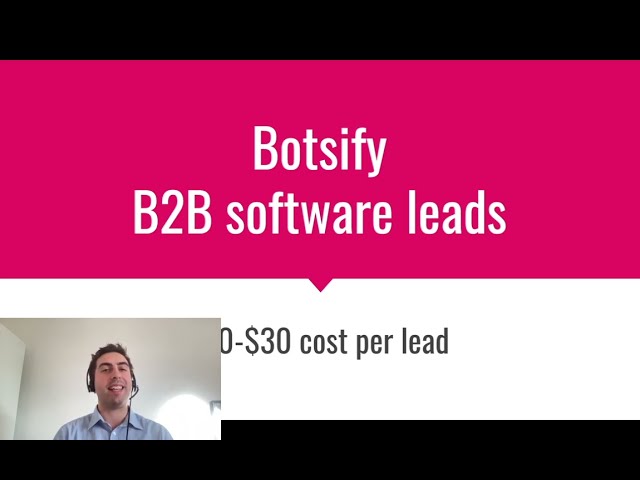
2. LinkedIn Ads (Narrow B2B Firmographic Targeting): When your prospects aren't actively searching for your service on Google, but you need to reach specific job titles within defined industries, LinkedIn is the premier platform. You can target users by exact job title, company size, industry, and software skills. We ran a campaign targeting B2B decision makers on LinkedIn that generated qualified leads at a $22 CPL by pairing tight firmographic filters with tailored sponsored content.
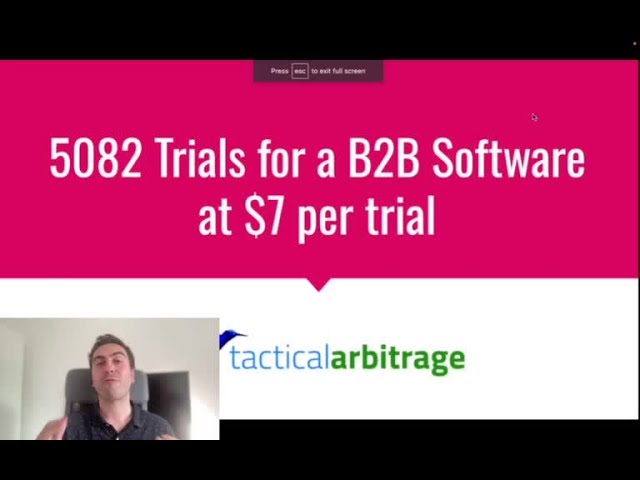
3. Meta Ads (Scale & Retargeting): Meta (Facebook & Instagram) is often dismissed by B2B marketers, but it offers tremendous scale and cost efficiencies when structured correctly. While native B2B targeting parameters are more limited than LinkedIn's, Meta's algorithm excels at visual demonstration and lookalike audiences once trained on conversion data. In one B2B software campaign, we generated 4,622 registrations at just $2.38 per registration using Meta Ads. We've also driven 1,535 B2B SaaS trials on Meta by focusing on strong video creatives and landing page copy. Furthermore, Meta is an ideal channel for mid-funnel retargeting to keep your brand top-of-mind across longer deal cycles.
If you want to see how these channels perform side-by-side across common B2B metrics, review the benchmark grid below.
B2B Paid Ad Channel Benchmarks
Comparative analysis based on client campaign data
Ideal for active problem searches
Best for strict enterprise ICPs
Requires qualification filters
How do you qualify leads without tanking your conversion volume?
A common issue with B2B ads is generating a high volume of leads that your sales team ultimately can't close. When you optimize for low lead costs alone, ad networks tend to deliver users who sign up easily but lack buying authority or budget. To learn more about fixing volume issues, read our guide on scaling LinkedIn ads profitably without sacrificing quality.
The solution is introducing strategic friction. Instead of using a simple one-field email submission form, include qualifying questions on your landing page or lead gen form. Ask about company size, current software tools, or estimated budget range. While adding fields will increase your nominal CPL, it filters out un-qualified submissions before they ever reach your sales pipeline. This lowers your true Cost Per Qualified Lead (CPQL) and saves significant sales capacity.
You can also use marketing automation to qualify and route leads automatically based on their answers. Below is a diagram showing how a full-funnel lead qualification architecture filters inbound traffic.
B2B Lead Qualification & Routing Flow
How should you structure your ad creative to capture high-intent buyers?
B2B ad copy fails when it reads like a dry press release. Decision makers respond to clear, direct copy that acknowledges their real workplace frustrations. Depending on your business model, three primary copywriting frameworks perform consistently well across B2B campaigns:
1. Problem-Agitate-Solve (PAS): Ideal for high-touch B2B professional services. You state the core frustration directly, agitate the consequences of leaving it unaddressed, and present your offering as the natural resolution. For instance, rather than selling general financial consulting, your copy might address cash flow uncertainty: "Are your monthly cash projections mostly guesswork? Are you one unexpected drop in revenue away from a payroll crunch while competitors raise capital? Our financial strategy team builds real-time dashboards that turn revenue unpredictability into steady growth."
2. Before-After-Bridge (BAB): Highly effective for B2B SaaS solutions. You paint a vivid picture of their current manual process, contrast it with their ideal automated setup, and introduce your platform as the bridge connecting the two. For example: "Your cloud infrastructure bill just came in 35% higher than projected, and engineering has no clear breakdown of why. Imagine opening your monthly cloud statement to find costs systematically categorized and reduced. Our FinOps platform is the bridge to get you there. Start a 14-day free trial today."
3. Feature-to-Consequence: Required when selling technical or high-ticket industrial products. Technical founders often focus purely on product specifications. Instead, connect every feature directly to its commercial benefit. For instance, if you are selling medical diagnostics or laboratory equipment, don't just state precision metrics: "Our diagnostic system maintains a 0.001% margin of error. What does that mean for your clinical lab? It means publishing research with total confidence, securing institutional funding, and attracting top research talent."
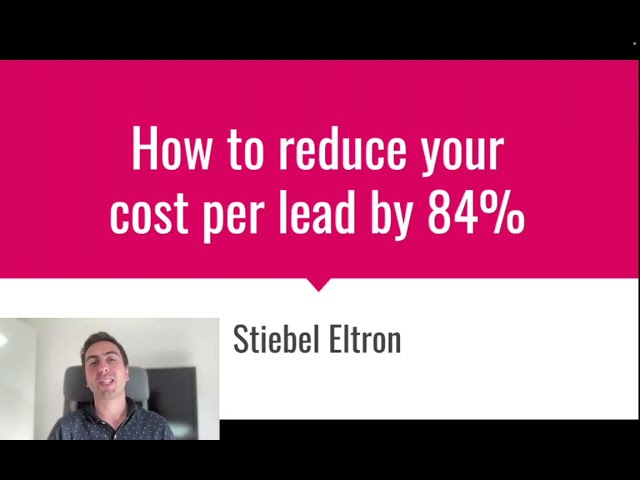
We saw this approach work for a client in environmental controls. By re-architecting their campaign messaging around core operational pain points and deploying targeted campaigns across LinkedIn and Meta Ads, we reduced their cost per lead by 84%. Focusing on real business outcomes cuts through ad clutter far better than technical jargon.
Why do awareness campaigns fail for B2B startups?
When starting paid campaigns, founders are often advised to run top-of-funnel "Brand Awareness" or "Reach" campaigns to generate buzz before driving conversions. On Meta or LinkedIn, selecting "Brand Awareness" explicitly tells the algorithm to find users who cost the least to reach. The platform then delivers your ads to low-intent users who rarely engage or convert, simply because their ad impressions are cheap.
For small-to-mid-sized B2B companies, brand awareness is a natural byproduct of acquiring satisfied customers—not a prerequisite to making sales. The most effective way to build credibility is to acquire real users who benefit from your product and share their success. You should almost always set your campaign objectives to explicit conversion outcomes like Leads, Signups, or Conversions. This forces platform algorithms to look for users whose behavior indicates genuine commercial intent.
Conversion Rate by B2B Campaign Objective
Comparing conversion performance across campaign setups
Max Conversion Rate
What landing page adjustments double your B2B conversion rate?
You can build excellent ad campaigns in Meta or Google Ads, but if your landing pages are poorly designed, your conversion performance will suffer. I've audited campaigns with strong ad click-through rates that saw zero conversions simply because the landing page had slow loading times, weak headline copy, or confusing forms. Landing pages must align directly with your ad copy to maintain trust and momentum.
To improve landing page conversion performance, prioritize these updates:
1. Match Your Headline to Ad Intent: The headline on your landing page should reflect the exact promise or pain point highlighted in your ad. If your ad highlights reducing software deployment delays, your landing page headline must reinforce that immediate outcome.
2. Feature Real Product Shots & Walkthroughs: Abstract stock photography lowers credibility. Show clear screenshots of your application dashboard, or include a short video demonstrating your platform in action. Showing how your product works visually makes it feel more tangible and reliable.
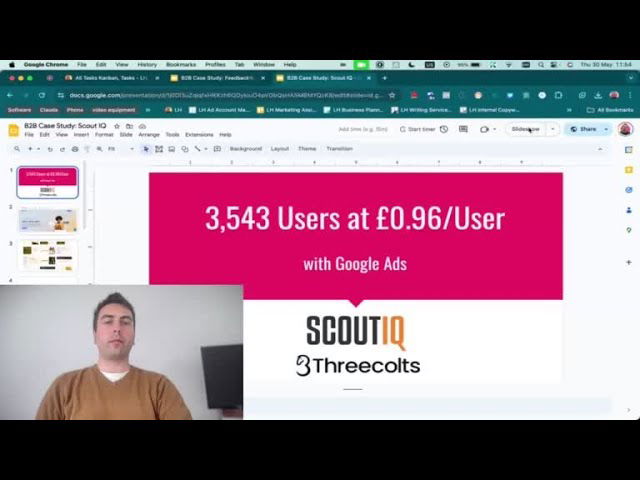
3. Add Relevant Social Proof: Display logos of recognizable clients, short customer quotes, and verifiable case studies. For instance, in our own campaigns, we showcase specific results we've delivered for clients—such as scaling a B2B SaaS platform to 3,543 users at £0.96 per user on Google Search Ads, or reducing user acquisition cost from £100 down to £7 CPA for a medical job recruitment SaaS on Meta and Google Ads. Providing concrete proof builds trust far better than generic claims.
If you're evaluating broader campaign settings across channels, check out our guide on stopping lead cost waste in B2B tech campaigns.
How do you scale B2B campaigns when ad spend plateaus?
It is common for B2B ad campaigns to hit spend plateaus. As you increase budget within a defined target audience, your Cost Per Acquisition (CPA) starts to rise and Return on Ad Spend (ROAS) declines. This happens because you've reached the most readily convertible pool of prospects within that targeting criteria.
To scale past spend bottlenecks without sacrificing profitability, focus on these tactical growth drivers:
1. Expand Channel Coverage: If you've saturated your core audience on LinkedIn Ads, expand into Meta Ads or Google Search Ads. Reaching prospects across different platforms captures contextually different moments of attention and lowers overall blend acquisition costs.
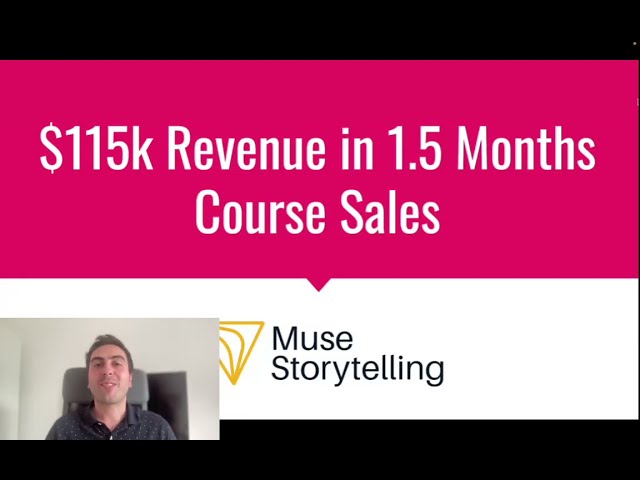
2. Leverage Productized Offers & Lifetime Deals: For software businesses trying to unlock immediate adoption, offering a lifetime deal or a special launch package can drive rapid cash flow and fast user growth. In one SaaS implementation, we generated over $30,000 in upfront lifetime deal sales using Meta Ads, creating a strong customer base to nurture over time.
3. Optimize Downstream Funnel Conversion: Scaling isn't just about spending more money on ads. Improving your landing page conversion rate by even 2% reduces your acquisition costs across all active campaigns, allowing you to bid more aggressively and scale overall volume comfortably.
This is the main advice I have for you:
| Core B2B Pillar | Common Mistake | Actionable Optimization Standard |
|---|---|---|
| ICP Definition | Targeting broad corporate firmographics (e.g. "Tech 50-200 staff"). | Target specific, urgent operational pain points and career-threatening risks. |
| Economic Math | Chasing low CPLs without accounting for customer lifetime value. | Calculate true LTV to establish a 3:1 LTV:CAC target and acceptable allowable CPL. |
| Offer Architecture | Relying on generic "Request a Demo" calls-to-action. | Provide immediate utility via credit-card-free trials, ungated tools, or free audits. |
| Channel Strategy | Running identical ad setups across all networks regardless of user intent. | Match search ads to active problem searches, and use social ads for pain-point targeting. |
| Lead Qualification | Using basic 1-field forms that collect un-qualified contacts. | Add strategic friction fields (budget, team size) to screen out window shoppers upfront. |
| Creative Frameworks | Writing bland corporate press-release style ad copy. | Deploy PAS, BAB, or Feature-to-Consequence copy frameworks focused on business outcomes. |
Why consider expert guidance for your B2B ad campaigns?
Building high-converting B2B advertising campaigns requires continuous alignment between ad strategy, landing page design, offer positioning, and economic forecasting. Misaligning any single component can lead to wasted budget and lost revenue opportunities. If your team is struggling to lower acquisition costs, scale past budget plateaus, or generate truly qualified enterprise leads, working with an experienced growth partner can save substantial time and resources.
We work with B2B, SaaS, and service clients to review campaign performance, rebuild landing page funnels, and implement proven acquisition strategies that drive measurable revenue growth. If you'd like a clear analysis of your current advertising strategy and account performance, feel free to get in touch to request a free initial consultation with our team.
{{LEAD_SIGNUP_FORM}} {{LEAD_MAGNET_MAIN_CTA}}
Lukas Holschuh
Founder, Growth & Advertising Consultant
Great campaigns fail without expertise. Lukas and his team provide the missing strategy, optimizing your entire advertising funnel—from ad creatives and copy to landing page design.
Backed by a proven track record across SaaS, eLearning, and eCommerce, they don't just run ads; they engineer systems that convert. A data-driven partnership focused on tangible revenue growth.