TLDR;
- The Diagnosis: Your revenue has plateaued because your funnel is leaking profit at every stage, making every new pound spent on ads a gamble rather than a sound investment.
- The Strategic Fix: We will stop you chasing cheap clicks and instead install a full-funnel system based on real-world unit economics that turns ad spend into predictable, scalable revenue.
- What's Inside The Free Toolkit: An interactive ROI Forecaster, our complete Funnel Leakage Diagnostic Checklist, and the copy-paste ad templates we used to generate $115k for a course creator in six weeks.
You are stuck. That $5k a month revenue figure feels less like a milestone and more like a cage. You have tweaked the email sequences, run the webinars, and done everything the online guides told you to do, but the needle is not moving. The only advice you hear now is to double your ad spend, which feels a lot like being told to accelerate towards a brick wall. You know, deep down, that pouring more money into a system that is already struggling is a massive mistake.
Unlock the Course Creator Funnel Diagnostic & LTV Calculator
Enter your email below to unlock the interactive LTV calculator, funnel diagnostic checklist, and copy-paste ad templates.
Why are your ads really failing?
Let us be blunt about this. The problem is not your ad copy, your targeting, or your budget. Not really. Those are just symptoms. The root cause is a fundamental misunderstanding of how to acquire customers profitably online. Most course creators are taught to focus on front-end metrics like clicks, impressions, or webinar signups. They treat advertising like a vending machine where you put money in and get traffic out. But when that traffic fails to convert, they assume the machine is broken and just needs more coins.
This is a surefire way to burn through your cash. I have audited hundreds of ad accounts for course creators, and the pattern is always the same. They pay good money to platforms like Meta, but they give the algorithm a hopeless task. By optimising for reach or traffic, they actively tell Facebook to find the cheapest people to show ads to. The algorithm does its job perfectly and serves your ads to an audience of people who never click, never engage, and certainly never buy anything. Their attention is cheap for a reason. You are paying to attract window shoppers, not buyers.
The alternative, optimising for conversions, does not fix the problem if the rest of your system is broken. If your landing page is weak, your offer is unappealing, and your follow-up does not exist, you are sending high-intent traffic to a dead end. The algorithm sees people walking away without buying, assumes your product is a dud, and starts charging you more for each click to compensate. You end up in a death spiral where your costs rise, your conversions drop, and you are left convinced that paid advertising simply does not work for your business. It works. Your funnel just needs fixing.
Are you measuring what actually matters?
This brings us to the single biggest blind spot for most entrepreneurs: unit economics. You cannot know if your advertising is working if you do not know what a customer is actually worth to you. The real question is not how low you can get your cost per lead, but what maximum amount you can afford to pay to acquire a high-value customer and still remain profitable.
The answer lies in calculating your Customer Lifetime Value. Without this number, you are flying completely blind, making decisions based on guesswork and gut feelings. Let us run through some numbers. Most course creators operate on a simple model, but let us imagine you have a recurring membership element or the potential for repeat purchases.
We need three simple inputs:
- Average Revenue Per Account: What is the average amount a customer pays you per month? Let us say your course is part of a £100/month community.
- Gross Margin Percentage: What is your profit margin after all costs of goods sold, such as platform fees and content creation? For a digital course, this is often very high, around 90%.
- Monthly Churn Rate: What percentage of your customers cancel their subscription each month? A 5% churn is fairly standard.
The calculation is straightforward:
LTV = (ARPA * Gross Margin %) / Monthly Churn Rate
LTV = (£100 * 0.90) / 0.05
LTV = £90 / 0.05 = £1,800
This means every single customer you acquire is worth £1,800 in gross margin to your business over their lifetime. This number changes everything. A healthy business model aims for at least a 3:1 LTV to Customer Acquisition Cost ratio. With an £1,800 LTV, you can afford to spend up to £600 to acquire a single new customer. If your sales process converts one in every 20 qualified leads, you can afford to pay up to £30 per lead. Suddenly that £25 lead from Meta looks like a bargain rather than an expense.
This is the math that enables aggressive, intelligent growth. It frees you from the tyranny of chasing cheap, low-quality leads and gives you the confidence to invest in acquiring the right customers, even if they cost more upfront. Most of your competitors are scared to spend more than a few pounds per lead. Once you know your numbers, you can outbid and outspend them all day long with total confidence.
Course Creator LTV & Allowable CAC Calculator
Stop guessing. Enter your real numbers to discover how much you can truly afford to spend to acquire a new student.
Is your offer the biggest leak in your funnel?
Once you know your numbers, the next failure point becomes glaringly obvious: your offer. Most course creators have exactly one offer, which is to buy their course immediately. This is the equivalent of asking for marriage on the first date. It is a high-friction, high-commitment ask for someone who has just discovered you from a quick video ad.
Just like in software marketing where a demo request can be a conversion killer, the buy button for an expensive course is an insurmountable wall for cold traffic. It presumes the prospect is ready to make a significant financial decision based on a single landing page. They are busy, skeptical, and have a dozen other tabs open in their browser.
Your offer’s only job is to deliver an instant moment of value—a small, undeniable win that makes the prospect sell themselves on your larger solution. You have to solve a real, tangible problem for them for free to earn the right to solve the whole thing later. What does this look like for a course creator?
- Instead of a long webinar: offer a free, quick interactive quiz that diagnoses their biggest weakness as a creator and gives them a personalised action plan.
- Instead of a generic PDF checklist: offer a free, automated template that helps them plan their next month of content.
- Instead of just selling the course: offer a free video module taken directly from your main programme that solves one specific, urgent problem.
These offers are low-friction and high-value. They do not just generate a lead; they generate a qualified buyer who has already experienced the quality of your teaching. They build trust, demonstrate expertise, and pull prospects into your world instead of pushing a sale on them. When the free asset itself proves its value, the sale of the main course becomes a natural next step rather than a hard sell. I have worked with course creators who saw their lead costs drop dramatically and their sales double simply by switching from a high-friction webinar to a low-friction, high-value tool.
The Economics of a Better Offer
Assuming a monthly paid ad budget of £2,000 at an average cost per click of £2.00 yielding 1,000 clicks per month:
Switching from a direct sale to a high-value free offer lowers your cost per lead, increases lead volume, and generates more sales from the same ad spend.
Can generic blog tips and prompt tricks fix this?
At this point, you might think you can solve this by reading a few blog posts on how to create a lead magnet or asking artificial intelligence for course promotion ideas. That misses the point entirely. The issue is not a lack of ideas; it is the absence of a coherent, mathematically sound system that connects your advertising directly to your revenue.
Generic advice fails because it does not account for your specific numbers, your specific audience, or your specific product. An offer that works for a high-ticket business consultant will fail miserably for a course creator selling to hobbyists. A funnel built for a software product will fall flat for an educational program. You are not just building a landing page and an email sequence; you are engineering a customer acquisition machine that requires three core pillars:
- Pillar 1: Bulletproof Unit Economics. This is your foundation. It involves calculating your lifetime value, understanding your margins, and defining a clear target for your acquisition costs.
- Pillar 2: The Irresistible Sandbox Offer. This is your hook. It is about deep customer psychology, architecting an experience that solves a small problem and tees up your main course as the logical next step.
- Pillar 3: The Automated Conversion Engine. This is your system. It takes a person from a social media ad to your sandbox offer, nurtures them with value, and presents the sale at the right moment.
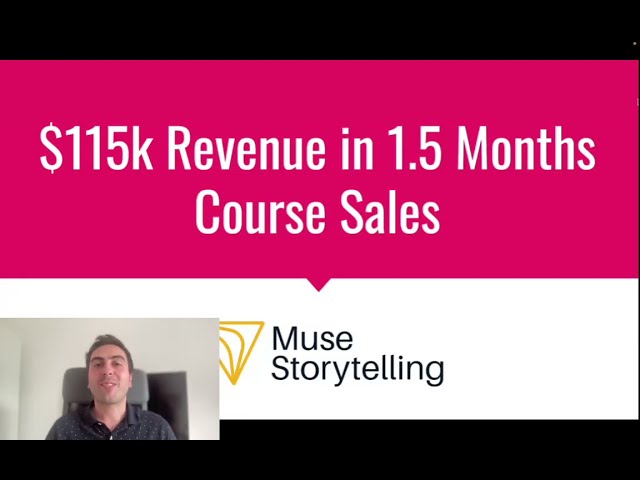
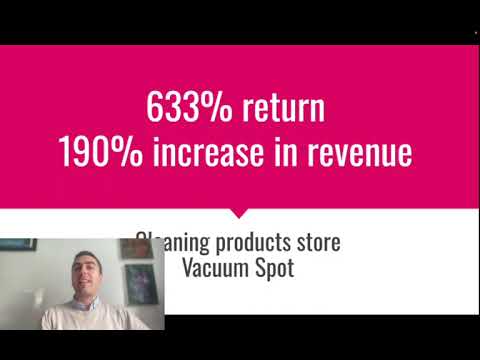
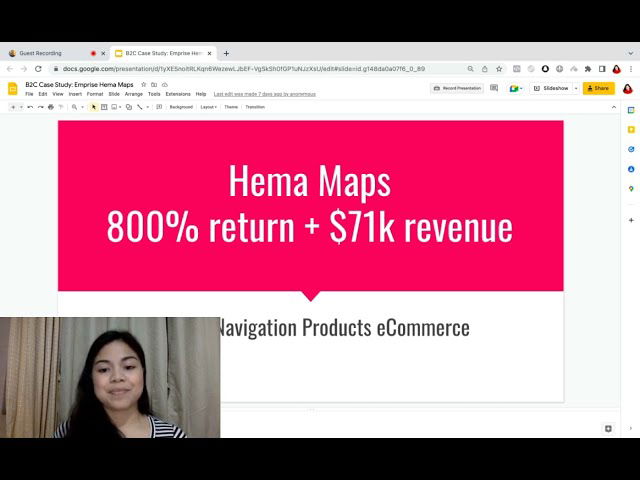
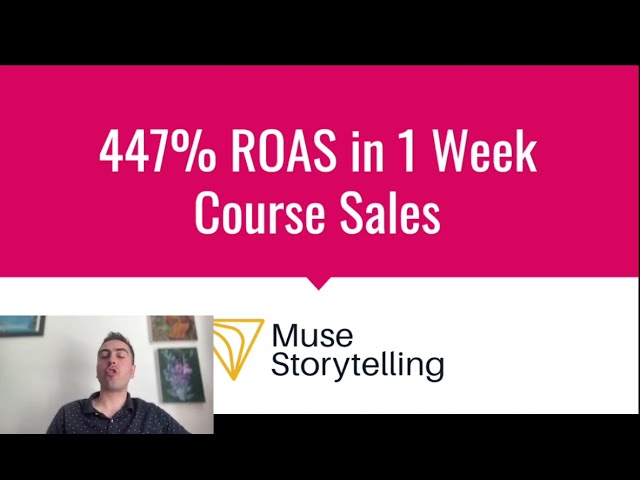
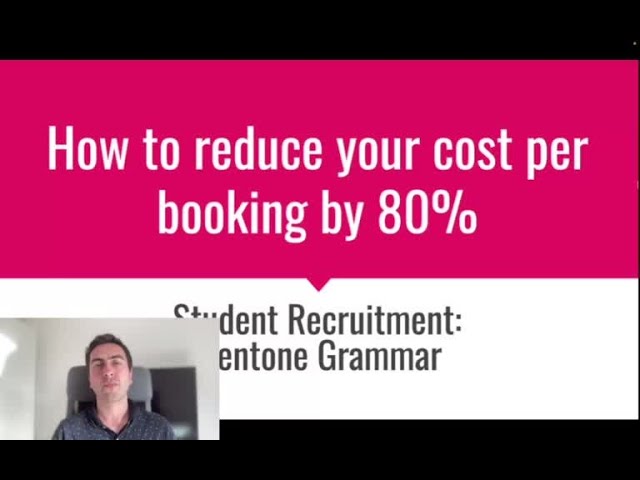
Tinkering with one of these pillars in isolation will not work. Improving your ad copy is useless if it leads to a broken offer. A brilliant offer will not scale if you do not know your numbers and cannot afford traffic. We have implemented this exact system for other course creators, helping clients generate $115,000 in revenue in just a month and a half, alongside strong returns on ad spend. These results come from building a proper growth engine rather than treating ad platforms like a lottery.
How do you get the complete system to break your plateau?
The concepts we discussed cover the strategy behind growth. To actually break through your revenue plateau, you need the step-by-step instructions, templates, and tools to implement this system in your own business.
That is what we focus on when partnering with creators. We help you build a complete implementation package designed to give you the clarity and tools required to re-architect your customer acquisition strategy from the ground up, moving away from guesswork and toward predictable scaling.

Lukas Holschuh
Founder, Growth & Advertising Consultant
Great campaigns fail without expertise. Lukas and his team provide the missing strategy, optimizing your entire advertising funnel—from ad creatives and copy to landing page design.
Backed by a proven track record across SaaS, eLearning, and eCommerce, they don't just run ads; they engineer systems that convert. A data-driven partnership focused on tangible revenue growth.