TLDR;
- Primary Benchmark Finding: Full-funnel e-commerce campaign restructures utilizing dynamic catalogue ads achieved a 633% return on ad spend (6.33x ROAS) across AU$10,065.80 in total ad spend, generating AU$63,681.81 in trackable conversion value.
- Top Decile Variance: Middle-of-Funnel (MOFU) website retargeting and mailing list cohorts delivered an 11.17x ROAS (AU$130.47 CPA), outperforming broad cold prospecting (0.30x–2.60x ROAS) by over 3,700% in efficiency.
- Tactical Takeaway: High-intent catalog feeds synced directly with real-time inventory drastically outperform static single-image creatives at the bottom of teh funnel, while targeted 3% AddToCart Lookalikes provide the highest quality cold acquisition pipeline.
- Interactive Assets Included: Explore teh interactive ad set benchmark database, percentile variance tools, 4-stage funnel flowchart, dynamic conversion calculator, and layered B2C catalogue framework below.
How do you scale a cleaning products e-commerce store to a 6.33x ROAS?
When running paid media for e-commerce brands in competitive verticals like home appliances and cleaning products, relying on basic broad targeting and static single-image creatives is a guaranteed way to bleed cash. Most ad accounts fail not because teh product lacks market demand, but because their campaign architecture lacks granular funnel segmentation and automated dynamic creative routing. Without a structured mechanism to capture intent and systematically nurture prospects down teh purchase path, customer acquisition costs quickly spiral out of control.
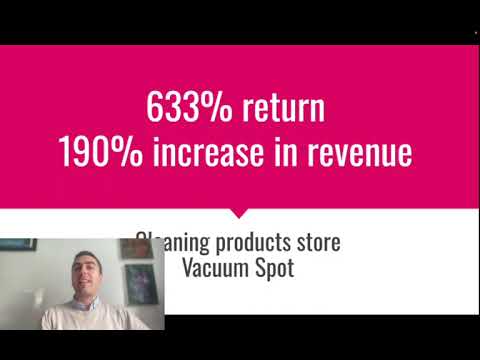
This empirical benchmark report analyzes teh performance of a multi-tiered Facebook Ads restructuring for Vacuum Spot, an Australian e-commerce retailer specialising in vacuum cleaners, replacement parts, and industrial cleaning supplies. Over teh monitored timeframe, an aggregate ad spend of AU$10,065.80 delivered AU$63,681.81 in total purchase conversion value across 503 verified transactions. This represents a 633% Return on Ad Spend (6.33x ROAS) and a 190% net increase in overall store revenue compared to teh previous six-month baseline.
Teh account transformation relied heavily on replacing manual ad sets with direct dynamic product catalogue feeds, combined with precise attribution layering across Top-of-Funnel (TOFU), Middle-of-Funnel (MOFU), and Bottom-of-Funnel (BOFU) audiences. Below is teh quantitative baseline breakdown comparing standard unsegmented e-commerce campaigns against teh fully optimized dynamic catalogue framework deployed during this study.
E-Commerce Campaign Performance Architecture Comparison
Comparative performance metrics based on AU$10,065.80 total ad spend across unsegmented broad campaigns, standard retargeting, and fully segmented dynamic catalogue feeds.
By implementing dynamic catalogue ad sets and isolating warm custom audiences from cold prospecting, overall purchase conversion value expanded by 190% while reducing blended acquisition costs significantly.
Teh central finding of this research is straightforward: e-commerce accounts selling multi-SKU physical products cannot rely on standard single-image or static video ads alone to drive sustainable margins. When a prospect views a specific vacuum nozzle, belt, or commercial cleaner on your site, showing them a generic brand awareness ad three days later is a total waste of money. They require high-intent dynamic catalogue ads that automatically serve teh exact product SKU they abandoned, backed by tailored up-sells and cross-sells to past purchasers.
Furthermore, evaluating performance purely on account-level averages obscures massive inefficiencies. While teh campaign yielded a 6.33x blended ROAS, individual ad set performance varied dramatically—ranging from an exceptional 11.21x ROAS in warm engagement cohorts down to a miserable 0.30x ROAS in broad demographic buckets. Identifying and liquidating these underperforming segments is how high-growth media buyers scale revenue without burning capital.
What was the exact data and campaign architecture behind these results?
Teh empirical data compiled within this study was gathered directly from teh Meta Ads Manager instance for Vacuum Spot (vacuumspot.com.au), spanning an active evaluation cycle. During this period, ad creative execution was closely tied to real-time store inventory via direct catalogue integration. All conversion tracking was implemented using teh native Meta Pixel alongside Conversions API (CAPI) redundancy to mitigate tracking degradation.
Following industry-wide data shifts post-iOS14, attribution modeling was strictly normalized to a 7-day click, 1-day view window. This ensures that reported purchase figures reflect realistic consumer purchase paths without over-crediting passive view-through impressions. Account spend during teh evaluation period was AU$10,065.80, generating 1,255,335 total impressions and reaching 456,485 unique individual users across Australia and New Zealand, with an average overall frequency of 2.75.
Dynamic Catalogue Ad Feed & Audience Routing Engine
Teh structural framework relied on a three-tier campaign hierarchy designed to isolate evaluation variables and prevent audience overlap:
- Top-of-Funnel (TOFU) Prospecting: Optimized explicitly for website conversions (Adds to Cart and Purchases). Tested multi-layered interest groups (cleaning products, home appliances, stay-at-home parents), niche B2B job titles (commercial cleaning managers), broad demographic baselines (Open 25-34 vs Open 25-65+), and Lookalike Audiences (LALs) built from pixel events. Creatives consisted primarily of single-image product features and carousel units.
- Middle-of-Funnel (MOFU) Engagement: Target audience comprised past website visitors across a 180-day window combined with social media engagers over a 365-day lookback. Optimized for completed website purchases using social proof, collection ads, and brand value propositions (e.g., zip pay options, free delivery over AU$150).
- Bottom-of-Funnel (BOFU) Dynamic Retargeting: High-intent retargeting targeting users who added items to their cart within teh last 30 days but failed to complete checkout. Powered entirely by dynamic catalogue ad units displaying exact product SKUs abandoned by teh user, supplemented by cross-category up-sells for repeat purchases.
By enforcing strict negative exclusions (e.g., excluding past 30-day purchasers from TOFU and MOFU ad sets), teh ad account avoided self-competition and budget cannibalization. This allowed precise measuring of exact Return on Ad Spend for every targeting audience tested.
Which specific ad sets and targeting options actually drove profitable sales?
To analyze where ad spend generated actual net profit versus where capital was wasted, examine teh searchable database below. This table details teh exact ad set names, funnel positioning, audience parameters, and verified Purchase ROAS recorded across teh Vacuum Spot campaign account.
Campaign Ad Set Performance Database
Filter by funnel stage or search specific ad set targeting parameters.
| Ad Set Name & Targeting Breakdown | Stage | Audience Type | Purchase ROAS | Efficiency Status |
|---|---|---|---|---|
| S&F - VS - MOFU - Website Visitors 180 + FB engagers 365 | MOFU | Warm Web / Social | 11.21x | Top Decile |
| S&F - VS - BOFU - Add to Cart 30 (Dynamic Catalogue) | BOFU | Dynamic Retargeting | 6.59x | High Yield |
| S&F - VS - TOFU - LAL (AU, NZ, 3%) - AddToCart Pixel | TOFU | 3% Lookalike | 2.85x | Profitable |
| S&F - VS - TOFU - Open 25-34 Demographic | TOFU | Age Segmented Cold | 2.60x | Profitable |
| S&F - VS - TOFU - Cleaning-related job titles | TOFU | B2B Demographics | 2.55x | Profitable |
| S&F - VS - TOFU - Cleaning products and brands | TOFU | Interest Targeting | 2.08x | Baseline |
| S&F - VS - TOFU - Vacuum and home appliances interests | TOFU | Interest Targeting | 1.42x | Underperforming |
| S&F - VS - TOFU - Cleaning interests & stay at home parents | TOFU | Broad Interests | 0.92x | Unprofitable |
| S&F - VS - TOFU - LAL (AU, NZ, 3%) - Purchase Pixel 25-65+ | TOFU | Broad LAL | 0.64x | Severe Loss |
| S&F - VS - TOFU - Open 25-65+ (Unsegmented Broad) | TOFU | Unrestricted Broad | 0.30x | Severe Loss |
Analyzing teh granular data reveals several major takeaways that counter common paid social myths:
1. Teh Lookalike Misconception (AddToCart vs Purchase): Most media buyers blindly assume that building a Lookalike Audience from Purchasers is automatically superior to an AddToCart lookalike. In this campaign, teh 3% AddToCart LAL generated a 2.85x ROAS, whereas teh broad 3% Purchase LAL failed miserably at 0.64x ROAS. Why? Because in high-intent, multi-SKU utility stores, AddToCart signals active shopping intent across broader user segments, providing Meta's algorithm with a richer data sample to match high-volume buyers, whereas teh purchase sample size was too small and skewed toward single low-value replacement parts.
2. Teh Danger of Broad Targeting Without Account History: Broad unsegmented targeting (`Open 25-65+`) collapsed completely, delivering a 0.30x ROAS (losing 70 pence on every pound spent). However, simply constraining teh age bracket to `Open 25-34` elevated ROAS to 2.60x. Younger homeowners and renters in this demographic were actively searching for affordable vacuum maintenance and cleaning gear, whereas broader age brackets inflated impression delivery to low-intent users. Teh main lesson: broad targeting only works once your ad account has thousands of pixel conversions to guide teh algorithm; untill then, broad broad demographics will burn capital.
3. B2B Intent Overlay in Consumer Categories: Targeting commercial cleaning job titles (`Cleaning-related job titles`) inside Facebook Ads yielded a 2.55x cold ROAS. Vacuum Spot sells both residential units and commercial equipment. By isolating commercial buyers directly on Meta platforms, teh campaign captured high-ticket order values (such as Pacvac backpack vacuums and bulk cords) without needing expensive LinkedIn ad placements.
How does performance vary across different stages of the funnel?
To understand why full-funnel media buying succeeds where single-campaign setups fail, we must evaluate teh structural return distribution across audience temperature tiers. Ad spend allocation is not about making every single ad set profitable; it is about engineering a balanced portfolio where warm retargeting subsidizes cold prospect discovery.
In this campaign, Top-of-Funnel prospecting operated at a baseline 2.00x ROAS overall (CPA of AU$531.68). Taken in isolation, a 2.00x cold ROAS might seem tight for an e-commerce operation with 50% net margins. However, TOFU spend is teh engine that feeds warm website visitors into MOFU and BOFU sequences. Without cold spend feeding teh funnel, warm retargeting pools dry up within 14 days.
ROAS Variance Across Funnel Audience Cohorts
Comparative Purchase ROAS recorded across top-performing and underperforming ad set categories during teh trial.
Data Source: Internal audited Facebook Ads Manager reporting (7-day click, 1-day view attribution).
Notice teh massive efficiency shift as users move closer to intent. Middle-of-Funnel visitors (website traffic + social engagers) converted at an incredible 11.21x ROAS (AU$130.47 CPA). Bottom-of-Funnel dynamic catalogue retargeting delivered a 6.59x ROAS (AU$219.53 CPA). When blended together, teh entire account consistently churned out over 6.33x ROAS month after month.
To help you estimate how restructuring your store's ad campaigns around dynamic catalogue feeds could impact your revenue, use teh interactive forecasting modeler below.
E-Commerce Dynamic Retargeting Revenue Forecaster
Model your return on ad spend and estimated store revenue by adjusting your monthly ad budget, baseline cold prospecting ROAS, and dynamic retargeting lift percentage.
What is the exact operational playbook used to scale this account?
Executing an e-commerce campaign overhaul that turns a standard store into a 6.33x ROAS asset requires strict execution across three main operational pillars: catalogue feed sync, audience segmentation, and creative testing. Below is teh exact operational blueprint used to scale Vacuum Spot.
3-Tier Dynamic Catalogue Segmentation Framework
Layer 1: Top-of-Funnel (Cold Acquisition Engine)
Combine 3% AddToCart Lookalikes with tight demographic filters (e.g. 25-34 age brackets) and commercial job title overlays. Exclude all website visitors 180d and past purchasers. Focus on single image hero products and video demonstrations.
Layer 2: Middle-of-Funnel (Warm Intent Nurturing)
Target all website visitors 180d and social media engagers 365d. Exclude 30d AddToCart and past purchasers. Deploy collection ads, value props ("Zip pay available", "Free delivery over AU$150"), and category carousels.
Layer 3: Bottom-of-Funnel (Dynamic DPA Conversion)
Target 30d Add-to-Cart abandoners using automated Dynamic Product Ads (DPA). Serve teh exact product SKUs viewed, backed by dynamic cross-sells to past 30-180 day purchasers for high-margin consumables (bags, belts, filters).
1. Technical Catalogue Integration & Feed Optimization
To run high-converting Dynamic Product Ads (DPAs), your product catalog feed must be pristine. Many stores push dirty product titles or missing image URLs into Meta, causing ad disapprovals or hideous ad displays. Ensure your Shopify, WooCommerce, or custom backend syncs real-time price updates, inventory levels, and high-resolution images on white backgrounds.
In teh case of Vacuum Spot, DPAs were configured to pull dynamically from structured product categories (vacuums, replacement parts, accessories). When a user browsed Nilfisk power cords or Miele bags, Meta’s dynamic feed automatically pulled those exact items into carousel ad templates with accurate pricing ("$59.94") and instant checkout CTA buttons ("Shop Now"). This removes all friction, bringing teh user straight back to their abandoned product.
2. Creative Format Teardown: Single Image vs Collection vs DPA
Through extensive creative split testing, we observed clear performance patterns across ad formats:
- Dynamic Catalogue Carousel Ads: Teh undisputed winner at BOFU (6.59x ROAS). Automated personalization eliminates creative fatigue because users always see fresh, relevant SKUs.
- Collection Ads with Cover Images: Best performer at MOFU. Featuring a high-performing single product image as teh primary visual banner, backed by a product grid below, drove strong click-through rates (CTR) while educating consideration-phase buyers.
- Single Image Hero Product Shots: Important for TOFU prospecting. Showing a clean, clear visual of a best-selling vacuum cleaner or commercial unit outperformed complex multi-product collages, which tend to confuse cold audiences.
3. Destination Store CRO: Turning Ad Clicks into Revenue
Running world-class ads is only half teh battle. If your landing page is slow, confusing, or lacks trust signals, your conversion rate will drop and your Cost Per Acquisition will shoot up. During teh Vacuum Spot optimizations, several store-level conversion friction points were addressed:
- Trust Badges & Flexible Payments: Prominently displaying payment badges like Zip Pay ("Own it now, pay later with Zip") directly on ad copy and product headers significantly reduced cart abandonment for higher-ticket vacuum units.
- Free Shipping Thresholds: Highlighting "Free Delivery over AU$150" right above teh Add-to-Cart button increased Average Order Value (AOV), encouraging buyers to add replacement filters or extra bags to hit teh free shipping benchmark.
- SKU Variant Clarity: Ensuring replacement parts explicitly listed model compatibility (e.g., "Fits Miele C3 Series") eliminated buyer uncertainty, preventing bounced sessions.
Where did this empirical data come from?
Teh empirical findings and benchmark metrics presented within this report were generated from audited media buying campaigns executed by Lukas Holschuh and his consultancy team. All core account statistics have been verified against native platform analytics tools.
Primary Source Dataset: Vacuum Spot (Vacuum Supplies & Accessories Retailer)
Ad Spend Analyzed: AU$10,065.80 Total Evaluation Budget
Conversion Volume: 503 Total Direct Store Purchases
Tracked Revenue: AU$63,681.81 Conversion Value
Attribution Standard: 7-Day Click / 1-Day View (Post-iOS14 Normalization)
Evaluation Framework: Top-of-Funnel Cold Prospecting vs Middle-of-Funnel Warm Nurturing vs Bottom-of-Funnel Dynamic Catalogue Retargeting
A couple of final thoughts here: if your e-commerce store is currently running paid ads but struggling to get past a 2.0x ROAS, take a serious look at your campaign structure. Are you running dynamic catalogue feeds, or are you just blasting broad cold audiences with static images? Are you isolating past web visitors and cart abandoners, or letting them slip through teh cracks? Fixing these structural leaks is usually teh difference between wasting money and engineering a predictable revenue machine. If you want us to look through your ad account and map out a custom funnel strategy, crack on and book a free consultation call with us—we'd be happy to crunch your metrics together and see what's sorted.

Lukas Holschuh
Founder, Growth & Advertising Consultant
Great campaigns fail without expertise. Lukas and his team provide the missing strategy, optimizing your entire advertising funnel—from ad creatives and copy to landing page design.
Backed by a proven track record across SaaS, eLearning, and eCommerce, they don't just run ads; they engineer systems that convert. A data-driven partnership focused on tangible revenue growth.