TLDR;
- Your current £150 cost per member in London is likely unsustainable. Stop chasing cheap leads and instead focus on your Customer Lifetime Value (LTV) to know what you can *actually* afford to pay for a new client.
- "Local professionals" is far too vague for a saturated London market. Explore their specific "nightmares" (e.g., stress, long commutes, lack of time) to craft hyper-targeted ads that resonate.
- Ditch the high-friction "Sign Up Now" offer. Provide undeniable, instant value upfront, like a free taster session or a discounted introductory week, to get Londoners through your studio doors.
- Your landing pages and ad creative are just as important as your targeting. Ensure they’re persuasive, trust-inspiring, and speak directly to your specific London audience's problems.
- This guide includes a simple LTV calculator, audience segmentation benchmarks, and examples of London-specific ad copy to help you get started.
Right, so you've opened a new fitness studio in central London, and you're seeing a £150 cost per acquired member which is eating into your first month's revenue. That sounds like a proper headache, especially in a competitive place like London. Many businesses find themselves in a similar spot, throwing money at ads and not really knowing why it's not working out. The common myth is that you just need 'better targeting' or 'cheaper clicks', but often the problem runs much deeper than that.
The truth is, focusing purely on lowering your cost per lead (CPL) or cost per acquisition (CPA) can actually be a dangerous game. It often leads you to acquire lower quality customers who churn quickly, leaving you right back where you started, but with a lighter wallet. Instead, the real question isn't "how low can my CPA go?", it's "how high can I afford to pay for a *great* customer?" The answer to that lies in understanding your Customer Lifetime Value, or LTV.
How to Figure Out What a Customer is Actually Worth (and What You Can Afford to Pay)
Before you spend another quid on ads, you need to properly calculate your Customer Lifetime Value (LTV). This is arguably the primary metric for any subscription-based business like a fitness studio. It tells you the total revenue you can expect from a single customer over the entire period they stay with you. Once you know this, you can set a realistic target for your Customer Acquisition Cost (CAC) – which is what your £150 figure is right now.
Most experts aim for an LTV:CAC ratio of at least 3:1, meaning for every £1 you spend acquiring a customer, you should get £3 back in profit. If your current £150 CPA wipes out your first month's membership, that ratio is probably closer to 1:1 or even less, which isn't sustainable.
Let's break down how to calculate LTV for your London fitness studio. You'll need three main figures:
- -> Average Revenue Per Account (ARPA): This is your average monthly membership fee. Let's say, for a boutique studio in central London, this is £100 per month.
- -> Gross Margin %: What's your profit margin on that revenue? For a service business like a fitness studio, this can be quite high, maybe 70-85%, after accounting for instructor costs, rent, utilities, etc. Let's assume 80% for now.
- -> Monthly Churn Rate: What percentage of your members do you lose each month? This is fundamental. For a new studio, it might be a bit higher initially as you find your footing, say 7%.
The calculation is simple enough:
LTV = (ARPA * Gross Margin %) / Monthly Churn Rate
Fitness Studio LTV Calculator
Calculate your customer lifetime value to understand what you can truly afford to spend on acquisition for your London fitness studio.
So, if your ARPA is £100, Gross Margin is 80%, and Churn is 7%, your LTV would be (£100 * 0.80) / 0.07 = £80 / 0.07 = £1142.86. Now, if you want a 3:1 LTV:CAC ratio, you could afford to spend up to £380.95 to acquire a new member. Suddenly, that £150 CPA doesn't seem so bad *if* the customer sticks around long enough to justify it. If your LTV is lower than this, then yes, £150 is a massive problem. This math is what frees you from the constant pressure of just getting cheaper leads and allows for intelligent growth.
If you need to explore managing your ad spend further, you might find our London Ad Budget: The Data-Driven Guide for Growth Leads article quite helpful.
Your ICP is a Nightmare, Not a Demographic
You mentioned targeting "local professionals." That's a good start, but in a city as diverse and bustling as London, it's far too broad. "Professionals" could mean anything from a junior accountant in the City to a tech founder in Shoreditch or a lawyer in Canary Wharf. Each of these groups has different schedules, different stress levels, and different motivations for joining a fitness studio.
Forget the generic demographic profile. To truly connect, you need to become an expert in your ideal customer's specific, urgent, and often career-related *nightmare*. What keeps them up at night? For a London professional, it might be:
- -> The draining commute and lack of energy by mid-week.
- -> The constant pressure and stress of their job, needing an outlet.
- -> The struggle to fit exercise into an unpredictable, demanding work schedule.
- -> The desire for a social outlet or a sense of community outside of work.
- -> Wanting to look and feel good for client meetings or social events in a city where appearance can feel important.
Once you've identified *that* nightmare, you can start to build your targeting strategy. Who are these people? What publications do they read (e.g., City A.M., Evening Standard)? What specific LinkedIn groups might they be in? What other lifestyle interests do they have (e.g., healthy eating, mindful living, specific cultural events in London)? This intelligence is the blueprint for your ad creative and messaging too, making your ads feel like they're speaking directly to them.
How do we target these London professionals then?
On Meta Ads (Facebook/Instagram), you're not just targeting general interests. You're layering them. For example, instead of just "Fitness," you might combine:
- -> Demographics: Age range (e.g., 25-45), perhaps a higher income bracket (though this is less reliable).
- -> Job Titles/Industries (via LinkedIn Audience Network or if available as interests on Meta): Think about job functions common in central London's finance, tech, and creative industries.
- -> Interests: Specific London-based wellness influencers, high-end coffee shops, healthy food brands that resonate with urban professionals, business publications relevant to London.
- -> Location: Hyper-localise around your studio. Don't just target "London"; refine it to specific postcodes or even custom radius targets around the City, Canary Wharf, Shoreditch, or wherever your studio attracts footfall.
For Google Search Ads, it’s about user intent. Target keywords that show they're *actively searching* for a solution to their fitness nightmare:
- -> "boutique fitness studio [your area of London]"
- -> "HIIT classes near [London landmark/tube station]"
- -> "stress relief workouts London"
- -> "lunchtime fitness classes City of London"
- -> "premium gym Shoreditch"
By using these specific, high-intent keywords, you're essentially pre-qualifying your audience. They're already looking for what you offer, which often leads to a better conversion rate than trying to convince someone who's just scrolling social media.
To really hone in on your Google Ads strategy for London, our Google Ads in London: Stop Wasting Money (Real Guide) article offers some excellent further insights.
London Professional Audience Refinement Flow
Delete the "Request a Demo" Button – Or Your Equivalent
Your current offer, resulting in a £150 CPA that wipes out first month's revenue, suggests a high-friction proposition. For a fitness studio, this "request a demo" equivalent might be asking someone to commit to a full-price membership upfront without experiencing your unique vibe. That's a massive ask, especially in a city full of options.
Your offer's only job is to deliver a moment of undeniable value – an "aha!" moment that makes the prospect sell themselves on your solution. For a boutique fitness studio, that means getting them through your doors and experiencing the atmosphere, the instructors, and the community. You need to reduce the perceived risk and friction. Think about:
- -> A Free Taster Session: One complimentary class. No commitment, just an experience.
- -> A Highly Discounted Introductory Offer: "First Week for £10" or "3 Classes for £25." Something low-cost but high-value.
- -> A "London Pro Fitness Audit": A short, personalised consultation on their fitness goals, followed by a free session.
We've seen how removing credit card requirements for SaaS trials drastically increases sign-ups. The same principle applies here. You aren't trying to generate a full-price membership immediately; you're creating an "Experience Qualified Lead" who is already convinced by the product itself. When they feel the burn, see the results, and enjoy the community, the full membership becomes a natural progression, not a leap of faith.
This strategy is fundamental for London's Performance Marketing Strategy: The Complete Guide where high customer expectations are the norm. It’s about building trust first.
Conversion Rates for Studio Offers
Benchmark conversion for London fitness studio entry offers
Typical Trial-to-Member
A Message They Can't Ignore: Crafting London-Centric Ad Copy
Once you know who you're talking to (that specific London professional with their unique nightmare) and what low-friction offer you're presenting, your ad copy needs to be brutally honest and direct. You're not selling "fitness"; you're selling a solution to their problem. For a high-touch service business like a boutique studio, the Problem-Agitate-Solve framework works a treat.
Let's take a couple of hypothetical London professional segments and apply this:
Segment 1: The Stressed City Worker (e.g., in Finance, Legal in the Square Mile/Canary Wharf)
- -> Problem: "Struggling to switch off after another demanding day in the City? Feeling the constant pressure and just can't find time for yourself?"
- -> Agitate: "The endless deadlines and commutes leave you drained, affecting your focus and well-being. Your current routine just isn't cutting it, and finding an escape feels impossible."
- -> Solve: "Recharge your mind and body at [Your Studio Name], just minutes from [Nearest Landmark/Tube Station]. Our 45-min express classes are designed for busy London pros like you. Try your first session free – because your well-being isn't a luxury, it's a necessity. Book now and reclaim your calm."
Segment 2: The Creative Tech Professional (e.g., in Shoreditch/East London)
- -> Problem: "Feeling creatively blocked or sluggish after hours at your desk in Shoreditch? Want to stay sharp and energised without the stuffy gym vibe?"
- -> Agitate: "Long coding sessions or design sprints can take a toll on your posture and energy. Generic workouts feel uninspired, and you're looking for something that matches your dynamic lifestyle."
- -> Solve: "Unleash your inner athlete at [Your Studio Name] in the heart of East London. Our innovative, high-energy classes will get you moving, thinking clearer, and connecting with a vibrant community. Grab our 'First Week for £10' intro offer and spark your next breakthrough."
Notice how the language, the problems, and even the solutions are tailored to these specific segments and their London context. The ad visuals should also reflect this – showing diverse Londoners actively enjoying your classes, perhaps even with recognisable London backdrops (subtly, of course, not overtly touristy).
On the paid platforms, you need to remember that people scrolling Meta aren't usually in 'buying mode'. They're browsing. Your ad needs to *stop the scroll* with a relevant problem. On Google, they're searching with intent, so your ad copy needs to immediately assure them you're the precise solution they're looking for, often mentioning your location prominently.
| Target Audience | Meta Ad Copy Example (Problem-Agitate-Solve) | Google Ad Headline Example (Intent-Match) |
|---|---|---|
| Canary Wharf Finance Pros Stressed, time-poor, need high-intensity relief. |
Problem: Long hours & city stress got you feeling drained? Agitate: Your desk job is taking a toll, but finding time to recharge feels impossible. Solve: Escape the trading floor. Our express HIIT classes near Canary Wharf melt stress in 45 mins. First class free! |
⚡️HIIT Classes Canary Wharf | 45-Min Express Workouts | First Class Free Today! |
| Shoreditch Tech & Creative Desk-bound, seeking energetic, community-focused workouts. |
Problem: Stiff from coding all day? Want to spark new energy? Agitate: Generic gyms don't inspire. You need a workout as dynamic as your ideas. Solve: Recharge at our Shoreditch studio. High-energy classes, vibrant community. Get your intro week for £10! |
🚀Boutique Fitness Shoreditch | Energetic Classes & Community | £10 Intro Week! |
| West End Professionals Sophisticated, valuing aesthetics, convenience, and bespoke experience. |
Problem: Seeking a premium fitness experience that fits your West End lifestyle? Agitate: Crowded gyms lack personalised attention. You deserve a studio that feels exclusive. Solve: Discover [Your Studio Name] in the West End. Bespoke classes, elegant space, focused results. Book a complimentary consultation & taster session. |
✨Luxury Fitness West End | Personalised Boutique Workouts | Free Consultation & Class! |
Your Website/Landing Page: The Unsung Hero
I remember one client where I realized that I could do whatever I wanted on the advertising side, but if their destination pages were poor, the campaigns would fail. This is absolutely true for your fitness studio. If people click your perfectly targeted, problem-solving ad but land on a slow, cluttered, or confusing website, that £150 CPA will feel like a bargain compared to the wasted potential. Your website needs to be a digital showroom, not just a brochure.
Main things to check for your London fitness studio's landing page:
- -> Speed: Londoners are impatient. If your page takes more than 2-3 seconds to load, you're losing people.
- -> Mobile-First Design: Many professionals will be viewing your site on their phones during commutes or lunch breaks. It *must* be immaculate on mobile.
- -> Clear Offer & Call to Action (CTA): Is your low-friction offer (free class, intro week) immediately visible? Is the "Book Now" or "Claim Offer" button prominent and easy to find?
- -> Persuasive Copy: Does it continue the conversation from your ad? Does it speak to their London-specific pains and how your studio solves them?
- -> Social Proof: Reviews and testimonials from local London members are gold. Showcase them prominently. Videos of members talking about their experience are even better.
- -> Trustworthiness: High-quality photography of your studio and instructors, clear contact info, and maybe even a brief "Our Story" section to build rapport.
Think about the journey: Ad (problem/offer) -> Landing Page (details offer, builds trust, reduces friction) -> Conversion (booking a trial/intro offer). Any break in that chain, and your money goes up in smoke. We’ve seen conversions jump by focusing on just a few of these elements, directly impacting overall acquisition costs.
Campaign Structure & Optimisation: Getting it Right from Day One
Your £2,000 monthly budget for Meta and Google Ads in London is a decent starting point if used wisely. The goal is to stop trying to do everything at once and instead focus on what drives the highest quality leads first. We generally advise a phased approach, building up your pixel data and understanding what works before scaling.
Google Ads for Local Fitness
As mentioned, Google Search Ads are fantastic for capturing intent. People searching for "boutique gym London" or "HIIT Shoreditch" are already looking to buy. Your ads need to show up there. Structure your campaigns granularly:
- -> Branded Campaigns: If people are searching for your studio by name, you *must* be at the top. This is usually very cheap and high converting.
- -> Hyper-Local Service Campaigns: Create ad groups for specific services (e.g., "Yoga Classes", "Spin Studio") combined with specific London areas (e.g., "City of London", "Islington").
- -> Competitor Campaigns: Bid on competitors' names (if allowed and strategic) to poach traffic, but ensure your ad copy clearly differentiates you.
Use location extensions, call extensions (so people can call your studio directly), and structured snippet extensions to highlight your class types or unique features. This makes your ad bigger and more informative.
For more detailed strategies on controlling costs, check out our guide on Google Ads CPI in London: The 2024 Complete Guide.
Meta Ads for Local Fitness (Facebook/Instagram)
Meta is great for building awareness and nurturing prospects who aren't actively searching. Given your budget and the saturated London market, I'd prioritise:
- -> Retargeting Campaigns (BoFu & MoFu): This is your lowest hanging fruit. Anyone who has visited your website, watched a video, or engaged with your Instagram needs to be retargeted. Show them ads with your low-friction offer (e.g., "Still thinking about it? Your first class is free!"). You can achieve phenomenal ROAS here.
- -> Lookalike Audiences (ToFu, once you have enough data): Once you have at least 100 website visitors or, even better, 100 people who've signed up for a trial, create a 1% lookalike audience. These are people Meta thinks are similar to your existing good leads.
- -> Specific Interest & Behaviour Targeting (ToFu): This is where your "London professional nightmare" research comes in. Target interests like "wellness London," "mindfulness apps," "healthy eating London," combined with location targeting for your studio's catchment area.
Crucially, optimise your Meta campaigns for *conversions* (e.g., "Trial Signup" or "Intro Offer Claimed"), not just "Reach" or "Brand Awareness." When you set your campaign objective to "Reach" or "Brand Awareness," you are actively paying the world's most powerful advertising machine to find you the worst possible audience for your product. You want people to *act*, not just see your ad.
And remember, split test your creatives constantly. Different images, videos, and headlines will resonate with different segments of your London audience. Use UGC (User Generated Content) – real members sharing their experience – it can be incredibly powerful for a boutique studio.
| Campaign Type | Ad Platform | Targeting Focus (London Context) | Objective | Expected CPA (Rough London Estimate) |
|---|---|---|---|---|
| Google Search: Branded | Google Ads | Your Studio Name (e.g., "[Your Studio Name] London") | Website Traffic, Trial Signups | £5 - £20 (Very high intent) |
| Google Search: Hyper-Local Intent | Google Ads | "HIIT classes [postcode/area]", "boutique gym [district]" | Trial Signups, Phone Calls | £25 - £70 (Medium-high intent, competitive) |
| Meta Ads: Retargeting (BoFu) | Meta Ads | Website visitors, ad engagers (all London) | Trial Signups, Intro Offer Claims | £10 - £40 (Warm audience, high conversion) |
| Meta Ads: Lookalikes (ToFu) | Meta Ads | 1% Lookalike of Trial Signups (across London) | Trial Signups | £40 - £90 (Cold, but pre-qualified audience) |
| Meta Ads: Interest Targeting (ToFu) | Meta Ads | London professionals, "wellness London", specific brands | Trial Signups | £70 - £150+ (Cold audience, requires strong offer) |
Addressing the "Saturated London Market"
It's easy to feel disheartened when you think about the sheer number of gyms and fitness studios in London. But "saturated" just means there's a lot of competition; it doesn't mean there isn't demand. It means you need to be *more* specific, not less. Instead of seeing yourself as competing with every gym in London, focus on being the *only* solution for a *very specific* group of London professionals.
- -> Niche Down: Is your studio particularly suited for early risers? Lunchtime warriors? Post-work wind-downs? Professionals in a specific industry (e.g., tech, finance)? Cater your entire offering to them.
- -> Community: In a huge city, people often crave community. Can your studio offer more than just a workout? Can it be a place for networking, social events, or a genuine sense of belonging for London professionals? Highlight this in your ads.
- -> Unique Selling Proposition (USP): What makes your studio different from the one down the road? Is it the specific type of training, the atmosphere, the instructor expertise, the state-of-the-art equipment? Whatever it is, shout about it in your messaging.
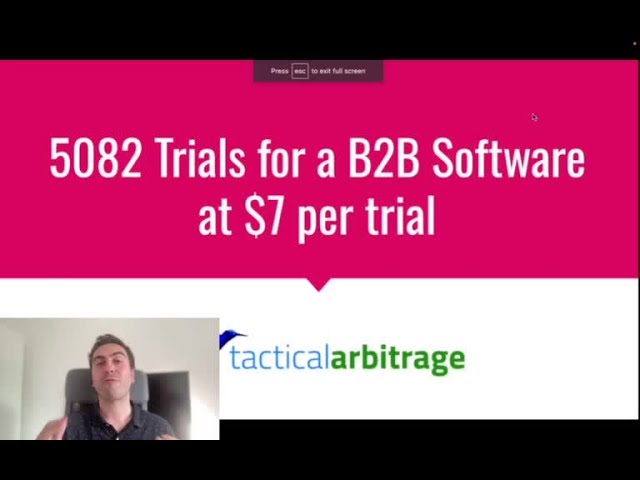
One campaign we worked on for a medical job matching SaaS reduced their cost per user acquisition from £100 to £7. It wasn't magic; it was about systematically optimising each part of the funnel, from targeting to the offer. This approach works for local services too. It's about finding those little pockets of opportunity within the broader London market.
For a broader view on how to navigate the London advertising landscape, you might want to review our London Paid Ads: Stop Wasting Money (Complete Guide).
Optimisation Impact on CPA for London Studios
Illustrative improvements through strategic changes
Significant room for improvement with targeted efforts.
Optimise page for clear offer and mobile experience.
Improve in-studio experience & follow-up process.
My Main Recommendations for You:
| Priority | Recommendation | Actionable Steps for Your London Studio |
|---|---|---|
| 1st - Foundation | Calculate True LTV | Use the LTV calculator provided to understand what a member is *actually* worth. This will set your realistic CPA target for London. |
| 2nd - Offer | Redesign Your Initial Offer | Shift from a high-commitment membership to a low-friction, high-value introductory offer (e.g., free class, £10 intro week). |
| 3rd - Audience | Refine "Local Professionals" Target | Identify specific London professional segments and their unique "nightmares" (e.g., Canary Wharf stress, Shoreditch desk-bound). |
| 4th - Platform | Optimise Google Search Ads | Target hyper-local, high-intent keywords (e.g., "boutique fitness [postcode]", "HIIT classes [London area]") with relevant ad copy. |
| 5th - Platform | Prioritise Meta Ads Retargeting | Focus most of your Meta budget on retargeting website visitors and ad engagers with your new, low-friction offer. Test specific London interests. |
| 6th - Creative | Craft Problem-Solving Ad Copy | Use the Problem-Agitate-Solve framework, tailored to your London target segments, making your ads impossible to ignore. Match visuals to your audience. |
| 7th - Website | Improve Landing Page Conversion | Ensure your landing page is fast, mobile-friendly, clearly presents the offer, includes strong social proof, and has a clear, singular Call To Action. |
| 8th - Long Term | Nurture & Optimise In-Studio Experience | Your ad spend gets wasted if new members don't stay. Focus on converting trialists to full members by delivering exceptional value and fostering community. |
Getting your paid advertising right, especially in a competitive market like London, is often more complex than just setting up a few ads. It's about a complete funnel approach, from understanding your customer's deepest needs to crafting offers they can't refuse, and building landing pages that convert like crazy. When you combine this with smart, hyper-localised targeting and relentless optimisation, that £2,000 budget can start driving real, profitable growth.
If this all sounds like a lot to take on, or if you feel like you're still just burning cash, sometimes an expert eye can make all the difference. We offer a free, initial consultation where we'll look through your current strategy and ad account together. It's a chance to get some bespoke advice and see if we're a good fit to help you turn those ad pounds into proper returns.
{{LEAD_MAGNET_MAIN_CTA}}
Lukas Holschuh
Founder, Growth & Advertising Consultant
Great campaigns fail without expertise. Lukas and his team provide the missing strategy, optimizing your entire advertising funnel—from ad creatives and copy to landing page design.
Backed by a proven track record across SaaS, eLearning, and eCommerce, they don't just run ads; they engineer systems that convert. A data-driven partnership focused on tangible revenue growth.