TLDR;
- The Diagnosis: Scaling ad spend profitably fails because you focus on cheap leads (low CPL) instead of what you can actually afford to pay for a high-value customer (your true allowable CAC).
- The Strategic Fix: We stop guessing and start engineering growth by calculating your true Customer Lifetime Value (LTV), identifying the career-threatening "nightmare" your ideal customer faces, and building a high-value, low-friction "sandbox" offer they cannot refuse.
- What's Inside The Free Toolkit: Get the interactive LTV & Allowable CAC Calculator, our Nightmare ICP Discovery Worksheet, and the Sandbox Offer Blueprint to build a predictable client acquisition machine.
You have hit the wall. Your ads work, sort of. You get clicks, maybe even some leads. But every time you try to increase the budget, the whole thing shudders and threatens to fall apart. Your Cost Per Lead shoots up, your Return on Ad Spend tanks, and you are left with that sinking feeling that you are just pouring more money into a leaky bucket. You are stuck in the scaling trap: growth feels impossible without burning an excessive amount of cash.
Unlock the LTV & Allowable CAC Diagnostic Toolkit
Enter your email below to unlock the interactive LTV calculator, Nightmare ICP worksheet, and sandbox offer blueprint.
So, Why Does Everything Break When You Try to Scale?
Most advice you receive at this point is complete rubbish. Test more creatives! Try a new audience! Just copy what your competitors are doing! It is all tactical nonsense that ignores the real, architectural problem. Simply turning up the budget on a system that is already fragile is like trying to make a car go faster by pressing harder on a faulty accelerator. At best, nothing happens. At worst, the engine blows.
The fundamental breakdown does not happen inside your Ads Manager. It happens in your strategy. The reason your costs skyrocket when you scale is that you ask ad platforms to do the impossible: find more of a tiny group of people ready to buy right now. That pool is always small and expensive. As you spend more, the algorithms are forced to look further afield, showing your ads to people who are less interested, less qualified, and less likely to convert. Your costs go up. It is simple supply and demand.
This is made a hundred times worse if you make the most common mistake in paid advertising: optimising for the wrong thing. I see it in nearly every new account I audit. They run brand awareness or reach campaigns, thinking they need to warm up the market. Here is the uncomfortable truth: you actively pay the world's most powerful advertising machines to find you the worst possible audience for your product.
When you set your campaign objective to reach, you give the algorithm a very specific command: find me the largest number of people for the lowest possible price. The algorithm, being ruthlessly efficient, does exactly that. It seeks out users inside your targeting who are least likely to click, least likely to engage, and absolutely least likely to ever buy anything. Why? Because those users are not in demand. Their attention is cheap. You pay to find non-customers. Awareness is a byproduct of making sales and having a great product, not a prerequisite for it.
The other side of this coin is the obsession with a low CPL. Chasing a cheap lead is a fool's errand. A £5 lead that never converts is infinitely more expensive than a £250 lead that becomes a £10,000 customer. Yet businesses everywhere are terrified of a high CPL, hamstringing their own growth because they measure the wrong metric. They get stuck in a cycle of generating low-quality leads from low-intent audiences who were never going to buy anyway, all in the name of a good CPL. It is a race to the bottom, and the prize is a sales team drowning in dross and a balance sheet stained with red ink.
How Do You Figure Out What You Can Actually Afford to Pay?
To break out of this trap, you must stop guessing what a good CPL is and start calculating what a profitable Customer Acquisition Cost must be. The real question is not how low can my CPL go, but how high a CPL can I afford to acquire a truly great customer. The answer to that question is found in its counterpart: Customer Lifetime Value.
Without knowing your LTV, you fly blind. You have no way of knowing whether your £50 CPL is a bargain or a bankruptcy sentence. Calculating it requires honesty about your numbers. It forms the foundation of every successful scaling strategy I have built.
The calculation requires three figures:
1. Average Revenue Per Account: What is the average amount a customer pays you each month? Let us say you run a SaaS business and your average subscription is £500 per month.
2. Gross Margin Percentage: What is your profit on that revenue after accounting for the cost of goods sold or the cost to service that customer? This is not your net profit. It is the profit before overheads like office rent and salaries. Let us assume it sits at a healthy 80% for our SaaS example.
3. Monthly Churn Rate: What percentage of your customers do you lose each month? Be honest here. If you lose 4 out of every 100 customers each month, your churn rate is 4%.
The calculation proceeds as follows:
LTV = (ARPA * Gross Margin %) / Monthly Churn Rate
Using our example:
LTV = (£500 * 0.80) / 0.04
LTV = £400 / 0.04
LTV = £10,000
There it is. In this scenario, every new customer you acquire is worth £10,000 in gross margin to your business over their lifetime. This is the number that changes everything. It serves as your North Star for profitable scaling.
A sustainable business model typically aims for a 3:1 LTV to CAC ratio. This means you want your LTV to be at least three times your Customer Acquisition Cost. With a £10,000 LTV, you can afford to spend up to £3,333 to acquire a single new customer and maintain a robust business.
Let that sink in. Suddenly, that £250 lead from a LinkedIn campaign targeting a CTO looks like a bargain. If your sales team converts one in ten of those qualified leads into a customer, you can afford to pay up to £333 per lead. This math unlocks aggressive, intelligent growth. It frees you from the tyranny of cheap clicks and allows you to bid for the attention of high-value prospects with confidence.
To make this real for your own business, I built an interactive calculator. Plug in your own numbers and see exactly what you can afford to spend. This diagnostic tool immediately reveals whether your current ad performance is sustainable or a ticking time bomb.
LTV & Allowable CAC Simulator
Input your business metrics to calculate your Customer Lifetime Value and determine your maximum affordable Customer Acquisition Cost for profitable scaling.
Right, But Who Exactly Are You Spending This Money On?
Knowing your numbers is the first step. However, it proves useless if you still point that firepower at the wrong people. This brings us to the second failure: a demographic-based definition of the Ideal Customer Profile.
Forget the sterile profile your last marketing hire put together. Companies in the finance sector with 50 to 200 employees tells you precisely nothing of value. It functions as a description, not a diagnosis. It leads to generic ad copy, broad targeting, and wasted spend because it misses the one thing that actually matters: pain.
To stop burning cash, you must redefine your customer not by who they are, but by the specific, urgent, and expensive nightmare they currently live through. Your ICP is not a person; it is a problem state. You need to become an expert in their career-threatening trouble.
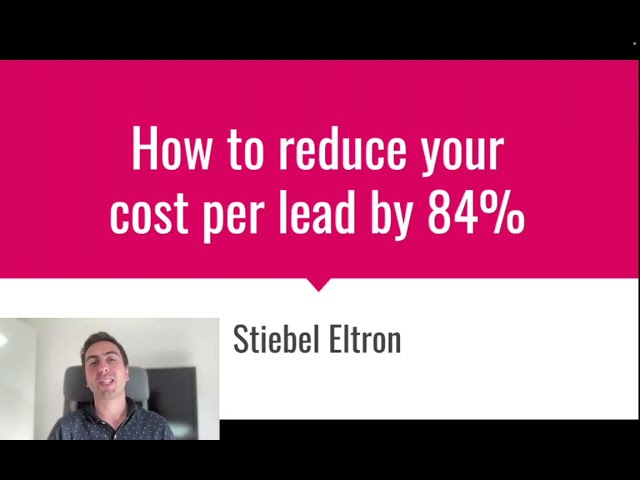
Allow me to share examples from campaigns we ran. Your engineering leader client is not just a job title; she is a leader terrified of her best developers quitting out of frustration with a broken workflow and technical debt. Your law firm partner is kept awake at night by the fear of a junior associate missing an urgent filing deadline, exposing the firm to a severe malpractice suit. For one software client in the recruitment space, their ICP was not hiring managers in general; it was the specific nightmare of having a medical role unfilled for 90 days, costing the hospital a fortune in locum fees and putting patient care at risk. We helped them reduce their client's CPA from £100 down to just £7 by focusing on that specific pain.
Once you isolate that nightmare, everything else clicks into place. Your targeting becomes a guided missile instead of a scattergun. Where do people experiencing this specific nightmare go for answers? You find the niche podcasts they listen to on their commute, like industry finance shows. You find the newsletters they actually open and read. You identify the SaaS tools they already pay for and integrate with, like HubSpot or Salesforce. Are they members of specific professional Facebook groups? Do they follow recognized industry leaders on Twitter?
This intelligence provides the blueprint for your entire targeting strategy. It enables you to build a multi-layered targeting framework that goes beyond the obvious.
The Nightmare ICP Targeting Framework
Layer 1: The Firmographic Boundary
This acts as your basic filter. Target company size, target industry, and job seniority. This gets you into the right building.
Layer 2: The Functional Context
Now you get more specific. Target job functions to ensure you speak to the correct department within that building.
Layer 3: The Nightmare Signal
This represents the hidden mechanism. Layer on interests and behaviours signaling they live the nightmare. Member groups, profile skills, or followers of specific influencers find the exact person experiencing the problem you solve.
Do this work first. Dig into forums, listen to sales calls, and interview your best customers. Map out their day, their fears, and their aspirations. If you cannot describe your ideal customer's problem better than they can themselves, you have no business spending money on ads.
Now, What Do You Say to Get Their Attention?
Once you know who you address and the nightmare keeping them awake, your ad copy writes itself. It stops being a bland list of features and turns into a direct, empathetic, and unignorable message. You no longer shout into a void; you whisper the exact solution into the ear of someone desperate to hear it.
Your ad needs to speak directly to that pain. We deploy proven copywriting frameworks. For a high-touch service business, you use the Problem-Agitate-Solve framework. You do not sell fractional CFO services; you sell a good night's sleep. Your ad copy stops being corporate jargon and starts acting like a real conversation:
"Are your cash flow projections just a shot in the dark? Are you one bad month away from a payroll crisis while your competitors confidently raise their next round? Get expert financial strategy for a fraction of a full-time hire. We build dashboards that turn uncertainty into predictable growth."
For a B2B SaaS product, you use the Before-After-Bridge framework. You do not sell a cloud platform; you sell the feeling of total relief. Your ad becomes a short narrative:
"Before: Your cloud bill just arrived. It sits 30% higher than last month, and your engineers have no idea why. Another fire to put out, another angry call from management. After: Imagine opening your bill and smiling. You see exactly where every dollar goes, and a dashboard already flagged the waste for you. Bridge: Our platform is the bridge that gets you there. Start a free trial and find your first savings today."
For high-ticket physical products, like lab equipment, you must attack feature-obsession head-on. Do not state the spec; state its consequence. Your prospect cares about what the feature unlocks for them.
"Our new spectrometer achieves a 0.001% margin of error. So what? So your lab can publish results with unshakeable confidence, securing more funding and attracting top talent that other labs can only dream of."
This relies on empathy at scale. You demonstrate instantly that you understand their world and offer a credible solution. When your message reaches this precision, your ads act as a qualification filter. The right people feel seen and feel compelled to click. The wrong people scroll past, saving you budget. This is how you attract high-intent buyers before they even reach your website.
For Goodness Sake, Stop Asking for a Demo
Now we arrive at the most common and destructive failure point in the entire B2B advertising funnel: the offer. If your primary Call to Action asks users to request a demo, you systematically sabotage your own growth.
The request a demo button stands as an arrogant Call to Action. It presumes your prospect, a busy, high-value decision-maker, has nothing better to do than book a 30-minute slot in their calendar to experience a sales pitch. It creates high friction, offers low value, and instantly positions you as another commoditised vendor begging for time. It kills conversions and leaves landing page conversion rates stuck in the low single digits.
Your offer's sole job is delivering a moment of undeniable value—an aha moment making prospects sell themselves on your solution. It must solve a small piece of their nightmare for free, right now, to earn you the right to solve the rest later.
I call this the sandbox offer. You give them a safe, low-commitment space to test your value proposition and experience a tangible win. For SaaS founders, this represents your biggest advantage. The gold standard is a completely free trial without credit card requirements or a generous freemium plan. Let them use the actual product. Let them feel the transformation. When the product proves its own value, the sale becomes a formality. You avoid generating marketing qualified leads for sales teams to chase; you create product qualified leads who are already convinced.
If you do not run a SaaS company, you are not exempt. You must package your expertise into a tool, piece of content, or asset providing instant value. For a marketing agency, this could be a free, automated SEO audit showing top keyword opportunities. For a data analytics platform, a data health check flagging database issues. For us, as an advertising consultancy, it involves a strategy session where we audit a failing ad account completely free of charge. You must solve a real problem for free.
The impact this creates on your funnel economics is staggering. By switching from a high-friction demo request to a high-value sandbox offer, you dramatically increase your landing page conversion rate. This produces a massive effect on your Cost Per Lead, as the breakdown below shows.
The Math of a Better Offer
Assuming a monthly ad budget of £5,000 at an average Cost Per Click of £2.50, generating 2,000 clicks per month:
By swapping a high-friction ask for a high-value offer, your lead volume increases by 650% and your effective Cost Per Lead drops by over 86% without spending an extra penny on traffic.
This Is Not a Checklist, It Is an Operating System
What I walked you through is not a collection of tips or tricks. It forms an integrated operating system for profitable growth. Each component depends on the others.
Your unit economics tell you what you can afford to spend. This gives you the confidence to pursue high-value prospects.
Your nightmare ICP tells you who those prospects are, based on their pain rather than demographics.
Your message-to-nightmare match ensures your ad copy connects instantly, acting as a filter to attract the right people and repel the wrong ones.
Your sandbox offer provides enough upfront value that converting becomes straightforward, fixing your funnel economics and filling your pipeline with qualified leads.
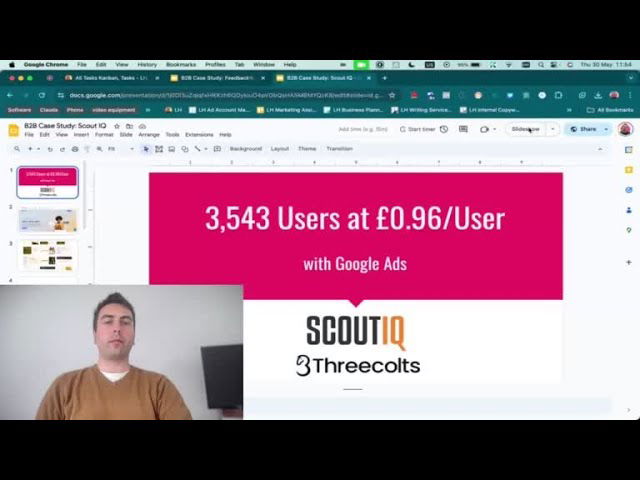
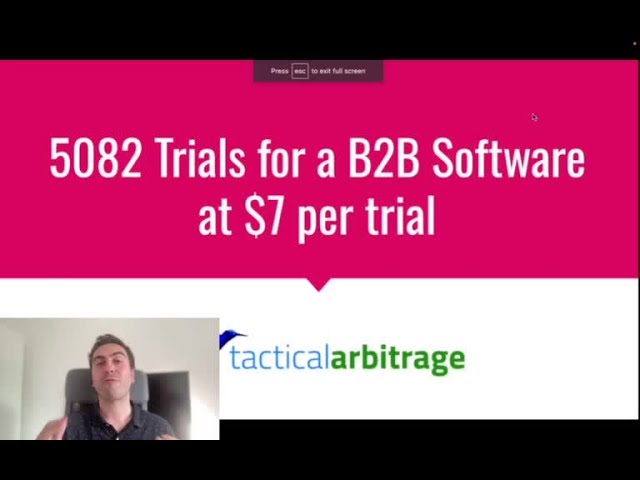
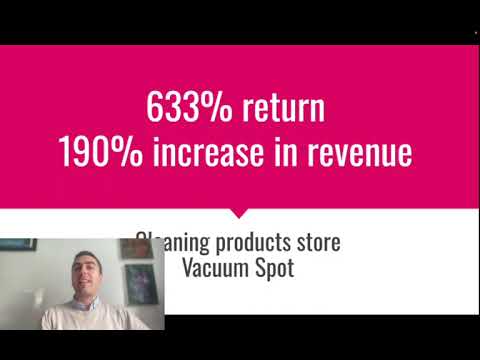
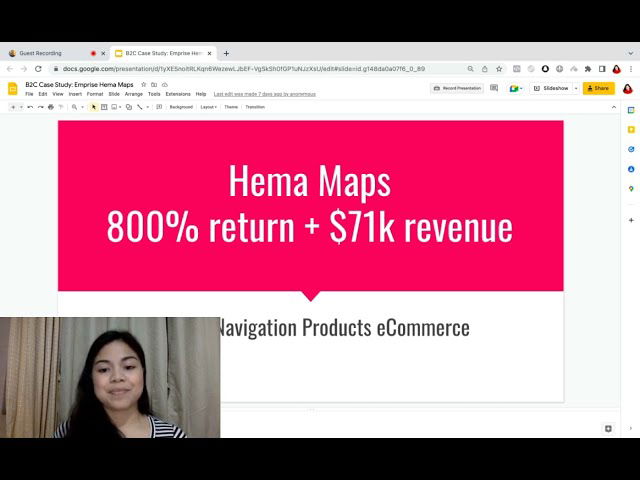
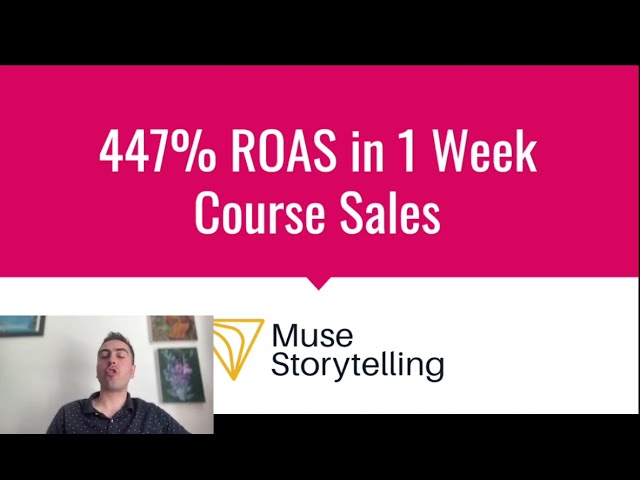
When these four pillars work in harmony, scaling stops being a gamble. It turns into a predictable, mathematical process. You no longer just run ads; you engineer a customer acquisition machine. This marks the difference between businesses stuck on a plateau and those achieving exponential, profitable growth. I witnessed this work repeatedly, from B2B software campaigns driving 4,622 registrations at $2.38 each to software clients where we drove over 5,000 trials.
The guide you read provides the strategic blueprint. Implementation requires the right tools, templates, and step-by-step processes. That is why I bundled our internal agency resources into a free toolkit.
This package contains our complete implementation framework. Inside, you unlock:
- The Interactive LTV & Allowable CAC Calculator: The exact tool we use to diagnose unit economics and set profitable scaling targets from day one.
- The Nightmare ICP Discovery Worksheet: A step-by-step framework containing the exact questions needed to uncover customer pain points and find where they live online.
- 5 Plug-and-Play Ad Copy Templates: Proven copy frameworks you can adapt for your own campaigns.
- The Sandbox Offer Blueprint: A guide to help design a high-value, low-friction offer transforming landing page conversion rates.
Stop guessing and stop burning cash. Enter your email below to receive the complete system and start building a predictable, profitable advertising machine today.
Unlock the LTV & Allowable CAC Diagnostic Toolkit
Enter your email below to unlock the interactive LTV calculator, Nightmare ICP worksheet, and sandbox offer blueprint.

Lukas Holschuh
Founder, Growth & Advertising Consultant
Great campaigns fail without expertise. Lukas and his team provide the missing strategy, optimizing your entire advertising funnel—from ad creatives and copy to landing page design.
Backed by a proven track record across SaaS, eLearning, and eCommerce, they don't just run ads; they engineer systems that convert. A data-driven partnership focused on tangible revenue growth.