Hi there,
Thanks for reaching out! Happy to give you some initial thoughts and guidance on breaking through that growth plateau you're facing. It's a common spot for growing businesses, and often it comes down to a few core things we can adjust to get you back on track and effectively reach a wider audience.
TLDR;
- Your ideal customer profile (ICP) isn't just a demographic, it's about understanding their deepest, most urgent "nightmare" problems. This should guide all your messaging and targeting.
- Before spending on ads, develop a high-value offer that directly solves a clear problem for that specific audience you've identified. Generic offers rarely work.
- Pick ad platforms based on where your audience hangs out and their intent. Google Search for active problem-solvers, LinkedIn for B2B decision-makers, Meta for broader reach with effective targeting.
- Always optimise for conversions, not just "awareness." Paying for reach on platforms like Meta often gets you cheap, unqualified attention.
- Focus on your funnel. A poor website or a high-friction "Request a Demo" button will tank your ad performance, no matter how good your ads are. Improving your conversion rates here is often the fastest way to lower your cost per acquisition and scale.
- This guide includes an interactive Customer Lifetime Value (LTV) calculator and a flowchart for prioritising Meta ad audiences.
Breaking through a growth plateau means we need to take a proper look at your entire approach, not just tweak your current ads. Often, marketing efforts plateau because the foundations aren't quite solid enough to support the next level of scale. We're talking about understanding your customer right down to their bones, crafting an offer they can't ignore, choosing the right places to find them, and making sure your website actually turns them into paying customers.
We'll need to look at who your customer really is and what they desperately need...
First off, let's talk about your ideal customer profile, or ICP. Now, forget that dry, demographic-based profile you might have used before. Saying "companies in the finance sector with 50-200 employees" really tells you nothing useful for ads. It leads to ads that are so generic they speak to no one, and you end up just throwing money away.
To really break through, you need to define your customer by their actual pain. You gotta become an expert in their specific, urgent, expensive, maybe even career-threatening nightmare. Think about it: your Head of Engineering client isn't just a job title. She's a leader who's absolutely terrified of her best developers quitting because of a broken workflow. For a legal tech SaaS, the real nightmare isn't 'needing document management'; it's 'a partner missing a major filing deadline and potentially exposing the firm to a malpractice suit.'
Your ICP isn't just a person; it's a very specific problem state they are in. Once you've really honed in on that nightmare, then you can figure out where they hang out. What podcasts do they listen to on their commute, like 'Acquired'? What industry newsletters do they actually open, say, like 'Stratechery'? What SaaS tools are they already using and paying for, like HubSpot or Salesforce? Are they lurking in the 'SaaS Growth Hacks' Facebook group? Do they follow folks like Jason Lemkin on Twitter? This sort of intelligence isn't just data; it's the blueprint for your entire targeting strategy. Seriously, do this work first, or you've no business spending another penny on ads.
Targeting Effectiveness Compared
Problem-Focused vs. Generic ICP Approach
Underperforming due to broad relevance.
Strong performance, highly relevant traffic.
High cost for often low-quality leads.
Efficient cost for high-quality, pre-qualified leads.
This leads right into the next important part: your offer. The number one reason campaigns fall flat is because the offer isn't strong enough or there isn't a clear demand for what's being offered. I've seen countless founders chase brilliant ideas, build tons of features, and pour years into perfecting a product, only to then struggle to get any traction because there just isn't enough demand. To avoid that pitfall, you've got to develop a high-value offer with a clear, existing demand before you even think about advertising.
What do successful offers look like then? Well, first, they focus on a really specific audience, making the offer and your ads incredibly relevant to that persona. This focused approach makes your message powerful. Second, they pinpoint an urgent problem this audience has. For example, you don't just sell a "brand film"; you sell a solution to a deep frustration, like being a talented firm that can't build a strong customer base. That emotional connection is what truly drives action. And third, they've developed a super clear offer—be it a product, a service, or a SaaS product—that solves that exact frustration for that specific audience. Think about turning a complex service into something tangible, like a "1-Day Filming Process" with a clear name, deliverables, and timeline. It makes a complex thing feel simple, less risky for a buyer to invest in.
You'll need to figure out where your audience actually is and how to reach them...
Once you've got your customer's nightmare and your compelling offer sorted, the next hurdle is figuring out where to find these people. The best ad platform is simply where your target audience can best be reached with the platform's targeting options. Pick the wrong platform, and your targeting will be off, making it incredibly difficult to see any decent results.
Are your ideal customers actively searching for a solution? Most business services, for example, are pretty tough to sell unless a company already has an urgent need they're looking to solve. In that case, Google Search ads will likely be your best bet to get traffic from people actively looking for help. You'd be targeting keywords like "AI implementation service" or "software agency near me," depending on what you offer. If they're not actively searching, then social media ads with conversion optimisation can work, but you'll need to get the targeting spot on.
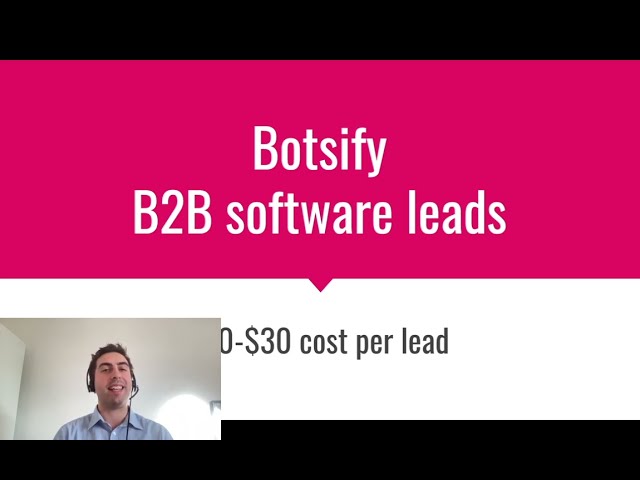
For B2B specifically, if you need to reach particular decision makers in certain industries, LinkedIn Ads is usually your best option because of its narrow B2B targeting options. We've seen really good results for B2B decision makers on LinkedIn, often with CPLs around $22 for software clients. However, if you work with small businesses, Facebook/Instagram ads can also be effective if you use their more limited B2B targeting options like "small business owners" or "business page admins."
When it comes to Meta (Facebook/Instagram) ads, I often see people testing audiences that just don't align with their actual target audience or their conversion goals. You want to prioritise audiences based on how 'warm' they are – the further along in the funnel an audience (or a lookalike of one) is, the better it usually performs.
For new accounts, you'll want to start by testing detailed targeting, interests, and behaviours. This helps you gather enough pixel data. Then, as soon as you have at least 100 people in a custom audience, you can start looking into retargeting and lookalikes. But honestly, you usually need a lot more than 100 for them to work well. If you're on a small budget, combining multiple retargeting audiences into one ad set in the beginning can be an effective approach.
When picking detailed targeting, make sure you choose interests that are specific to your target audience. I usually group them into themes of related interests. Really think about what your target audience likes, what pages they follow, what interests they might list on their profile. The trick is to ensure these interests actually contain a significant number of people who fit your buyer persona. If an interest is too broad, you'll end up reaching more people outside your target audience than within it. For example, if you're targeting eCommerce store owners, simply targeting "Amazon" isn't great, as it includes loads of consumers. Instead, go for things like "Shopify," "WooCommerce," "retail page owners," or pages of Amazon agencies – things more likely to be liked by your actual target.
Once you have enough data, move to retargeting and lookalike audiences. Don't skip these! Refer to the funnel below and test them in order of priority, starting with events closest to your conversion objective. If you want sales, make lookalikes of purchasers, then checkouts, then adds to cart, and so on.
Meta Ads Audience Prioritisation Flow
You really need to test, test, and test again. Use an account structure similar to what I’ve outlined: different long-term campaigns for each stage of the funnel, then split test audiences inside them. Turn off audiences that don't perform well after a few days. How long you wait depends on how much a conversion is worth to you and your average cost per conversion. If an audience has spent, say, 3x your average cost per conversion and isn’t delivering, it’s likely not going to beat your other audiences.
You probably should fix your funnel and offers first...
Now, this is a big one. Even if your ads are perfectly targeted and your offer is brilliant, a poor website or a high-friction funnel will absolutely kill your campaign performance. I've often seen clients with great engagement on the ad side—lots of clicks and interest—but conversions are just non-existent. There's always a drop-off.
The truth is, I could be the best media buyer in the world, but if your landing pages are confusing, the copy is weak, or there's a disconnect between the ad message and the page, the campaigns will fail. Clients often don't have the internal resources or the Conversion Rate Optimisation (CRO) expertise to fix this, and it ends up wasting all their ad spend. This is why a holistic, full-funnel approach is so important.
Let's talk about the "Request a Demo" button. Honestly, it's perhaps the most arrogant Call to Action ever conceived. It presumes your prospect, who's usually a busy C-level decision maker, has nothing better to do than book a meeting to be sold to. It's high-friction, low-value, and immediately positions you as a commoditised vendor. Your offer's only job is to deliver a moment of undeniable value—an "aha!" moment that makes the prospect sell themselves on your solution.
For SaaS founders, this is your unfair advantage. The gold standard is a free trial (no card details needed) or a freemium plan. Let people actually use your product. Let them feel the transformation. When the product itself proves its value, the sale often becomes a mere formality. You're not just generating Marketing Qualified Leads (MQLs) for a sales team to chase; you're creating Product Qualified Leads (PQLs) who are already convinced.
If you're not a SaaS company, you're not off the hook either. You still need to bottle your expertise into a tool, some content, or an asset that provides instant value. For a marketing agency, this could be a free, automated SEO audit showing top keyword opportunities. For a data analytics platform, a free 'Data Health Check' flagging database issues. For a corporate training company, a free 15-minute interactive video module on 'Handling Difficult Conversations' for new managers. The idea is to solve a small, real problem for free to earn the right to solve the whole thing.
Also, I can't stress this enough: your website needs to be up to scratch. I've looked at websites where ads simply weren't working, and it was obvious why. If you're in B2B, advertising is already harder and more costly, with longer sales cycles. If your site then demands a huge effort from businesses (like changing their accounting system) without offering something like a free trial, you're dead in the water. Who's going to pay for a new accounting system without trying it first? Your competitors probably offer months of trials and discounts. Your value proposition needs to be crystal clear and genuinely something your target audience cares about. "Where business meets privacy" might not be as compelling as "reliable accounting with all the features you need."
A completely free trial usually works best to get people in the door. Then you can onboard them, nurture them, and upsell them to a plan later. To get people interested, you need a landing page with genuinely persuasive copy—we often use a copywriter for this with specific experience in SaaS. And make sure it loads quickly and looks trustworthy. If your store doesn't look trustworthy, people just won't feel comfortable ordering. Trust badges, reviews, testimonials, links to other platforms where you sell, social profiles, even your physical address can all help build that trust.
We need to calculate your Customer Lifetime Value (LTV) properly...
The real question for scaling isn't "How low can my Cost Per Lead (CPL) go?" but "How high a CPL can I afford to acquire a truly great customer?" The answer lies in its counterpart: Lifetime Value (LTV). You need to know what each customer is really worth to you over their entire journey with your business.
LTV Calculator
Calculate your customer's lifetime value based on average revenue, gross margin, and churn rate. Adjust sliders to see the impact.
Formula: LTV = (ARPA * Gross Margin) / Monthly Churn Rate.
With an LTV, you can then figure out a healthy LTV:CAC (Customer Acquisition Cost) ratio, usually around 3:1. So if a customer is worth, say, £10,000 in gross margin over their lifetime, you can afford to spend up to £3,333 to acquire them. If your sales team then converts 1 in 10 qualified leads into a customer, you can afford to pay up to £333 per qualified lead. Suddenly, that £250 lead for a CTO on LinkedIn doesn't seem all that expensive, does it? It looks like a bargain. This is the maths that truly unlocks aggressive, intelligent growth and frees you from that constant pressure for cheap, often useless, leads.
You'll need a message they can't ignore...
Once you know your customer's pain and where to find them, your ad copy needs to speak directly to those problems. For a high-touch service business, we often use a Problem-Agitate-Solve framework. You don't just sell "fractional CFO services"; you're selling a good night's sleep. Your ad would say something like, "Are your cash flow projections just a shot in the dark? Are you one bad month away from a payroll crisis while your competitors are confidently raising their next round? Get expert financial strategy for a fraction of a full-time hire. We build dashboards that turn uncertainty into predictable growth."
For a B2B SaaS product, the Before-After-Bridge framework is really effective. You don't sell a "FinOps platform"; you sell the feeling of relief. An ad might say, "Your AWS bill just arrived. It’s 30% higher than last month, and your engineers have no idea why. Another fire to put out. Imagine opening your cloud bill and smiling. You see where every pound is going and waste is automatically eliminated. Our platform is the bridge that gets you there. Start a free trial and find your first £1,000 in savings today."
Even for high-ticket physical products, like lab equipment, you attack the feature-obsession head-on. Don't just state the spec; state its consequence. "Our new mass spectrometer has a 0.001% margin of error. So what? So your lab can publish results with unshakeable confidence, securing more funding and attracting top talent that other labs can only dream of."
Ad Copy Examples
| Scenario | Framework | Example Ad Copy |
|---|---|---|
| Fractional CFO Services | Problem-Agitate-Solve | "Are your cash flow projections just a shot in the dark? Are you one bad month away from a payroll crisis while your competitors are confidently raising their next round? Get expert financial strategy for a fraction of a full-time hire. We build dashboards that turn uncertainty into predictable growth." |
| B2B FinOps SaaS | Before-After-Bridge | "Your AWS bill just arrived. It’s 30% higher than last month, and your engineers have no idea why. Another fire to put out. Imagine opening your cloud bill and smiling. You see where every pound is going and waste is automatically eliminated. Our platform is the bridge that gets you there. Start a free trial and find your first £1,000 in savings today." |
| High-Ticket Lab Equipment | Consequence-Driven | "Our new mass spectrometer has a 0.001% margin of error. So what? So your lab can publish results with unshakeable confidence, securing more funding and attracting top talent that other labs can only dream of." |
You'll need a proper plan for scaling and managing your advertising spend...
It's quite normal for marketing efforts to plateau at some point. Your ad spend will hit a ceiling where you can't scale further without seeing lower ROAS (Return On Ad Spend) or higher CPA (Cost Per Acquisition). This often happens if you're selling a single product and can't easily branch out, as there's a limited number of people likely to convert. As you scale, costs naturally increase because you're reaching further into less interested audiences.
But there are ways around this. Firstly, you can improve your funnel. Any increase in your website's or funnel's conversion rates will help you convert more traffic, which then lowers your effective CPA. Secondly, increasing your customer lifetime value means you can afford to spend more to acquire a customer and still be profitable. We covered how to calculate that earlier, and it's absolutely important.
Next, focus on improving your actual ads. Proper split testing and campaign structure make a massive difference. Targeting is usually the most important factor here – there are always more audiences to test until you find new winners. Also, keep testing creative: try more formats, different messaging, mix things up to increase your chances of finding new winning creatives. For several SaaS clients, we've seen really good results with UGC videos, and there are loads of angles to test there.
Retargeting is another powerful tool. It helps activate more users, reduces abandoned registrations, and converts more of your existing website visitors, all of which works to lower your overall acquisition costs. If your campaigns have enough data, you might also switch to ROAS optimisation. The system then tries to keep your ROAS stable as you increase ad spend.
Expanding to other ad platforms can also help, but usually, this only makes sense once you've scaled to a higher ad spend on your primary platform. There's a limited pool of people most likely to convert within each audience. So if you've maxed out the pool on, say, Meta ads, you could try a new platform and tap into a different audience.
A word of warning here about "awareness" campaigns on platforms like Meta. When you set your campaign objective to "Reach" or "Brand Awareness," you're giving the algorithm a very specific command: "Find me the largest number of people for the lowest possible price." And the algorithm, in its infinite wisdom, does exactly what you ask. It seeks out the users inside your targeting who are least likely to click, least likely to engage, and absolutely, positively least likely to ever pull out a credit card. Why? Because those users aren't in demand, so their attention is cheap. You're actively paying the world's most powerful advertising machine to find you the worst possible audience for your product. The best form of brand awareness for a startup or small business is a competitor's customer switching to your product or service and raving about it online. That only happens through conversion. Awareness is a byproduct of having a great product that solves a real problem, not a prerequisite for making a sale. That is why, to find customers that will actually buy from you, you should switch your campaign to optimise for a conversion objective, like sales, leads, or appointments.
What conversion price should you expect and how to reduce it?
The conversion price isn't as straightforward as you might think. It depends on loads of factors, including your optimisation goal and the country you're targeting. The estimates below are for leads, signups, or subscribers – any conversion objective where people can reach it pretty quickly.
| Objective | Country Type | Low CPC | High CPC | Conversion Rate Range | Estimated CPA Range |
|---|---|---|---|---|---|
| Signups | Developed | £0.50 | £1.50 | 10% - 30% | £1.60 - £15.00 |
| Signups | Developing | £0.10 | £0.50 | 10% - 30% | £0.33 - £5.00 |
| Sales (E-commerce) | Developed | £0.50 | £1.50 | 2% - 5% | £10.00 - £75.00 |
| Sales (E-commerce) | Developing | £0.10 | £0.50 | 2% - 5% | £2.00 - £25.00 |
These are rough estimates, but they give you a ballpark figure. For B2B leads that go through a long lead form with many qualifying questions, you’ll see much lower conversion rates and thus higher costs. E-commerce stores typically see conversion rates of 2-5%, so your cost per purchase will be higher. Much depends on your prices, higher prices can impact conversion rates and drive up costs. (Though for sales, you should really be looking at return on ad spend, not just cost per purchase).
So, what if you're seeing costs at the higher end of these ranges and want to reduce them? This is where our expertise comes in. We'd usually start by testing different targeting within the same locations. This alone can often significantly reduce your costs by finding more receptive segments of your audience. You can narrow down using interests, behaviours, and demographics. Lookalikes and retargeting can also be incredibly effective once you have enough pixel data.
We'd also typically run separate campaigns for different countries or groups of countries, e.g., all developed countries versus all developing countries, or English-speaking versus non-English speaking. We usually start with the country where most of your existing customers are or where your ideal customers are most concentrated. This way, you get better quality signups first. If you want to expand, always test with a small budget first, as quality can vary wildly between countries. It’s better to pay a bit more for higher quality, more engaged subscribers.
If you don't care about quality and want to run a worldwide campaign, then you'll need to install captchas on your landing page or add an email verification step to weed out the bots. Though, honestly, we normally suggest just excluding the top 30 or so lowest-income countries, as there are often loads of bots there. It might be tempting to run a worldwide campaign to reach as many people as possible, but this usually leads to lower quality signups. It's generally better to pay a bit more for signups who are actually likely to engage with your content.
Then, we'd focus on your ads themselves. Professionally crafted ads can make a huge difference and drive down your cost per conversion. If your CPCs are in the higher range, better targeting and creatives will get you closer to the lower figures. And finally, there's nearly always more that can be done on your landing page to convert more visitors. Persuasive sales copy by a good copywriter and a professional design, free of distractions, can dramatically improve your conversion rates. Even a few percentage points increase here can have a huge impact on your cost per conversion.
It's not just about setting up an ad and hoping for the best. It's about really understanding your audience, optimising your targeting, creating compelling ads, and fine-tuning your landing page. That's where a professional consultancy like ours can make a huge difference. With years of experience and a deep understanding of the advertising landscape, we can help you identify the best strategies to drive down your costs per conversion and scale effectively. We can provide insights you might not have thought of and take over the implementation of the entire optimisation process for you, ensuring that every pound you spend is truly working to grow your audience and revenue.
This is the main advice I have for you:
| Area | Recommendation | Key Action Steps |
|---|---|---|
| Customer & Offer | Refine ICP and Value Proposition | Identify customer's "nightmare" problems. Develop a high-value offer with clear demand. |
| Platform Selection | Align with Audience Intent | Google Search for high intent. LinkedIn for B2B decision makers. Meta for broader reach with specific targeting. |
| Audience Targeting | Prioritise Funnel Stages | Start with detailed interests (ToFu). Build custom audiences and lookalikes (MoFu/BoFu) from high-intent actions/customers. Continually test and iterate. |
| Conversion Funnel | Optimise Website & Offer Conversion | Replace "Request a Demo" with value-driven offers (free trial/audit). Ensure clear CTAs, persuasive copy, and a trustworthy site. Improve load speed. |
| Ad Creative & Copy | Speak to Pain Points & Consequences | Use Problem-Agitate-Solve or Before-After-Bridge frameworks. Highlight solutions and positive outcomes, not just features. |
| Scaling & Budget | Focus on Profitability & LTV | Calculate LTV to understand affordable CPA. Optimise for conversions, not just reach. Split test creative/targeting. Consider retargeting. |
| Cost Reduction | Strategic Targeting & Funnel Improvements | Test new targeting. Run separate country campaigns for quality. Improve ad quality and landing page conversion rates. |
Breaking through a growth plateau can feel like a big challenge when you're doing it alone, but with a structured approach focusing on these core areas, you can definitely reignite your growth. It requires a bit of an analytical eye and a willingness to test and adjust, but the results are usually well worth the effort.
If you'd like to chat through any of this in more detail, or if you'd like us to take a look at your current marketing efforts and account, we offer a free initial consultation. It's a good chance for us to review your strategy and account together, which clients often find super helpful. It gives you a taste of the expertise you'd see going into a project if you decided to work with us, and we can map out a clearer path for your brand to reach a wider audience.
Regards,
Team @ Lukas Holschuh
{{LEAD_SIGNUP_FORM}} {{LEAD_MAGNET_MAIN_CTA}}
Lukas Holschuh
Founder, Growth & Advertising Consultant
Great campaigns fail without expertise. Lukas and his team provide the missing strategy, optimizing your entire advertising funnel—from ad creatives and copy to landing page design.
Backed by a proven track record across SaaS, eLearning, and eCommerce, they don't just run ads; they engineer systems that convert. A data-driven partnership focused on tangible revenue growth.