TLDR;
- Your Ideal Customer Profile (ICP) is likely ineffective. Stop targeting broad demographics and instead define your customer by their specific, urgent, and expensive business nightmare.
- You are probably measuring the wrong metric. Stop obsessing over a low Cost Per Lead (CPL) and calculate your true Customer Lifetime Value (LTV) to understand how much you can actually afford to spend to acquire a profitable customer.
- The most important piece of advice is: Your offer is the problem. The request a demo button is where B2B ad budgets go to waste. You must deliver a moment of undeniable value for free before you earn the right to ask for a meeting.
- Interactive tool and breakdown highlighted in this guide: Use the B2B SaaS LTV & Allowable CAC Calculator included below to finally understand the real unit economics of your business and set a paid acquisition budget with confidence.
So, you’ve battled your way to your first 10 customers. Fair play. That’s the hard part, or so people say. You’ve relied on your network, referrals, and probably a fair bit of grit. But now you’re trying to build a machine to get to 100 customers, and the paid advertising levers you’re pulling on Google and LinkedIn are just burning cash. The customer acquisition cost is terrifying, and nothing seems to be sticking.
This is a completely normal, and frankly predictable, stage. The strategies that get you from 0 to 10 customers are almost the polar opposite of what is needed to get from 10 to 100 and beyond. Your first customers likely came from warm relationships; they already trusted you. Cold traffic from an ad doesn't trust you, doesn't know you, and owes you nothing. You're stuck because you're trying to use a system built for cold, scalable acquisition without first fundamentally rewiring your approach. The problem isn't that LinkedIn is expensive or that Google Ads do not work. The problem is almost certainly your targeting, your calculations, your message, and your offer.
Let's dismantle the whole thing and rebuild it properly. Forget what you think you know about paid ads for a minute. We're going to build a system based on your customer's reality, not your product's feature list.
Why is my Ideal Customer Profile a complete waste of money?
Before you spend another pound on ads, I want you to find the document that defines your Ideal Customer Profile. I’ll wait. Got it? Good. Now, bin it. I’m not joking. If it reads something like fintech startups in London, 50-200 employees, targeting CTOs and founders, it is actively costing you money. That is a demographic, not a customer. It tells you nothing of value and leads directly to the kind of generic, wallpaper-like ads that get ignored by everyone.
Your job isn't to find CTOs. Your job is to find CTOs who are having a very specific, expensive, and career-threatening nightmare. Your ICP isn't a person; it's a problem state. To stop burning cash, you need to become an obsessive expert in their pain. For a business neobank like yours, the nightmare isn't needing a better business bank account. Nobody wakes up in a cold sweat thinking that. The nightmare is real and tangible.
It's the founder of a fast-growing agency who just had a £50,000 payment from a US client frozen for five days by their high-street bank's compliance checks, nearly causing them to miss payroll. It's the head of finance who spends the first three days of every month manually chasing and reconciling 200 different software subscription receipts from 15 different employee credit cards. It’s the e-commerce owner whose main bank just blocked their account after a spike in sales from a new market, mistaking it for fraud and killing their momentum.
This is your real ICP. It's a state of frustration, risk, and expensive inefficiency. Your first 10 organic customers are a rich source of this information. You need to get on the phone with them and ask questions that go beyond your product:
- Before you signed up with us, what was the single most frustrating task related to your business banking?
- Walk me through the exact moment you decided you had to find a new solution. What was the final straw?
- What was the specific, quantifiable cost of that problem in terms of time, lost revenue, or risk?
The answers to these questions are the blueprint for your entire advertising strategy. Once you've isolated that nightmare, you can stop targeting generic demographics and start targeting the context in which that nightmare occurs. Where do these people go to complain or find solutions?
Forget just targeting a job title like founder. Think about the ecosystem. Do they listen to niche podcasts like Acquired or The All-In Podcast? Do they subscribe to industry newsletters like Stratechery or Fintech Brain Food? Are they members of the SaaS Growth Hacks Facebook group or a specific Slack community for scale-up CFOs? What other SaaS tools are they definitely paying for, such as HubSpot, Xero, Salesforce, or Pipedrive? These are all targeting options on platforms like LinkedIn and Meta. This intelligence transforms your targeting from a wild guess into a calculated strike.
Doing this work is not optional. If you haven't defined your customer by their acute pain, you have no business running paid ads. You're just shouting into a crowded room and hoping the right person overhears you.
The Nightmare ICP Framework: From Demographics to Pain
The Old Way: Demographic ICP
Who: Founder / CFO Industry: Tech / SaaS Size: 50-200 Employees Leads to: Generic ads about smarter banking that get ignored.The New Way: Nightmare ICP
Problem: Finance team wastes 20 hours per month reconciling SaaS subscriptions. Agitation: Cannot get a real-time view of cash flow, making strategic decisions a gamble. Nightmare: A key supplier payment gets blocked, threatening the entire supply chain. Leads to: Highly specific ads that feel like you are reading their mind.This shift from demographics to pain doesn't just inform your targeting; it's the foundation for everything that follows. Without it, your message will be weak, your offer will be irrelevant, and your budget will continue to vaporise.
How much can I actually afford to spend to get a customer?
You mentioned you're struggling to find a sustainable customer acquisition cost. This tells me you're probably focused on the wrong metric. Most early-stage founders are obsessed with getting the Cost Per Lead as low as possible. They see a £250 CPL from a LinkedIn campaign and panic, thinking it's unsustainable. Meanwhile, they celebrate a £20 CPL from a broad Google search campaign, even if those leads never answer a follow-up email.
The real question isn't how low can my CPL go, but how high a CPL can I afford to acquire a truly great customer. The answer to that is rooted in your unit economics, specifically your Customer Lifetime Value. Until you know what a customer is worth, you have no way of knowing what you can afford to spend to get one. This isn't just a nice-to-have metric; it's the central nervous system of a scalable paid acquisition strategy.
Let's do the math. It's simpler than you think. You need three numbers:
- Average Revenue Per Account: What does a typical customer pay you each month? Let's say it's £200.
- Gross Margin percentage: After your cost of servicing that account, such as transaction fees and core banking provider costs, what percentage is left? Let's assume it's a healthy 75% for a fintech product.
- Monthly Churn Rate: What percentage of your customers leave each month? As an early-stage company, this might be an estimate, but let's say it's 3%.
Now, the calculation is straightforward:
LTV = (ARPA * Gross Margin percentage) / Monthly Churn Rate
Using our example numbers:
LTV = (£200 * 0.75) / 0.03
LTV = £150 / 0.03 = £5,000
In this scenario, every single customer you acquire is worth £5,000 in gross margin to your business over their lifetime. This number changes everything. A healthy LTV to CAC ratio for a venture-backed SaaS or fintech business is at least 3:1. This means for every £3 of lifetime value, you can spend £1 to acquire the customer.
So, with a £5,000 LTV, your target Allowable CAC is £5,000 / 3 = £1,667.
Let that sink in. You can afford to spend up to £1,667 to acquire a single new customer and still have a highly profitable, scalable business model. Now let's work backwards. If your sales process converts 1 in 10 qualified leads, representing a 10% lead-to-customer rate, you can afford to pay up to £166.70 per qualified lead. Suddenly that £250 CPL from LinkedIn for a highly-targeted decision-maker doesn't seem so crazy, does it? If those leads convert at a higher rate, say 20%, you could afford to pay £333 per lead. It's a bargain.
This is the math that unlocks aggressive, intelligent growth. It frees you from the tyranny of chasing cheap, low-quality leads and allows you to focus on acquiring high-value customers, even if they cost more upfront. I've built a simple calculator below so you can plug in your own numbers and see for yourself.
B2B SaaS LTV & Allowable CAC Calculator
Enter your key business metrics to determine your Customer Lifetime Value and what you can truly afford to pay for a new customer.
Stop guessing. Know your numbers, and you can start making investment decisions about your marketing, rather than just spending money and hoping for the best. For a deeper look at this, I've written before about how getting your PPC ROI sorted in a competitive market like London starts with this exact math.
What message will my target audience actually listen to?
Now that you know whose nightmare you're solving and how much you can afford to pay to solve it, we need to craft a message they can't ignore. Most B2B fintech ads are a sea of sameness. They talk about features like multi-currency accounts, virtual cards, or automated invoicing. Your prospects don't care about your features. They care about their problems. Your ad's only job is to show them you understand their problem so deeply that you must have the solution.
The most effective framework for this in B2B SaaS is the Before-After-Bridge. You paint a vivid picture of their current hell in the before state, show them a glimpse of the heaven you can provide in the after state, and position your product as the bridge to get them there.
Let's apply it to one of the nightmares we identified earlier: the finance team drowning in manual receipt reconciliation.
A generic, feature-led ad would say: Get our new corporate cards with automated expense reporting. It's boring, uninspired, and will be scrolled past without a second thought.
A Before-After-Bridge ad would say:
Headline: Stop Chasing Receipts. Start Scaling.
Body (The Before): It's the 3rd of the month. Your finance team is already 10 hours deep in a spreadsheet from hell, chasing down 15 different people for receipts for SaaS tools you didn't even know you were paying for. You're flying blind on your monthly burn.
(The After): Imagine closing the books in minutes. Every single subscription is paid from a unique virtual card, automatically categorized, with the receipt attached. You have a real-time dashboard of your spending, so there are no more end-of-month surprises.
(The Bridge): Our platform is the bridge. Intelligent corporate cards and spend management built for businesses that value time over paperwork. See how it works.
See the difference? The first ad sells a feature. The second sells relief. It sells control. It sells the feeling of finally being on top of the chaos. It connects on an emotional level because it validates the exact frustration the prospect is feeling right now. This is how you stop traffic. You don't sell a FinOps platform; you sell the feeling of opening your cloud bill and smiling. You don't sell fractional CFO services; you sell a founder a good night's sleep.
You need to create versions of this for each of your core Nightmare ICPs. The agency founder with frozen international payments needs a different Before-After-Bridge compared to the e-commerce owner with account-blocking issues. This is why the ICP work upfront is so critical. It gives you the raw material for ads that resonate deeply, making your higher CPL an efficient investment because the right people are clicking for the right reasons.
Why is my request a demo button killing my business?
We've reached the final, and most common, point of failure in B2B advertising. You can have the most precise targeting, the most compelling message, and perfectly calculated unit economics, but if you send that hard-won traffic to a landing page with a request a demo button, you might as well just set your money on fire. It is, without a doubt, the most arrogant and ineffective Call to Action for cold traffic.
Think about the psychology. You've just interrupted a busy, high-level decision-maker with an ad. They're intrigued, maybe even impressed that you seem to understand their problem. You've earned 30 seconds of their attention. And what do you ask for in return? You ask for a 30-minute slot in their calendar next week so you can have a salesperson pitch to them. It's an immediate, high-friction request that offers zero instant value. It presumes their time is less valuable than yours and instantly positions you as just another commoditised vendor begging for a meeting. The drop-off rate is severe.
Your offer's only job is to deliver a moment of undeniable value—an aha moment that makes the prospect sell themselves on your solution. You must solve a small, real problem for them, for free, right now.
For SaaS and fintech founders, your product itself is your most powerful sales tool. The gold standard offer is a free trial or a freemium plan without requiring credit card details. Let them get their hands on the product. Let them create their first virtual card. Let them connect their Xero account and see their transactions flow in automatically. When the product itself proves its value, the sale becomes a formality. You're no longer generating Marketing Qualified Leads for a sales team to chase; you're creating Product Qualified Leads who are already convinced.
If a full-blown free trial isn't feasible due to compliance or complexity, you are not exempt. You must bottle your expertise into a tool, a piece of content, or an asset that provides an instant win. For a business neobank, this could be:
- An Interactive Calculator: Calculate the Hidden FX and Wire Fees Your High-Street Bank is Charging You. The user inputs their last 3 international transfers, and you show them they could have saved £800 with you. That's an aha moment.
- A Free Audit Tool: The 5-Point SaaS Spend Health Check. A simple form where they list their top 10 software subscriptions. Your tool then flags common areas of waste, such as redundant tools or poor per-seat pricing, and shows a potential saving. That's an aha moment.
- A Sandbox Environment: If you have an API for issuing cards or processing payments, offer a free, no-strings-attached sandbox account. Let a developer on their team play with it for 15 minutes. If it's good, they will become your internal champion.
We do this ourselves. Our primary offer for cold traffic isn't hiring us. It's a completely free 20-minute strategy session where we audit a prospect's failing ad campaigns and give them actionable advice. We solve a small problem for free to earn the right to solve the big one.
The Funnel That's Bleeding Your Budget
Funnel 1: The Request a Demo Trap (High Friction)
Funnel 2: The Value-First Model (Low Friction)
Delete the request a demo button from your main landing page. Replace it with a high-value, low-friction offer. You'll generate more leads, they'll be better qualified, and your sales conversations will start with that tool you have was brilliant, can you tell me more instead of wondering what it is you guys do.
Which ad platform should I use, and how do I avoid paying for non-customers?
The question of LinkedIn versus Google is the wrong one to ask first. The platform is a distribution channel, nothing more. Its effectiveness is entirely dependent on the strategy you've built: your ICP, your LTV math, your message, and your offer. Now that we have those sorted, choosing the right platform and using it correctly becomes much simpler.
Google Ads is for capturing existing demand. You use it to find people who are already problem-aware and actively searching for a solution. For a neobank, you must avoid broad, informational keywords like what is a business bank account because that belongs on your blog, not your ad budget. You need to target keywords that signal commercial intent from your Nightmare ICP. Think about what the finance director who is sick of chasing receipts would type into Google. It's not expense management. It's probably something far more specific and urgent:
- best corporate card for saas subscriptions
- xero integration bank feed issues
- how to automate employee expense reports
- alternative to competitor bank name
These are money keywords. The volume is lower, but the intent is sky-high. By targeting these, you ensure your ads are only shown to people who are already pre-qualified by the very nature of their search. This is how you win on Google.
LinkedIn Ads is for creating new demand. You use it to find people who fit your Nightmare ICP but may not be actively searching for a solution yet. You're interrupting them to make them problem-aware. This is where your deep ICP work pays off. You don't just target job titles like CFO in the software industry. You use a layered approach to zero in on the right people.
LinkedIn Ads Targeting Layering Framework
Layer 1: Company Parameters (The Boundary)
Start with firmographics. Target Company Size, such as 51 to 200 employees, AND Target Industry, such as software development, financial services, or marketing and advertising.
Layer 2: Role Authority (The Decision-Maker)
Narrow to the people with the pain and the power. Job Functions, such as finance or operations, AND Seniority, such as director, vice president, CXO, or owner.
Layer 3: Intent & Skills (The Precision Strike)
Optionally, add a final layer of precision. Member Groups, such as members of fintech professional groups, OR Member Skills, such as financial modeling or SaaS metrics.
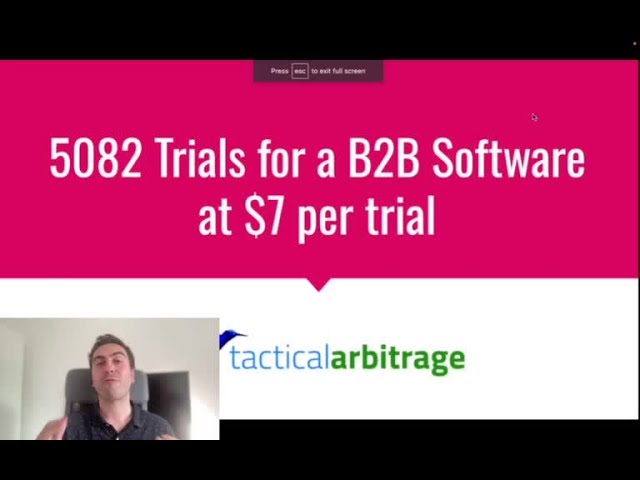
Your ad creative using the Before-After-Bridge does the rest of the qualification. I've seen this work time and time again. We ran a campaign for a B2B software client and by using this exact layering combined with a strong message, we were able to get highly qualified leads from decision-makers for just $22 per lead.
And what about awareness campaigns? Here's a hard truth. When you set your campaign objective on platforms like Meta or LinkedIn to brand awareness or reach, you are explicitly telling the algorithm to find you the cheapest possible eyeballs within that audience. The algorithm dutifully finds you the people who are least likely to click, least likely to engage, and absolutely least likely to ever buy anything. Their attention is cheap for a reason. You are actively paying to reach your worst possible prospects. For a startup, awareness is a byproduct of performance, not a prerequisite for it. Always optimise your campaigns for a conversion event further down the funnel, such as a lead or a sign-up.
How should I structure my campaigns to test and scale effectively?
Right, let's bring this all together into a structure that you can actually build. Forget complex multi-campaign setups for now. You need a simple, logical system to test your core assumptions and then scale what works. The classic top, middle, and bottom of funnel model is perfect for this, but let's define it specifically for your B2B fintech business.
Top of Funnel: Acquiring & Educating Cold Traffic
- Objective: Generate leads via your high-value offer, such as calculators or audit tools. This is about lead quantity to feed the machine.
- Platforms: LinkedIn and Meta Ads.
- Targeting: Your layered Nightmare ICPs. Create a separate ad set for each distinct nightmare or persona you're targeting. For example, one ad set for the international payments pain point targeting founders of agencies, and another for the SaaS spend chaos pain point targeting heads of finance at tech companies.
- Ad Creative: Your Before-After-Bridge ads. Test 2 to 3 different angles for each ad set. The goal here is to find which message resonates most powerfully with which audience.
- Budget: Allocate about 60 to 70 percent of your total ad spend here. This is your engine for growth.
Middle of Funnel: Nurturing & Building Trust
- Objective: Re-engage people who claimed your top of funnel offer but haven't taken the next step, such as booking a demo. You need to build trust and demonstrate your expertise.
- Platforms: LinkedIn, Meta, and the Google Display Network.
- Targeting: This is purely retargeting. Create custom audiences of people who visited your top of funnel landing page or submitted the lead form in the last 30 to 90 days, but exclude anyone who has already booked a demo or signed up.
- Ad Creative: This is not the time for another hard sell. Show them customer testimonials, a short video case study, or an article that explains a key concept related to their pain point. You want them to think that you really understand their situation.
- Budget: Allocate about 20 percent of your budget here. It's a highly efficient way to move prospects down the funnel.
Bottom of Funnel: Driving the Conversion
- Objective: Get the demo booked or the trial started. This is for your highest-intent prospects.
- Platforms: LinkedIn, Meta, and Google Search for brand terms.
- Targeting: A tight retargeting audience of people who have visited your pricing page, your main product pages, or the book a demo page in the last 14 days. These people are actively considering you. You also want to run a small Google Search campaign on your own brand name to catch anyone looking for you directly.
- Ad Creative: Now you can be direct. Ask them to book a 15-minute demo to see how your product solves their nightmare, or let them know their free trial is waiting. Make it simple and clear.
- Budget: The remaining 10 to 20 percent of your budget. This should be your highest-performing campaign in terms of conversion rate.
This structure gives you a clear system. Top of funnel finds new prospects, middle of funnel warms them up, and bottom of funnel converts them. You can clearly see where drop-offs are happening and optimise each stage independently. If your top of funnel CPL is good but no one is booking demos, you know your nurture sequence needs work. If your click-through rate at the top of the funnel is poor, your core message is wrong. It turns a black box of ad spend into a diagnostic tool.
I've detailed my main recommendations for you below in a more structured format to give you a clear path forward.
B2B Fintech: Paid Ads Action Blueprint
This is a prioritised roadmap to fix your paid acquisition funnel and build a scalable growth engine.
| Phase | Primary Failure Point | Diagnostic Action Item | Expected Impact |
|---|---|---|---|
| 1. Strategy & Economics | Demographic ICP and no LTV data leads to chasing cheap, worthless leads. | Redefine ICP around specific nightmares. Calculate LTV to establish a true Allowable CAC. | Unlocks Confident Budgeting |
| 2. Offer & Landing Page | High-friction request a demo call to action kills conversion rates on cold traffic. | Replace demo call to action with a value-first offer, such as interactive calculators or free audit tools. | +500% Lead Volume |
| 3. Messaging & Creative | Feature-led copy that fails to connect with the customer's core pain. | Rewrite all ad copy using the Before-After-Bridge framework for each Nightmare ICP. | +100% Ad Relevance & CTR |
| 4. Campaign Execution | Unstructured campaigns with awareness objectives burning cash. | Implement a top, middle, and bottom of funnel structure with conversion-focused objectives. | Systematic & Scalable Results |
Scaling from 10 to 100 customers isn't about finding a secret trick on Google Ads or a magic audience on LinkedIn. It's a fundamental shift in mindset from being a product-pusher to being a problem-solver at scale. It requires you to build a system based on deep customer empathy, solid financial modeling, and disciplined execution. It’s hard work, but it’s a repeatable process.
If navigating this feels overwhelming, that's what experts are for. This is precisely the kind of strategic overhaul we do for B2B SaaS and fintech clients. We can help you diagnose the core issues faster and implement the right systems to build a predictable engine for customer acquisition. If you'd like to have a chat about your specific situation, feel free to book in a free, no-obligation strategy session.
Cite this Article
If referencing this research, data, or strategy in your publication, please use the attribution below.

Lukas Holschuh
Founder, Growth & Advertising Consultant
Great campaigns fail without expertise. Lukas and his team provide the missing strategy, optimizing your entire advertising funnel—from ad creatives and copy to landing page design.
Backed by a proven track record across SaaS, eLearning, and eCommerce, they don't just run ads; they engineer systems that convert. A data-driven partnership focused on tangible revenue growth.