TLDR;
- Most B2B SaaS companies burn cash on agencies because they track the wrong metrics. Forget clicks and impressions; the only numbers that matter are your Customer Lifetime Value (LTV) and your allowable Customer Acquisition Cost (CAC).
- A good agency will grill you on your unit economics, sales cycle, and ideal customer's nightmare problem before they even mention a budget. A bad one will just show you a slide deck of their process.
- The most important piece of advice is: fix your offer before you fix your ads. The 'Request a Demo' button is where B2B ad budgets go to die. You need a low-friction, high-value offer like a free trial, a freemium plan, or an interactive tool to actually convert cold traffic.
- This guide includes an interactive LTV & Allowable CAC calculator to arm you with the right numbers before you talk to a single agency.
You’ve done the hard part. You’ve built a customer data platform, fought for your first 1,000 users, and proved there's a real need for what you do. Now the board is talking about Series B, and organic growth isn't going to cut it. You need a predictable engine for acquiring customers, and that means paid ads. The problem is, you’re about to walk into a tricky environment.
Every agency pitch starts to sound the same. They all promise ROI, data-driven strategies, and full-funnel optimisation. But you’ve got that nagging fear in the back of your mind, and you're right to have it. Most agencies are clueless when it comes to the long, complex sales cycles of B2B SaaS. They’re used to selling £50 t-shirts, not six-figure annual contracts. They’ll take your budget, point it at a generic 'Request a Demo' page, and then send you a report full of impressive-looking superficial metrics while your cash burns.
I've seen it happen more times than I can count. Good businesses with solid products, crippled by an agency that doesn't understand their model. So, let’s cut through the rubbish. Finding the right agency isn't about asking for their case studies or references – that’s just table stakes. It’s about arming yourself with the right framework to vet them, so you can spot the experts from the charlatans in the first ten minutes of the conversation.
Why do most B2B SaaS companies burn cash with the wrong agency?
The story is always the same. A founder comes to me after spending £30k with another agency and has nothing to show for it but a high click-through rate. The agency blames the long sales cycle or brand awareness phase, but the real problem is much simpler: they were measuring the wrong things from the start.
When you're selling a B2B SaaS product, especially one with a considered purchase, the click on the ad is probably the least important part of the journey. Yet it's what most agencies obsess over. They live inside Google Ads Manager or Meta's platform, tweaking bids and ad copy to get a cheaper Cost Per Click (CPC) or a higher Click-Through Rate (CTR). They see their job as driving traffic, and once the user lands on your website, their work is done.
This is a severe misunderstanding of how B2B growth works. Early in my career, I'd run campaigns for great software products and see fantastic engagement—likes, shares, thousands of clicks. But the revenue dial wasn't moving. The trail went cold. I realised I could be the best media buyer in the world, but if the landing page was confusing, the offer was weak, or the sales team had no idea how to handle the leads, the entire campaign was destined to fail. The agency wasn't just failing to deliver ROI; they were failing to even understand what ROI meant in a B2B context.
They’re not connecting marketing activity to sales outcomes. They see a lead from a LinkedIn Lead Gen Form as a victory. You, however, see it for what it is: an email address from someone who might have been mildly interested for 30 seconds. Your sales team then wastes days chasing these leads who have no budget, no authority, and no real intent, while the agency sends you a glowing report about your low Cost Per Lead (CPL). It's a cycle of delusion that only ends when the budget runs out.
What numbers should I actually be looking at before I even talk to an agency?
Before you get on a call with a single agency, you need to know the most important number in your business: how much you can afford to spend to acquire a customer. Not a lead, not a click, a paying customer. This isn't a marketing metric; it's a core business metric. If you don't know this, you're flying blind, and you're at the mercy of whatever an agency tells you a good CPL is.
The real question isn't "How low can my CPL go?" but "How high a CPL can I afford to acquire a great customer?" The answer is found by calculating your Customer Lifetime Value (LTV). Most SaaS founders have a vague idea of this, but you need to know it cold.
It's simple maths. You need three figures:
- Average Revenue Per Account (ARPA): How much does a typical customer pay you each month?
- Gross Margin %: After your cost of goods sold (server costs, support, etc.), what percentage of that revenue is profit?
- Monthly Churn Rate: What percentage of your customers cancel their subscription each month?
The formula is: LTV = (ARPA * Gross Margin %) / Monthly Churn Rate
Let’s run an example. Say your average customer pays £500/month (ARPA), your gross margin is 80%, and you lose 4% of your customers each month. Your LTV would be (£500 * 0.80) / 0.04, which equals £10,000. Each customer you sign is worth £10,000 in gross margin to your business over their lifetime.
Now we're talking. A healthy business model aims for at least a 3:1 LTV to Customer Acquisition Cost (CAC) ratio. This means for a customer worth £10,000, you can comfortably spend up to £3,333 to acquire them. This is your allowable CAC. It's your North Star.
And we can work backwards from there. If your sales team converts, say, 1 in 10 qualified leads into a paying customer, then your allowable cost per qualified lead is £333. Suddenly, that £250 lead from a LinkedIn campaign targeting CTOs doesn't look so expensive anymore, does it? It looks like a bargain. This is the maths that unlocks aggressive, intelligent scaling. It frees you from the tyranny of cheap, useless leads.
Below is a simple calculator so you can work this out for your own business. Play around with the numbers. See how improving your churn rate or increasing your ARPA dramatically impacts how much you can afford to spend on growth.
LTV & Allowable CAC Calculator
Enter your core business metrics to find out how much you can really afford to spend to acquire a customer and a lead.
Once you have this number, the entire conversation with an agency changes. You're no longer a passenger. You're in the driver's seat. You can walk into a pitch and say, "Our allowable CPL is £333. How are you going to build a system that gets us qualified leads at or below that number?" Most agencies will be completely thrown. The good ones will lean in, their eyes will light up, and the real strategic conversation will begin.
How can I spot an agency that understands B2B SaaS from one that just runs eCommerce ads?
Now that you’re armed with your numbers, you can start filtering. The difference between a consumer-focused agency and a true B2B growth partner becomes obvious very quickly. It’s all in the questions they ask.
An eCommerce agency will ask about your target audience in terms of demographics: age, gender, location, and basic interests like tech enthusiasts. They'll talk about running A/B tests on ad creatives and optimising for Add to Carts. Their world revolves around short conversion windows and impulse buys. This is completely useless for you.
A B2B SaaS expert, on the other hand, will go much deeper. They won't just ask who your customer is; they'll ask what their job-threatening nightmare is. They'll ask questions like:
- "What's the specific, expensive problem that your software solves? Forget the features, what's the pain?"
- "Who is the person feeling this pain most acutely? What's their job title? What keeps them up at night?"
- "Who else is involved in the buying decision? The CTO? The CFO? The end-user? How long does it take to get a decision?"
- "What does your sales process look like after a lead comes in? How do you qualify them?"
- "What's your customer LTV and current CAC? What's your allowable CPL?"
See the difference? They are trying to understand your entire business model, not just your ad account. They know that in B2B, you're not targeting a demographic; you're targeting a problem state within a specific professional context. They understand that a lead is worthless until it's been qualified and entered a sales pipeline. During our own onboarding, these are the exact questions we dig into. Without these answers, you can't possibly build an effective strategy.
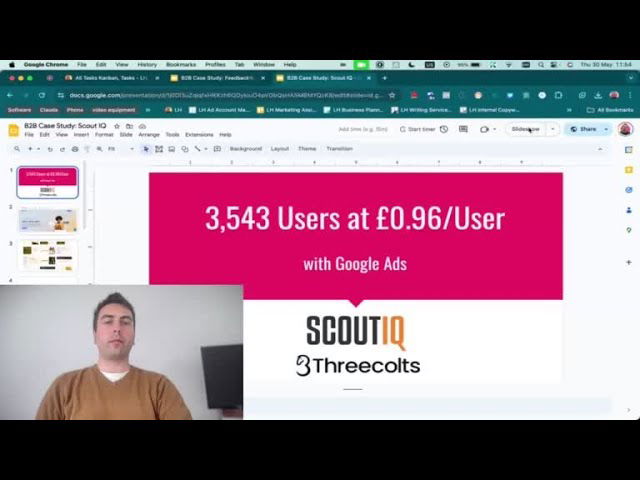
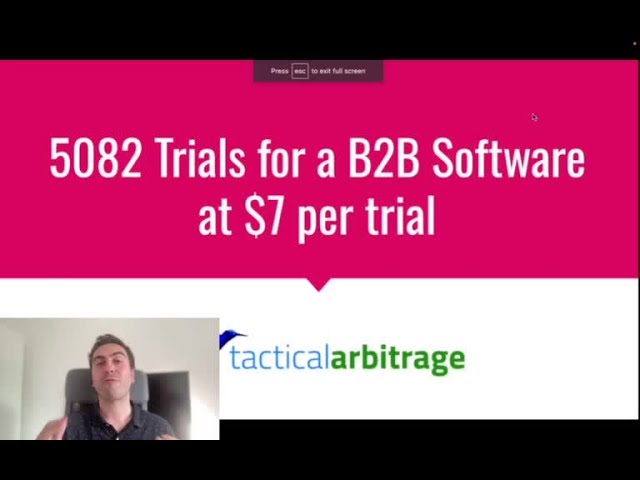
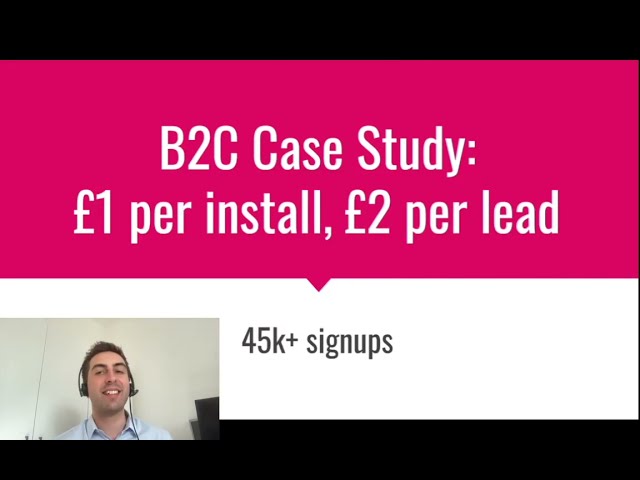
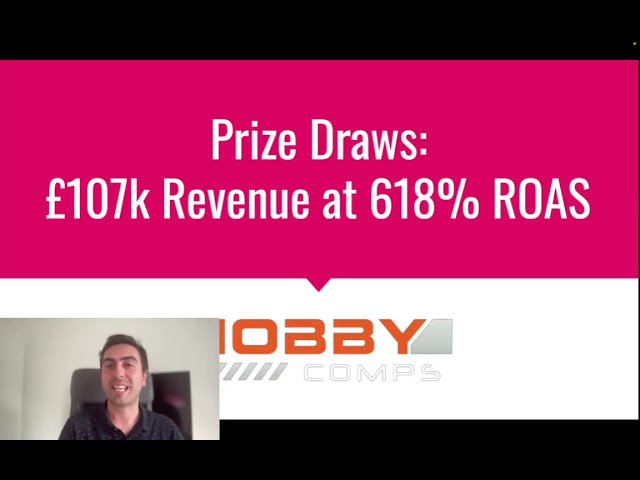
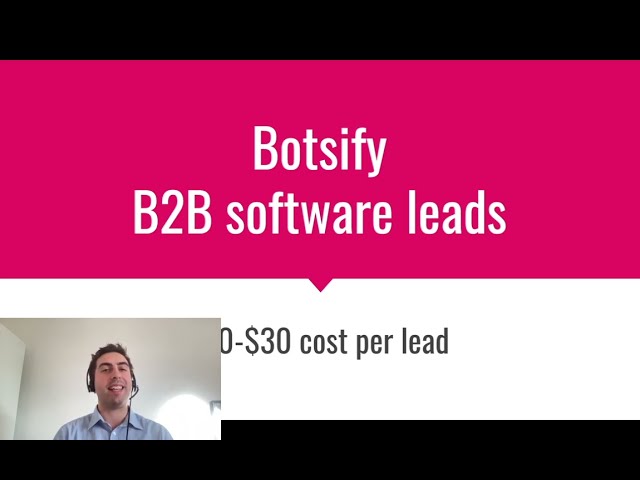
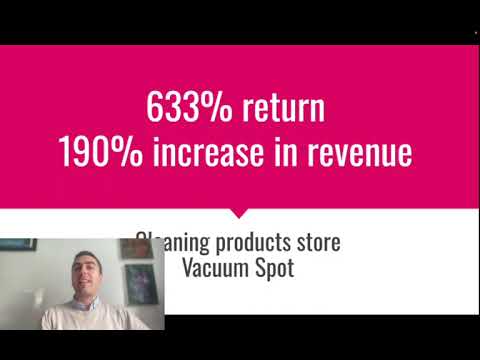
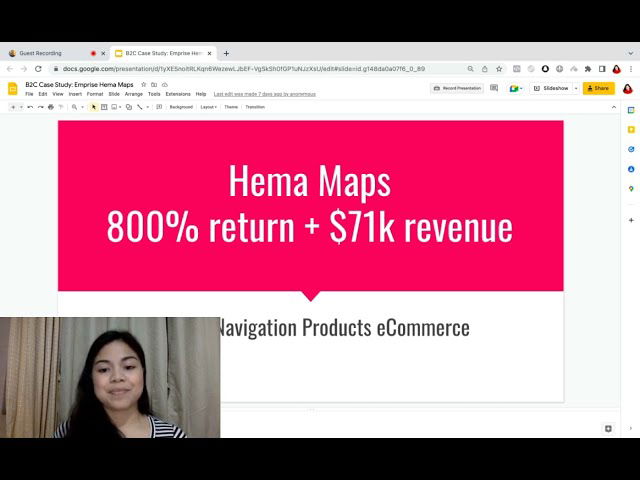
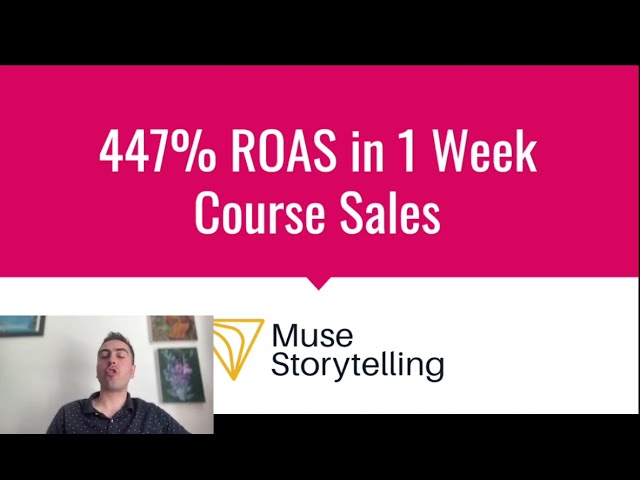
Next, look at their case studies. And I mean really look at them. Don't just be impressed by big brand logos. Ask yourself: are these for companies like mine? Are they for B2B SaaS, or are they for consumer apps and Shopify stores? When we show our case studies, we're specific. We don't just say we increased leads. We say we achieved a "$22 CPL for B2B decision makers" on LinkedIn for one software client, or we "reduced a £100 CPA to £7" for a medical job matching SaaS. These are specific, relevant results that demonstrate an understanding of the B2B landscape. If an agency's case studies are all about 10x ROAS for a fashion brand, they are probably not the right fit, no matter how slick their presentation is.
What should a good agency's pitch or free audit actually look like?
This is where the rubber meets the road. Almost every agency offers a free consultation or free account audit. For most, this is just a thinly veiled sales call where they follow a script and try to book a follow-up meeting. It provides you with zero value.
A genuine expert will use this time to demonstrate their expertise. They will have done their homework on your company, your competitors, and your market. They should come to the call with actual ideas and insights, not just a list of questions. When a potential client books a free consultation with us, we treat it like the first hour of a paid engagement. We'll ask for access to their ad accounts (if they have them) and their analytics beforehand. Then on the call, we're not showing slides about our agency's history. We're screensharing, live, inside their accounts, and saying things like:
"Okay, I can see you're running a campaign optimising for traffic to your homepage. This is probably burning 80% of your budget. The algorithm is just finding people who like to click, not people who are likely to sign up for a trial. We need to switch this to a conversion campaign, pointing to a dedicated landing page, and optimising for the trial sign-up event."
Or...
"I’ve looked at your landing page. The headline is focused on your features, but it doesn't speak to the customer's pain point. Also, you're asking for a credit card upfront for the trial, which is a massive friction point. I've seen SaaS clients double their trial sign-ups simply by removing that step. We should test that immediately."
The goal of a good audit is to leave you with at least two or three concrete, actionable insights that you could go and implement yourself, for free, and see an improvement. It's an act of good faith. It proves they know what they're talking about and builds trust. If you walk away from a free audit feeling like you've just been sold to for 45 minutes, that's a massive red flag. If you walk away with a notepad full of ideas and a clearer understanding of your own business, that's a very good sign.
What if my offer is the problem, not just the ads?
This is the question that separates the media buyers from the true growth partners. A typical agency will take your money and dutifully run ads to whatever page you tell them to. If the campaign fails, they'll blame the creative, the targeting, the platform algorithms—anything but the fundamental strategy.
An expert partner will have the guts to tell you the truth: your offer is the problem. In B2B SaaS, the single biggest point of failure I see is the 'Request a Demo' button. It's the most arrogant Call to Action in marketing. It presumes that your prospect, a busy decision-maker, is so captivated by your ad that they're willing to stop what they're doing, fill out a form, and schedule a 30-minute meeting to be sold to. It's a high-friction, low-value proposition.
You are asking for their time before you've delivered any real value. This is why conversion rates on demo request pages are often abysmal, especially from cold traffic. Your campaign isn't failing because the ads are bad; it's failing because you're asking for marriage on the first date.
A good agency will challenge this head-on. They will push you to create a Sandbox Offer – a low-friction way for a prospect to experience the value of your product without having to talk to a salesperson. The gold standard for a customer data platform like yours is a free trial (with no credit card required) or a freemium plan. Let them get their hands on the product. Let them connect a data source and have an aha! moment. When the product itself does the selling, the role of the sales team shifts from convincing to consulting.
The impact of this change is massive. We've seen it time and again. Simply switching from a 'Request a Demo' offer to a 'Start Free Trial' offer can slash your Cost Per Lead in half, or even more, because you're aligning your ask with the prospect's level of intent. The chart below shows a typical scenario based on real client data. The volume of leads goes up, the cost per lead goes down, and because these are Product Qualified Leads (PQLs) who have actually used the software, the lead-to-customer conversion rate often improves as well.
The Economic Impact of Your Offer
Assuming a monthly paid search budget of £5,000 at an average Cost Per Click (CPC) of £5.00 (1,000 clicks/month):
By switching to a low-friction Sandbox Offer, you can quadruple your lead volume and slash your CPL by 75% without changing your ad spend.
If an agency isn't talking to you about this, if they're not challenging your offer and your landing page, they're not a growth partner. They're just a media buyer, and they will fail.
How should a potential agency talk about targeting and platforms for B2B?
Once the strategic foundations are in place—unit economics, ICP, offer—then and only then can you have a sensible conversation about platforms and targeting. Any agency that leads with "We're experts in Performance Max" or "We'll build you a complex Meta funnel" is putting the cart before the horse.
The choice of platform should be dictated entirely by your ideal customer's behaviour. A good agency will map this out with you:
- Are your customers actively searching for a solution? If they know they have a problem and are typing things like "customer data platform for series B companies" into Google, then you absolutely must be on Google Search Ads. This is the lowest-hanging fruit. You're capturing high-intent demand that already exists. An agency should be talking about keyword strategy, focusing on long-tail, high-intent keywords rather than broad, expensive terms. A resource like our guide to Mastering Google Performance Max for B2B Lead Generation can be a good starting point for this conversation.
- Do you need to reach specific people in specific companies? If your ICP is, for example, a "Head of Growth at a FinTech company with 50-200 employees," then LinkedIn Ads is your best bet. No other platform offers that level of precision for firmographic and job title targeting. A good agency won't just talk about targeting job titles; they'll talk about layering.
We use a structured layering framework for LinkedIn to ensure we’re not just reaching the right titles, but the right titles at the right companies, filtering out the noise. It looks something like this:
LinkedIn Ads Targeting Layering Framework
Layer 1: Company Parameters (The Boundary)
Define your target accounts. Company Size (e.g., 51–200 employees) AND Target Industry (e.g., Computer Software, Financial Services).
Layer 2: Role Authority (The Decision-Makers)
Within those companies, find the right people. Job Functions (e.g., Marketing, Business Development, Engineering) AND Seniority (e.g., Director, VP, CXO).
Layer 3: Explicit Intent (Optional Precision)
Further refine by interest. Target members of specific Member Groups (e.g., "SaaS Growth Hacks") OR people with specific Skills on their profile (e.g., "Segment," "Mixpanel").
An agency that just suggests targeting "Chief Technology Officers" globally is going to waste your money. One that suggests this layered approach understands how to get efficient results on an expensive platform.
Finally, they should be brutally honest about objectives. An agency that suggests running "Brand Awareness" or "Reach" campaigns on Meta is telling you they don't know how to drive performance. You are literally paying Facebook to find the people in your audience who are least likely to ever click or convert because their attention is cheap. For a scale-up focused on hitting Series B targets, awareness is a byproduct of successful customer acquisition, not a goal in itself. Your campaign objective should always, always be tied to a conversion event further down the funnel, like a trial sign-up or a lead form submission. Any agency that argues otherwise doesn't understand direct response and is not the partner for you.
What does a good agency-client relationship and reporting structure look like?
Let's say you've found an agency that passes all these tests. They understand your numbers, they've helped you refine your offer, and they have a sound strategy for targeting. The final piece of the puzzle is how you work together.
The relationship should feel like they are an extension of your growth team, not an external vendor you get a report from once a month. Reporting shouldn't be a PDF attachment with a list of metrics. It should be a recurring strategic call where you discuss what the data is telling you and decide on the next set of tests. The conversation should be about business outcomes, not ad metrics.
A bad report says: "This month we achieved a CTR of 2.5% and a CPL of £150."
A good report says: "We generated 40 qualified trial sign-ups this month at a CPL of £150, which is well within your allowable CPL of £333. Of those, we can see from the CRM integration that 12 have already moved to the 'Demo Booked' stage in your pipeline, representing £120k in potential ARR. The LinkedIn campaign targeting VPs of Engineering is driving the highest quality leads, so we recommend shifting an extra £2k of budget from the less-performing Meta campaign to double down on what's working."
The focus must always be on revenue. We insist our B2B SaaS clients integrate their CRM with the ad platforms. This allows us to track a user from the first ad click all the way to a closed-won deal. This is how you prove ROI, not by looking at in-platform lead counts. It closes the loop and turns advertising from a black box expense into a predictable investment.
This is the mindset of a growth partner. We're not just campaign managers; we're capital allocators. Our job is to take your growth budget and deploy it in the most efficient way possible to generate the highest return for the business. It’s about making mathematically sound investment decisions to fuel your journey to Series B and beyond.
Below is a simple checklist detailing my main recommendations. Use it as a scorecard when you're talking to potential agencies.
Agency Vetting & Selection Matrix
A simple framework to separate genuine B2B growth partners from generic media buying agencies.
| Vetting Stage | 🚩 Red Flag (Avoid) | ✅ Green Flag (Look For) | Main Question to Ask Them |
|---|---|---|---|
| 1. Case Studies | Mostly eCommerce or B2C. Metrics are vague (e.g., "increased brand awareness"). | Specific B2B SaaS examples. Metrics are tied to business outcomes (CPL, CPA, Pipeline Value). | "Can you walk me through a B2B SaaS client campaign where you had to navigate a long sales cycle?" |
| 2. Initial Call / Audit | It’s a sales pitch about their agency and process. They ask for your budget first. | It’s a strategy session about your business. They ask about your LTV, churn, and sales process. They give you actionable advice for free. | "Based on what you see, what are the top 2 things you'd fix in our funnel right now?" |
| 3. Offer & Funnel | They accept your 'Request a Demo' page without question and just want to run traffic to it. | They challenge your offer and suggest testing a lower-friction alternative like a free trial or interactive tool. | "How would you approach improving our landing page conversion rate beyond just A/B testing headlines?" |
| 4. Strategy & Proposal | The proposal is a generic template focused on deliverables like ad creation and monthly reports. | The proposal is a custom growth plan based on your unit economics, with clear KPIs tied to pipeline and revenue. | "How will you measure the success of this campaign in terms of actual revenue, not just leads?" |
Choosing an agency is one of the most significant decisions you'll make on your path to scaling. Getting it right can be a massive accelerant. Getting it wrong can set you back six months and tens of thousands of pounds. Don't be swayed by a slick pitch or a long list of client logos. Focus on finding a partner who thinks like a business owner, who obsesses over your unit economics, and who has the courage to tell you that the problem might not be your ads, but your offer. That’s the kind of partner who will help you build a true growth engine.
If you'd like to see what a genuine, no-strings-attached strategy session looks like, and get an expert pair of eyes on your current funnel, feel free to schedule a free consultation. We can walk through your numbers and identify your biggest opportunities for growth.
Cite this Article
If referencing this research, data, or strategy in your publication, please use the attribution below.

Lukas Holschuh
Founder, Growth & Advertising Consultant
Great campaigns fail without expertise. Lukas and his team provide the missing strategy, optimizing your entire advertising funnel—from ad creatives and copy to landing page design.
Backed by a proven track record across SaaS, eLearning, and eCommerce, they don't just run ads; they engineer systems that convert. A data-driven partnership focused on tangible revenue growth.