TLDR;
- Stop seeing LinkedIn Ads management as a draining task; it is about shifting your mindset from chasing cheap leads to acquiring high-value customers by understanding their true pain.
- Your ideal customer isn't just a demographic; they are defined by an urgent, expensive nightmare problem that your offer must explicitly solve.
- Ditch the Request a Demo button. Offer instant, undeniable value like free audits or product trials to pre-qualify prospects and earn their trust before asking for the sale.
- Focus on your Customer Lifetime Value (LTV) to understand how much you can truly afford for a qualified lead, freeing you from the trap of low-quality, cheap conversions.
- We cover an LTV Calculator, a KPI grid comparing different offers, and a flowchart for audience prioritisation to help you build a profitable B2B LinkedIn strategy.
Right, so you're a B2B marketing manager, and you're feeling the pinch with LinkedIn Ads. Getting proper qualified leads, it's a constant battle innit? Always optimising, digging into the data, and it just eats up your team's time. I see this all the time, campaigns feeling like a drain rather than a growth engine. The thing is, LinkedIn isn't like Meta or Google; it's a different beast, and if you treat it the same, you're gonna struggle to get proper results. It's not just about spending money; it's about spending it intelligently.
Many businesses get caught in this loop, constantly fiddling with bids and audiences, but they're missing the bigger picture. It's not always the Ads Manager that's the problem. More often than not, it's a fundamental misunderstanding of who you're actually trying to reach, what you're offering them, and how you're communicating that value. When you get those core pieces right, the optimisation part becomes a lot less frantic and a lot more strategic. Let's explore how you can turn that around and start seeing LinkedIn Ads as a proper investment, not just another cost centre.
Why does LinkedIn Ads management feel like such a constant drain?
The main reason LinkedIn Ads management often feels like a constant drain is that many teams are looking at the wrong things. They're trying to out-optimise a broken strategy. It's like trying to get a leaky bucket to hold water by constantly pouring more in. The problem isn't your pouring technique; it's the bucket itself.
First off, the constant optimisation part often stems from a lack of clarity on what a qualified lead actually means for *your* business. Is it just someone who filled a form? Or is it someone who fits your Ideal Customer Profile (ICP) and has a genuine, urgent need? If you're chasing high lead volumes from broad targeting, you'll be constantly optimising just to weed out the dross, and that's a massive waste of time and money.
Then there's the deep analytical skills bit. Absolutely, you need to understand the data. But if your fundamental strategy is off, no amount of analytical wizardry will save it. You'll be analysing why bad leads are bad, instead of why good leads are good. In my experience, once the targeting, offer, and messaging are aligned, the analytical challenge shifts from firefighting to identifying true scaling opportunities. It's about looking at the right metrics that tie back to revenue, not just clicks or impressions.
You need to understand what you can afford for a customer and what a good customer is worth to you over their lifetime. This is where Customer Lifetime Value (LTV) comes into play. If you don't know your LTV, you're flying blind. Knowing this figure frees you from the tyranny of cheap leads, because you can then justify paying more for a truly qualified prospect who will stick around and bring in more revenue. Let's look at how to figure that out properly:
Customer Lifetime Value Calculator
Calculate how much a customer is worth to your business over their lifetime, so you know what you can afford to pay for them.
Once you've got your LTV, you can work backwards to figure out your Customer Acquisition Cost (CAC). If your LTV is, say, £10,000, and you want a healthy 3:1 LTV:CAC ratio, you can afford to spend around £3,333 to get a new customer. If your sales team converts 1 in 10 qualified leads, that means you can happily pay up to £333 for a qualified lead. Suddenly, a £150 CPL on LinkedIn for a C-suite decision maker doesn't seem expensive, does it? It looks like a bargain. This mathematical foundation is the first step to making LinkedIn Ads work for you.
Your ICP is a nightmare, not a demographic: How do you actually target on LinkedIn?
Forget the generic demographic profiles you’ve been given. Companies in the finance sector with 50-200 employees tells you next to nothing. To stop burning cash on LinkedIn, you need to define your customer by their actual pain. Your ICP isn't a person; it's a problem state.
For example, your Head of Engineering client isn't just a job title; she's someone terrified of her best developers quitting because of a broken workflow. For legal tech SaaS, the real nightmare isn't needing document management; it's a partner missing a major filing deadline and exposing the firm to a malpractice suit. Your ads need to speak directly to these deep, urgent, expensive, and potentially career-threatening nightmares. If you’re not talking about that, you’re just making noise.
LinkedIn's targeting is powerful for B2B, but it's still a blunt instrument if you don't know the pain. You can target by job title, industry, company size, seniority, skills, and even specific companies using Matched Audiences. The trick is to combine these to create a narrow audience that represents your nightmare customer. Don't go too broad too quickly, especially with the higher CPCs on LinkedIn. Start focused, prove the concept, then scale.
When we approach audience prioritisation on LinkedIn, it's about moving from broad problem awareness to highly specific intent. It is a similar approach to what you'd do on Meta, but with LinkedIn's unique B2B data. The flowchart below shows how we typically prioritise different audience segments, from those just discovering they have a problem to those who are practically ready to buy.
LinkedIn B2B Audience Prioritisation Flow
For new accounts, you'll start with detailed targeting based on job titles, industries, and company size. Combine these to create a very specific ideal customer profile. For instance, CMOs in SaaS companies with 50-200 employees in the UK. This ensures your initial spend is highly focused. As your account gathers enough data (at least 300 website visitors or a few dozen conversions), you can then start to build lookalike audiences based on your website visitors or engaged users. These can be surprisingly effective on LinkedIn if your seed audience is strong.
What about Account-Based Marketing (ABM)? This is where LinkedIn truly shines for B2B. You can upload a list of target companies (Matched Audiences) and then layer job titles or seniority on top to reach specific decision-makers within those accounts. I remember running campaigns for software clients where we generated B2B decision-maker leads at around $22 CPL. This is a powerful shift when you have a specific list of accounts you want to penetrate. You can find out more about how to set up your targeting and campaigns effectively in our guide on the ultimate guide to B2B LinkedIn Ad performance.
The offer problem: Why "Request a Demo" is killing your campaign
Now we arrive at the most common failure point in all of B2B advertising: the offer. That Request a Demo button is probably the most arrogant Call to Action ever. It assumes your prospect, usually a busy C-level decision maker, has nothing better to do than book a meeting to be sold to. It's high-friction, low-value, and instantly positions you as a commoditised vendor. It's a relic of a bygone era, frankly.
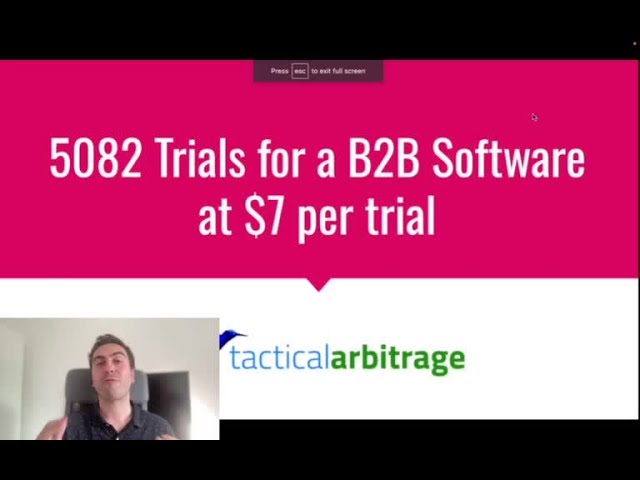
Your offer's only job is to deliver a moment of undeniable value – an aha! moment that makes the prospect sell themselves on your solution. For SaaS founders, the gold standard is a free trial (no card details) or a freemium plan. Let them use the actual product. Let them feel the transformation. When the product itself proves its value, the sale becomes a formality. You aren't generating Marketing Qualified Leads (MQLs) for a sales team to chase; you are creating Product Qualified Leads (PQLs) who are already convinced. In campaigns we've run for B2B SaaS clients, we've driven 1,535 trials at highly competitive costs.
If you're not a SaaS company, you're not exempt. You must bottle your expertise into a tool, content, or asset that provides instant value. For a marketing agency like us, it's a 20-minute strategy session where we audit failing ad campaigns completely free. For a data analytics platform, it could be a free Data Health Check that flags the top issues in their database. You must solve a small, real problem for free to earn the right to solve the whole thing. This shift from book a demo to get instant value can dramatically change your conversion rates and lead quality, and you'll realise that it's worth a slightly higher initial cost per lead.
Offer Performance Comparison
Benchmark for B2B Lead Generation Offers
Often high CPL with lower SQL % due to friction.
Many leads might not be truly qualified for a sales call.
Lower CPL due to reduced friction & higher perceived value.
Leads are pre-qualified and more engaged after initial value exchange.
As you can see, even if a Value-First offer has a slightly higher cost per conversion for the initial value exchange, the quality of those leads (and thus their SQL rate) often means your true Customer Acquisition Cost is lower in the long run. It shifts the entire dynamic from chasing volume to nurturing genuinely interested prospects.
Crafting a message they can't ignore: From features to friction
Your ad copy on LinkedIn needs to speak directly to the problems of your ideal customers, not just list out features. Remember that nightmare we talked about? Your ad should amplify that nightmare and then present your solution as the only way out.
For a high-touch service business, you need to deploy Problem-Agitate-Solve. Don't sell fractional CFO services; you sell a good night's sleep. Your ad should say, Are your cash flow projections just a shot in the dark? Are you one bad month away from a payroll crisis while your competitors are confidently raising their next round? Get expert financial strategy for a fraction of a full-time hire. We build dashboards that turn uncertainty into predictable growth. That hits hard because it's relatable and directly addresses their fears.
For a B2B SaaS product, you use the Before-After-Bridge framework. You don't sell a FinOps platform; you sell the feeling of relief. Your ad could say, Your AWS bill just arrived. It’s 30% higher than last month, and your engineers have no idea why. Another fire to put out. Imagine opening your cloud bill and smiling. You see where every pound is going and waste is automatically eliminated. Our platform is the bridge that gets you there. Start a free trial and find your first £1,000 in savings today. This paints a vivid picture of their current pain and your future solution.
For high-ticket physical products, like specialist lab equipment, you attack the feature-obsession head-on. Don't just state the spec; state its consequence. Our new mass spectrometer has a 0.001% margin of error. So what? So your lab can publish results with unshakeable confidence, securing more funding and attracting top talent that other labs can only dream of. This elevates the conversation from technical details to real-world impact and career advantages.
The ad format also matters on LinkedIn. Sponsored content ads (single image, video, carousel) are your bread and butter for lead generation. Video ads can be particularly effective for pre-qualifying leads – people who watch a significant portion of your video are often more engaged. We've seen strong results with engaging video content to drive B2B leads. Text ads are more akin to cold outreach and can work for starting conversations, but they're not typically where you'll drive large volumes of qualified leads. Always split test your creatives. A small change in messaging can have a big impact on your click-through rates and, ultimately, your lead quality.
Ad Creative Performance by Messaging Type
Average CTR for B2B LinkedIn Lead Gen Campaigns
Avg. CTR
This chart clearly shows that simply listing features isn't enough. You need to connect with the audience on a deeper, more emotional level by addressing their pains and offering a clear vision of a better future. The slightly higher CTRs of problem-focused ads might not seem like a huge jump, but over thousands of impressions and clicks, this translates directly into a lower CPL and a higher volume of more engaged prospects.
Beyond the click: Optimising your landing page for B2B conversions
Getting the right person to click your ad with the right message is only half the battle. If your landing page doesn't continue that conversation, you're just wasting your ad spend. I've seen countless campaigns fail because the ad creative is brilliant, but the page it sends users to is a confusing mess. There needs to be a seamless transition from the ad to the landing page, carrying the same message and tone.
Your landing page needs to be built around a single, clear objective: to get that lead. This means removing all distractions – no complex navigation menus, no links to other parts of your site, just a sharp focus on the call to action. The copy needs to be persuasive, reiterating the problem your ad highlighted and presenting your offer as the undeniable solution. We often work with specialist copywriters for our SaaS clients to make sure every word drives conversions.
For B2B, particularly with higher-value offers, don't be afraid to introduce strategic friction on your landing page. If you're looking for enterprise clients with a minimum revenue, ask about it in your form. If your solution is only for certain industries, make that clear and ask about it. This pre-qualifies leads before they even reach your sales team, saving everyone time. As I often note when working with clients, instead of relying solely on expensive targeting, we let the ad copy, landing page, and lead form do the heavy lifting by introducing strategic friction.
The goal isn't just to get a form fill; it's to get a qualified form fill. If your campaigns are struggling with conversions even after getting good traffic, it’s worth examining your landing page and offer alignment. I recommend reviewing our guide on fixing failing ad campaigns that covers common pitfalls and what happens after the click.
The real metrics: Shifting from CPL to LTV:CAC
If you're still obsessing over Cost Per Lead (CPL) as your primary metric, you're missing the point. A low CPL means nothing if those leads never convert into paying customers. The real game in B2B paid advertising is about your LTV:CAC ratio. How much revenue does a customer bring in over their lifetime compared to how much it cost you to acquire them?
We work hard with clients to integrate their CRM and sales data with ad platform tracking. This allows us to directly attribute revenue to specific campaigns and understand the true ROI. When a client sees that a £200 lead converts into a £10,000 LTV customer, while a £50 lead barely converts at all, the conversation quickly shifts from asking how cheap the leads are to focusing on how to secure more high-value leads.
When it comes to scaling, understanding LTV:CAC is entirely necessary. You can't just throw more money at a campaign and expect the same results indefinitely. Ad platforms have a limited pool of the best audiences. As you increase spend, you inevitably start reaching more expensive or less qualified prospects. This means your Cost Per Acquisition (CPA) will likely rise, and your Return on Ad Spend (ROAS) might dip slightly. But if you know your LTV, you know your ceiling. You can still profitably scale, even if the marginal cost of acquisition increases, because the overall revenue growth far outweighs the slightly higher individual lead costs. It's about maximising total portfolio yield. To explore this approach further, you can read our playbook on scaling B2B paid ads for SaaS and professional services.
Target LTV:CAC Ratio
The North Star for Sustainable Growth
A ratio of 3:1 or higher indicates a healthy, profitable, and sustainable growth model for most B2B SaaS and service businesses.
Advanced strategies: Retargeting, Account-Based Marketing (ABM) on LinkedIn, and Budget Allocation
Once you've nailed the fundamentals – strong ICP, compelling offer, and aligned messaging – you can start to layer on advanced strategies to maximise your LinkedIn Ads performance. Retargeting is often the lowest hanging fruit for B2B. People rarely convert on first contact, especially for high-ticket services or complex software. You need to stay in front of them.
On LinkedIn, you can retarget website visitors who landed on specific pages (e.g., pricing, solutions), people who watched your video ads for a certain duration (e.g., 50% or 75%), or even those who opened your Lead Gen Forms but didn't complete them. These audiences are warmer and often convert at a much lower CPA. Your messaging for retargeting should be different, addressing any objections they might have after their initial interaction, or offering something even more valuable.
Account-Based Marketing (ABM) on LinkedIn is exceptionally powerful. By uploading a list of your target companies, you can then focus your ads exclusively on decision-makers within those organisations. This is especially effective for sales teams targeting a specific list of high-value accounts. We've used this to drive high-quality leads for various software clients targeting B2B decision-makers. You can further refine this by targeting specific job roles or seniority levels within those matched companies. For a deeper look at ABM and other scaling tactics on LinkedIn, review our B2B guide to scaling LinkedIn Ads profitably.
Budget allocation across different stages of the funnel is also a major factor. You wouldn't spend the same amount on a cold audience as you would on someone who's already engaged with your content multiple times. Typically, more budget should be allocated to mid-to-bottom-of-funnel campaigns (retargeting, ABM) because these audiences are closer to converting and offer a higher ROI. However, you still need top-of-funnel campaigns to feed the machine with new prospects. It's a delicate balancing act, and constant monitoring and adjustment are required, but with the right LTV:CAC mindset, you'll know where to pull and push your spend for maximum impact.
You can also consider expanding your B2B advertising efforts beyond just LinkedIn, if it makes sense for your target audience. Whilst LinkedIn is fantastic for B2B, other platforms can play a role, depending on the customer journey and what you're trying to achieve. Google Search Ads are brilliant for capturing existing intent, whilst Meta (Facebook/Instagram) can be surprisingly effective for B2B if you use their limited targeting options for small business owners or layer interests correctly. For a holistic view of B2B paid advertising, you might find our complete B2B paid advertising playbook useful, as it covers multiple platforms and how they fit into a cohesive strategy.
I've detailed my main recommendations for you below:
| Area of Focus | Primary Recommendation | Why It Works |
|---|---|---|
| Mindset Shift | Stop focusing on low CPL; start focusing on LTV:CAC. Understand what a customer is truly worth. | Frees you to invest in high-quality leads, knowing the long-term profitability. |
| Ideal Customer Profile (ICP) | Define your ICP by their urgent, expensive nightmare problems, not just demographics. | Allows for hyper-relevant targeting and messaging that resonates deeply. |
| Offer Strategy | Replace Request a Demo with a Value-First offer (free audit, mini-strategy session, freemium trial). | Provides instant aha! moments, builds trust, and pre-qualifies prospects before sales contact. |
| Ad Messaging | Use Problem-Agitate-Solve or Before-After-Bridge frameworks. Speak to the consequences of their pain. | Captures attention by addressing core struggles, making your solution compelling. |
| Landing Page Optimisation | Ensure seamless transition from ad to page. Remove distractions. Use persuasive copy. Add strategic friction to qualify. | Maximises conversion rate of valuable traffic, ensuring only truly qualified leads proceed. |
| Audience Prioritisation | Start with narrow, high-intent targeting (job titles, industries, matched audiences). Progress to lookalikes and broader retargeting once data is accrued. | Ensures initial ad spend is efficient and generates high-quality signals for the algorithm to learn from. |
| Data & Analytics | Integrate CRM/sales data with ad platforms to track true ROI. Monitor LTV:CAC, not just CPL. | Provides a clear picture of profitability and informs strategic budget allocation for scaling. |
Why consider expert help to fix your LinkedIn Ads?
Look, managing LinkedIn Ads for B2B isn't just about clicking buttons and setting a budget. It's a complex, multi-layered beast that requires a deep understanding of strategy, copywriting, analytics, and sales funnels. It's a full-time job for a dedicated expert, and honestly, trying to do it in-house whilst juggling everything else can quickly lead to burnout and wasted ad spend. The analytical skills drain you mentioned is real because it demands consistent, high-level attention.
Bringing in an expert means you get someone who lives and breathes this stuff. They've seen what works and, more importantly, what doesn't. They can diagnose problems quickly, implement proven strategies, and free up your internal team to focus on what they do best – servicing clients and developing your product. We've helped countless B2B businesses, from SaaS startups to established service providers, transform their LinkedIn Ads from a money pit into a powerful lead generation engine, often achieving significant reductions in CPA and increases in lead quality, like when we worked with software clients to generate decision-maker leads at $22 CPL and helped reduce CPAs significantly for specialized tech platforms. It's about getting someone who can build you a funnel that actually converts, not just manages your campaigns.
If you're tired of feeling like you're constantly optimising just to stay afloat, and you want to truly scale your qualified lead generation on LinkedIn, it might be time to get some specialist eyes on your account. We offer a free initial consultation where we'll review your current strategy and account together. No strings added, just a proper chat about what's going on and some actionable advice you can take away. It often gives potential clients a good taste of the expertise we bring to the table.
{{LEAD_SIGNUP_FORM}} {{LEAD_MAGNET_MAIN_CTA}}
Lukas Holschuh
Founder, Growth & Advertising Consultant
Great campaigns fail without expertise. Lukas and his team provide the missing strategy, optimizing your entire advertising funnel—from ad creatives and copy to landing page design.
Backed by a proven track record across SaaS, eLearning, and eCommerce, they don't just run ads; they engineer systems that convert. A data-driven partnership focused on tangible revenue growth.