So, you've got your first 50 customers. Fair play. You've proven the concept. Now you're trying to pour more money into the ad machine to get the next 500, but the machine is spitting out error messages in the form of a terrifying Cost Per Acquisition. Every time you push the spend up, your CPA doubles and your profitability plummets. Sound familiar? It’s the most common wall B2B and SaaS founders hit.
The advice you'll get on forums is usually to test more creatives or try a new audience. That's not wrong, but it's like rearranging the deckchairs on the Titanic. The fundamental problem isn't your ad creative; it's that your entire acquisition model is built on a shaky foundation. You're trying to scale a leaky bucket. Before you spend another pound on ads, you need to rebuild the bucket. It starts with a bit of maths that most people skip because it feels like hard work.
What if my CPA isn't the real problem?
Here is the bit that trips everyone up. Founders come to me obsessed with getting their Cost Per Lead (CPL) or Cost Per Acquisition (CPA) down. They see a £100 CPA and panic. But that number is meaningless without its counterpart: Lifetime Value (LTV). The real question isn't "How low can my CPA go?" but "How high a CPA can I afford to acquire a truly great customer?" Without knowing that, you're flying blind.
Most businesses, especially in SaaS, calculate this all wrong. They look at the first month's revenue and try to make the numbers work. That's a recipe for failure. You need to understand what a customer is worth over their entire relationship with you. Let’s do the proper maths.
First, you need a few numbers from your business:
- Average Revenue Per Account (ARPA): What is the average amount a customer pays you each month?
- Gross Margin %: After your cost of goods sold (COGS), what percentage of that revenue is profit? For most software, this is high, maybe 80-90%.
- Monthly Churn Rate: What percentage of your customers cancel their subscription each month? Be honest here.
The formula is simple: LTV = (ARPA * Gross Margin %) / Monthly Churn Rate.
Let's take an example. Say your CRM costs £300/month (ARPA), your gross margin is 85%, and you lose 5% of your customers each month (churn). Your LTV is (£300 * 0.85) / 0.05, which comes out to £5,100. Each customer is worth over five grand to you. Suddenly, paying a few hundred pounds to acquire one doesn't seem so crazy, does it?
A healthy business model aims for an LTV to CAC (Customer Acquisition Cost) ratio of at least 3:1. In our example, with a £5,100 LTV, you can afford to spend up to £1,700 to acquire a single customer and still have a solid, scalable business. If your sales team converts 1 in 10 qualified leads into a customer, you can afford to pay £170 per lead. This is the number that sets you free. It stops you from making decisions based on fear and allows you to make them based on data. Use the calculator below to figure out your own numbers.
The 'Can I Afford This Lead?' Calculator
Stop guessing. Input your business metrics to find your real Lifetime Value (LTV) and what you can actually afford to spend to get a customer.
Once you've got this number sorted, you can stop chasing cheap, low-quality leads and start hunting for valuable customers, even if they cost more to acquire upfront. This mindset shift is the first and most significant step to scaling profitably. Without it, you’re just gambling.
Who are you actually selling to, though?
Right, so you know what you can afford to spend. Now, who are you spending it on? Most marketing agencies will ask you for your Ideal Customer Profile (ICP) and you'll give them something like: "We sell to VPs of Sales at tech companies with 50-200 employees." That's utterly useless. It tells you nothing about what keeps them awake at night.
Your ICP isn't a demographic; it's a problem state. It’s a nightmare. You need to become an expert in their specific, urgent, and expensive nightmare. Your VP of Sales isn't just a job title; she's a leader staring at a stalled pipeline, terrified of missing her quarterly target and having to explain it to the board. Your Head of Engineering isn't just a tech guy; he's watching his best developers quit because the internal tools are a buggy mess and it's killing morale.
For one of our B2B SaaS clients in the legal tech space, we stopped targeting "lawyers" and started targeting the nightmare: "The partner who just realised an associate missed a filing deadline, exposing the firm to a million-pound malpractice suit." You don't sell document management software to that person. You sell career insurance. The difference in messaging, and the results, is night and day.
You need to go deep. What podcasts do they actually listen to? (Hint: probably not generic business ones, but niche ones like 'Acquired' or industry-specific shows). What newsletters do they read and respect? ('Stratechery' by Ben Thompson is a common one for tech leaders). What software do they already use and pay for? (HubSpot, Salesforce, Jira). Are they in specific Facebook or Slack groups? Who do they follow on LinkedIn or Twitter/X for advice? This intelligence is the blueprint for your entire targeting strategy. This is how you stop wasting money on broad audiences and start placing your ads in front of the exact people feeling the pain you solve.
The 'Customer Nightmare' Targeting Framework
Layer 1: The Nightmare Scenario (The 'Why')
Define the specific, career-threatening problem. Not "needs a CRM," but "losing deals because follow-ups are falling through the cracks and the current system is a mess." This is the emotional core of your ad copy.
Layer 2: The Digital Watering Holes (The 'Where')
Identify where they go for information and community. Target members of groups like "SaaS Growth Hacks," followers of industry leaders like Jason Lemkin, or readers of specific publications. This is your audience targeting on LinkedIn and Meta.
Layer 3: The Search for a Cure (The 'How')
Pinpoint the exact phrases they type into Google when the pain becomes unbearable. Keywords like "best crm for small sales teams" or "hubspot alternative" show high intent. This is your Google Ads strategy. You can find more practical advice on B2B PPC in our guide on fixing B2B paid ads ROI.
How do I write an ad they can't ignore?
Once you understand their nightmare, you can stop writing ads that sound like every other corporate brochure. Your ad has one job: to reflect their problem back at them so accurately that they feel like you've been reading their emails. You need to earn their click by proving you understand their world.
For a B2B SaaS product, I often use the Before-After-Bridge framework. It is exceptionally effective.
Before: Paint a vivid picture of their current nightmare. "Your sales data is spread across three different spreadsheets. Your top rep just left, and took their pipeline knowledge with them. You have zero visibility."
After: Describe the promised land. "Imagine a single dashboard where every deal, every conversation, and every forecast is updated in real-time. You know exactly where your quarter stands, even on holiday."
Bridge: Introduce your product as the simple path from A to B. "Our CRM is the bridge. It sets up in 10 minutes and automates the busywork, so your team can focus on selling. See for yourself."
Notice we're not listing features. Nobody cares about your API integrations. They care about not getting fired. Your ad must sell the outcome, not the technology. We ran a campaign for a B2B software company targeting founders and managed to get registrations down to just $2.38 each by focusing entirely on the "After" state in our ad copy—the relief and control they'd feel.
Your message has to do the heavy lifting of qualifying your audience. If your product is only for a specific niche, shout it from the rooftops. "Attention, Shopify store owners!" This repels the wrong people and attracts the right ones, making your ad spend far more efficient before they even click.
Why is my 'Request a Demo' button killing my campaign?
Now we get to the part of the funnel where most of the money is actually wasted: the offer. You can have the best targeting and the most compelling ad in the world, but if you send that traffic to a landing page with a "Request a Demo" button, you might as well just set your money on fire.
The "Request a Demo" CTA is a high-friction, low-value offer. It presumes your prospect, a busy decision-maker, has nothing better to do than schedule a 30-minute meeting to be sold to. It screams that you are a commodity and about to waste their time. It forces them to make a huge commitment before they've received any real value.
Your offer's job is to deliver an "aha!" moment. It needs to solve a small part of their problem for free, instantly, to earn you the right to solve the bigger problem for money. This is how you build a funnel that scales.
If you're a SaaS founder, this is your superpower. The gold standard offers are:
- A Free Trial (No Credit Card): Let them use the actual product. Let them feel the pain relief. Once the product proves its value, the sale is easy. We've helped SaaS clients double or triple their signups just by removing the credit card field. One client of ours, a medical job matching platform, saw their CPA drop from a painful £100 down to just £7 after we restructured their funnel around a frictionless trial offer.
- A Freemium Plan: Even better. Give them a permanent, free version of your product. This completely removes the risk and lets them integrate your tool into their workflow. The upgrade happens when their needs grow.
If you're not a SaaS company, you're not off the hook. You need to bottle your expertise into a high-value asset:
- For an agency: A free, automated website audit that provides actual, specific recommendations.
- For a consultancy: A free, interactive calculator or a short video course that solves one specific problem. For us, it’s a free 20-minute strategy session where we audit a potential client's ad accounts live on a call. We give away massive value upfront.
The goal is to move from chasing Marketing Qualified Leads (MQLs) to generating Product Qualified Leads (PQLs) or deeply engaged prospects. A PQL is someone who has already used your product and seen its value. They don't need to be sold to; they need to be shown how to pay. This is the difference between a funnel that costs you money and a funnel that makes you money.
The Leaky B2B Funnel Architecture
Which platform is best for scaling, anyway?
Once your unit economics are solid, your ICP is defined by their nightmare, and your offer is genuinely valuable, then you can start worrying about platforms. Trying to decide between Google and LinkedIn before you've done this work is pointless.
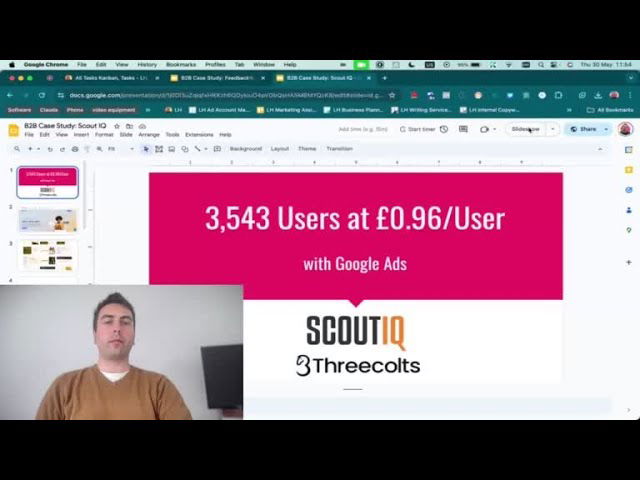
The platform choice comes down to your ICP's behaviour. Are they actively searching for a solution to their nightmare? If so, Google Ads is a strong option. You're capturing high-intent demand. The main principle is to bid on keywords that signal purchase intent, not just research. "CRM software pricing" is a much better keyword than "what is a CRM." For a SaaS client struggling to find users, we focused purely on high-intent Google search campaigns and generated 3,543 users at just £0.96 each because we knew they were already problem-aware and solution-seeking.
Are they not actively searching, but you know exactly who they are by job title, company size, and industry? Then LinkedIn Ads is your best option for precision targeting. You can get your message directly in front of the VPs and Directors you need to reach. But be warned: it's expensive. You must have your LTV and offer dialled in, or you will get burned. For one B2B software client, we targeted specific decision-makers on LinkedIn and achieved a $22 cost per qualified lead—a number that only made sense because we knew their LTV was in the thousands.
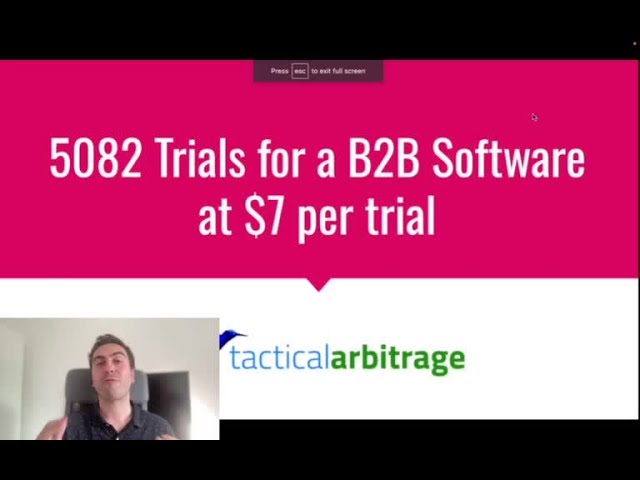
What about Meta (Facebook/Instagram)? Many B2B founders dismiss it, but that's a mistake. The targeting isn't as precise as LinkedIn, but the costs are far lower and the scale is massive. You can't target "VP of Engineering," but you can target interests like "AWS," "Jira," or people who follow tech publications. The trick is to let your ad copy do the filtering. An ad that starts "Engineers, tired of broken CI/CD pipelines?" will make the right people stop scrolling. We’ve had huge success on Meta for B2B SaaS, driving over 5,000 software trials at just $7 a trial because the ad creative was so specific to the audience's pain.
And never run Brand Awareness or Reach campaigns. You are literally paying the platform to find the people in your audience who are least likely to ever click or buy anything. Their attention is cheap for a reason. Always optimise your campaigns for the conversion event that matters—a trial sign-up, a lead form submission, a sale. You want the algorithm working to find you customers, not just eyeballs.
How do I structure my campaigns to actually grow?
Okay, you've got all the strategic pieces in place. Now for the execution. The way you structure your campaigns is what allows you to test, learn, and scale predictably. A messy account with dozens of random ad sets is impossible to manage or learn from. I generally use a simplified funnel structure.
Top of Funnel (ToFu) - Prospecting: This is where you target cold audiences who have never heard of you. You're using your ICP research here—the layered interests, lookalike audiences, and job title targeting. The goal is to drive them to your low-friction offer (the free trial, the freemium sign-up, the valuable asset). You should be testing multiple audiences against each other here to find winners. You're also testing different nightmare angles in your ad copy.
Middle of Funnel (MoFu) - Retargeting: This is for people who have engaged but not converted. They visited your landing page but didn't sign up. They watched 50% of your ad's video. Here, your messaging changes. It's less about introducing the problem and more about overcoming objections. Show them a case study, a testimonial, or answer a common question. The goal is to bring them back to complete the desired action.
Bottom of Funnel (BoFu) - Closing: This is for people who got very close. They added to cart, they initiated checkout, they signed up for a trial but haven't activated. The messaging here is urgent and direct. "Your trial is about to expire," or "Did you forget something?" You can also use this stage to upsell existing customers. Don't neglect this audience; it's often the most profitable part of your entire ad spend.
This structure allows you to allocate budget intelligently and speak to people with the right message at the right time. Your prospecting campaigns will naturally have a higher CPA than your retargeting campaigns. That's normal. You need to look at the blended CPA across the entire account. The prospecting fills the top of the funnel, and the retargeting efficiently converts that interest into revenue.
Consistent testing is the engine of scale. You should always have a test running. Test a new audience. Test a new headline. Test a new ad creative. But only test one thing at a time within an ad set so you know what actually made the difference. When you find a winner, you double down on it. When you find a loser, you kill it quickly. This methodical process of testing, learning, and reallocating budget is what turns advertising from a cost centre into a predictable growth engine.
I've detailed my main recommendations for you below:
The Profitable Scaling Blueprint
Follow these stages in order. Skipping the foundational work is why most scaling attempts fail and burn cash.
| Stage | Primary Failure Point | Action Item | Expected Impact |
|---|---|---|---|
| 1. Unit Economics | Guessing at an acceptable CPA; optimising for cheap leads. | Calculate your true LTV and establish a maximum affordable CAC based on a 3:1 ratio. | Unlocks Confident, Aggressive Spend |
| 2. Audience & Offer | Using broad demographic targeting and a high-friction "Request a Demo" CTA. | Define your ICP by their 'nightmare' and replace the demo button with a high-value, low-friction offer (trial, tool, freemium). | +200% Conversion Rate; Higher Quality Leads |
| 3. Funnel Optimisation | Sending all traffic to one generic landing page with weak copy. | Write ad copy that speaks directly to the 'nightmare'. Build a landing page that sells the outcome, not the features. | -50% Cost Per Lead |
| 4. Campaign Scaling | Randomly increasing budget on campaigns that 'seem' to be working. | Implement a ToFu/MoFu/BoFu structure. Methodically test audiences and creatives, killing losers and scaling winners. | Predictable, Repeatable Growth |
Scaling paid advertising isn't a dark art. It's a system. It requires you to be a ruthless strategist before you even touch the ad platforms. You need to be an expert in your customer's business, a savvy economist, and a disciplined scientist. Get the foundations right—the maths, the customer insight, the offer—and the scaling part becomes almost straightforward. Get them wrong, and no amount of clever bidding or creative testing will save you.
If you've worked through these steps and are still hitting a wall, or if you want to accelerate the process, it might be time to bring in an expert. My team and I specialise in this exact process: rebuilding advertising funnels from the ground up to be scalable and profitable. We don't just run ads; we engineer the entire system that turns clicks into revenue.
We offer a free, no-obligation consultation where we can look at your current campaigns and strategy, and give you some actionable advice on the spot. It's a chance to see how we think and whether we'd be a good fit to help you break through your scaling plateau.
Cite this Article
If referencing this research, data, or strategy in your publication, please use the attribution below.

Lukas Holschuh
Founder, Growth & Advertising Consultant
Great campaigns fail without expertise. Lukas and his team provide the missing strategy, optimizing your entire advertising funnel—from ad creatives and copy to landing page design.
Backed by a proven track record across SaaS, eLearning, and eCommerce, they don't just run ads; they engineer systems that convert. A data-driven partnership focused on tangible revenue growth.