TLDR;
- A real campaign audit is not about tweaking bids; it is a full-funnel teardown starting with your business maths, not your ad account. Most agencies get this backwards.
- The single biggest reason your ads are failing is probably your offer. "Request a Demo" is a high-friction, low-value ask that kills conversion rates. We need to build something that delivers value upfront.
- Your ideal customer is not a demographic; it is a person with an urgent, expensive problem. We have to define them by their pain, not their job title, to find them effectively.
- Stop wasting money on Brand Awareness or Reach campaigns. You are paying platforms to find the people least likely to ever buy from you. Every penny should go towards conversion-focused objectives.
- This letter includes an interactive LTV & Allowable CAC calculator to figure out exactly what you can afford to pay for a lead, and a full diagnostic action blueprint to get started.
Thanks for reaching out about an advertising audit. I am happy to give you some initial thoughts on how we approach this. Fair warning, my view on a performance audit is probably a bit different from what you might expect. Most people think it is about logging into Google or Meta Ads, looking at the Click-Through Rates, and tweaking a few audience settings. That is the last thing we do, not the first.
Great campaigns fail all the time because the foundations are rotten. You can have the best ad creative in the world, but if you are pointing it at the wrong people with a weak offer, you are just burning money faster. A proper audit looks at the entire system, from the maths of your business right down to the copy on your landing page button.
So, instead of a checklist of ad settings, I will walk you through the four core pillars we would need to tear down and rebuild. It all starts with the numbers.
We will need to look at your Unit Economics first...
Before we even think about ad spend, cost per click, or what platform to use, we have to answer a much more fundamental question: "How much can you actually afford to spend to acquire a customer?" If you don't know this number, you are flying blind. You have no way of knowing if a £50 lead is a bargain or a disaster.
The real question is not "How low can my Cost Per Lead go?" but "How high a CPL can I stomach to acquire a truly great customer?" The answer is your Customer Lifetime Value (LTV). This is the total profit you will make from an average customer over the entire time they stay with you. Once we know what a customer is worth, we can work backwards to figure out what we can pay to get one.
The calculation is pretty straightforward. You need three bits of information:
- Average Revenue Per Account (ARPA): How much does a customer pay you per month, on average?
- Gross Margin %: After your cost of goods or service delivery, what percentage is left as profit?
- Monthly Churn Rate: What percentage of your customers cancel or leave each month?
The formula is: LTV = (ARPA * Gross Margin %) / Monthly Churn Rate
Let us run a quick example. Say you run a B2B SaaS. Your ARPA is £500, your gross margin is 80% (pretty standard for software), and you lose 4% of your customers each month. Your LTV would be (£500 * 0.80) / 0.04, which comes out to a whopping £10,000. Each customer is worth £10k in gross margin to your business.
Now, this is where it gets interesting. A healthy business model aims for at least a 3:1 LTV to Customer Acquisition Cost (CAC) ratio. This means for every £3 of value a customer brings in, you can spend £1 to get them. With a £10,000 LTV, you can afford to spend up to £3,333 to acquire a single new customer and still have a brilliant business. If your sales team converts one in every ten qualified leads, you can therefore afford to pay up to £333 for each of those leads. Suddenly that £200 lead from LinkedIn does not look so pricey, does it? It looks like a bargain.
This is the maths that unlocks aggressive, intelligent growth. It stops you from making panicked decisions based on a high CPL in your ad account and instead focuses you on acquiring high-value customers, profitably. Most businesses never do this work. They just set a random budget and hope for the best. To make this tangible for you, I built a small calculator below. Plug in your own numbers and see what your allowable CAC is. It might surprise you.
LTV & Allowable CAC Simulator
Enter your business metrics to calculate what you can truly afford to pay for a customer and a qualified lead.
I would say your Offer is the biggest lever...
Once you know what you can afford to pay for a lead, the next question is: what are you asking them to do? This is where I see more than 90% of B2B advertising campaigns fall apart. The offer.
Let us be blunt. The "Request a Demo" button is probably the most arrogant, high-friction, and least effective Call to Action in modern marketing. It presumes that your prospect, a busy and important person, has nothing better to do than book a 30-minute slot in their calendar to be sold to. It screams "I want your time, but I am not going to give you any value in return until you sit through my pitch." It positions you as just another commodity vendor, and it is a huge reason why your conversion rates are terrible.
An audit that does not thoroughly examine your offer is a waste of time. Your offer's only job is to deliver an "aha!" moment of undeniable value, something that solves a small, real problem for your prospect right now, for free. This is how you earn the right to solve their bigger problems later. You need to make them sell themselves on your solution.
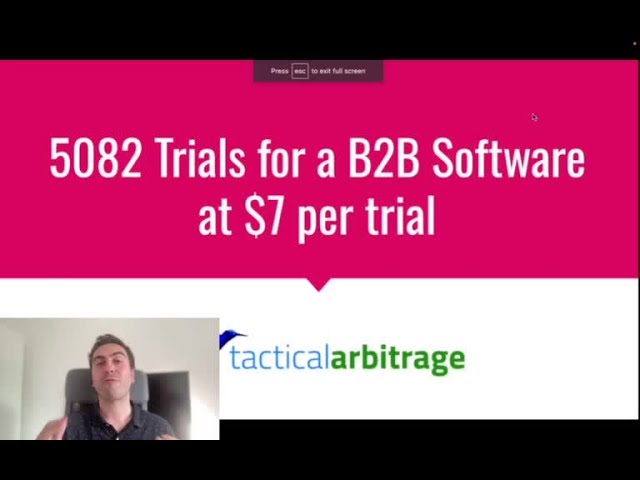
For SaaS businesses, this is your secret weapon. The gold standard is a free trial with no credit card required, or a genuinely useful freemium plan. Let them use the actual product. Let them experience the transformation firsthand. I have helped SaaS clients massively increase trial signups just by binning the credit card field. In one case for a medical job matching platform, we worked on their offer and funnel and managed to reduce their Cost Per User Acquisition from a crippling £100 down to just £7. When the product proves its own value, the sale becomes a formality. You stop generating Marketing Qualified Leads (MQLs) for your sales team to chase, and you start creating Product Qualified Leads (PQLs) who are already convinced.
If you are a service business, you are not off the hook. You have to bottle your expertise into a tool, an asset, or a piece of content that provides immediate value. For a marketing agency, it might be a free, automated SEO audit that finds their top 3 search opportunities. For a data platform, a free Data Health Check. For us, it is a free 20-minute strategy session where we audit a failing ad campaign. You must solve a small problem for free to earn the right to solve the whole thing.
Just look at the maths of it. A small improvement in your landing page conversion rate, driven by a better offer, has a massive impact on your effective cost per lead. If you are spending £5,000 a month on ads and getting a 5% conversion rate, your leads cost you £50 each. If you can get that conversion rate up to 20% with a killer sandbox offer, your cost per lead plummets to £12.50. You have just made your ad spend 4x more efficient without touching a single campaign setting.
The Maths of a Better Offer
Assuming a monthly paid ad budget of £5,000 at an average Cost Per Click (CPC) of £2.50 (2,000 clicks/month):
By optimising the offer and landing page to lift conversion rate from 5% to 20%, your effective Cost Per Lead decreases by 75% without increasing ad spend by a single penny.
You probably should rethink your audience targeting...
So, we know what we can afford to pay, and we have an offer that is actually valuable. Now, who do we show it to? This is the third pillar, and another area where people waste a fortune. Forget the sterile, demographic-based Ideal Customer Profile your last marketing hire put together. Companies in the finance sector with 50-200 employees tells you precisely nothing of value and leads to generic, ineffective ads that speak to no one.
To stop burning cash, you have to define your customer by their pain. Your ICP is not a person; it is a problem state. You need to become an expert in their specific, urgent, expensive, career-threatening nightmare.
Your Head of Engineering client is not just a job title; she is a leader terrified of her best developers quitting because they are frustrated with a broken workflow. For a legal tech SaaS, the nightmare is not needing better document management; it is a senior partner missing a major filing deadline and exposing the firm to a malpractice suit. You need to get that specific.
Once you have isolated that nightmare, you can find them. It is not about broad targeting. It is about intelligence. Find the niche podcasts they listen to on their commute, the industry newsletters they actually read, the specific SaaS tools they already pay for. Are they in certain members-only groups on LinkedIn or Facebook? Who are the key influencers they follow? This intelligence becomes the blueprint for your entire targeting strategy. On LinkedIn, for example, this means using a layered approach to pinpoint exactly the right people. You do not just target Directors; you target Directors in specific industries, at companies of a certain size, who also have certain skills listed on their profile. This is how you find needles in the haystack.
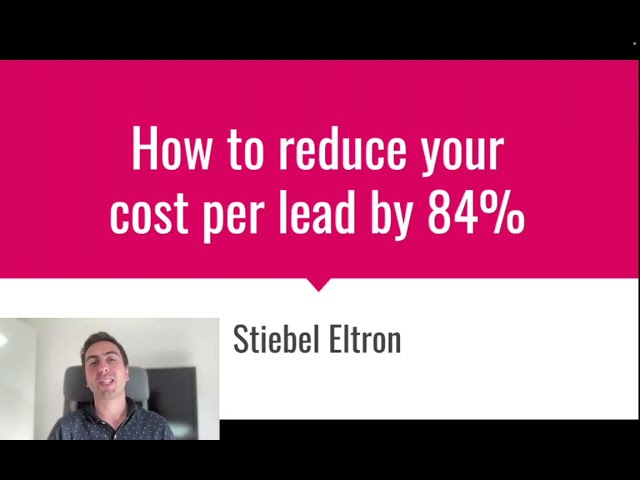
For one client in the environmental controls space, we used this exact method. They were trying to sell high-ticket industrial products with broad targeting and getting nowhere. We helped them define their ideal buyer by pain point, then built a multi-layered targeting strategy on LinkedIn to reach senior engineers in specific manufacturing sub-sectors. The result? We reduced their cost per lead by 84%. Because we were talking to the right people about a problem they actually had.
Below is a simplified version of the layering framework we often use for B2B campaigns on LinkedIn. It is about building a progressively more qualified audience, not just throwing a wide net.
LinkedIn Ads Targeting Layering Framework
Layer 1: Company Parameters (Mandatory Boundary)
Start with firmographics. Target Company Size (e.g., 51–200 employees) AND Target Industry (e.g., Financial Services, Software Development). This is your non-negotiable container.
Layer 2: Role Authority (Seniority + Function)
Now narrow within those companies. Target specific Job Functions (e.g., Information Technology, Finance) AND Job Seniority (e.g., Director, VP, CXO). This ensures you are reaching decision-makers.
Layer 3: Explicit Intent & Skills (Optional Precision)
For extra precision, you can add a final layer. Target members of specific Groups (e.g., "SaaS Growth Hacks") OR people with specific Skills listed on their profile (e.g., "Cloud Architecture"). Use this to find the most engaged and relevant people.
You will need to fix your campaign objectives and attribution...
Only now, with the economics, offer, and audience sorted, do we finally open the ad account. And this is where we find the final, fatal flaw in most campaigns: the wrong objective.
Here is an uncomfortable truth. When you set your campaign objective on Meta to "Reach" or "Brand Awareness," you are giving the algorithm a very specific, literal command: "Find me the largest number of people for the lowest possible price." The algorithm, being a very obedient machine, does exactly that. It scours your target audience to find the users who are least likely to click, least likely to engage, and absolutely, positively least likely to ever buy anything. Why? Because those users are not in demand. Their attention is cheap. You are actively paying the world's most powerful advertising platform to find you the worst possible audience for your product.
An audit needs to ensure every single campaign is optimised for the action that actually matters to your business. If you want leads, you optimise for leads. If you want sales, you optimise for sales. The algorithm is incredibly powerful, but it only does what you tell it to. For a startup or small business, the best form of brand awareness is a new customer. Awareness is a byproduct of making sales and solving problems, not a prerequisite for it.
This also ties into tracking and attribution. It is not enough to track clicks. We need to track what happens after the click. We need to see which campaigns, audiences, and ads are driving actual trial signups, qualified leads, and revenue. That means getting the technical side right: installing the Meta Pixel and Conversions API properly, setting up server-side tracking, and ideally, integrating your CRM or store backend so you can attribute sales back to the ads that generated them. Without this, you are just guessing. You might be turning off a campaign with a high CPL that actually generates all your best customers, while scaling a campaign with a low CPL that brings in nothing but time-wasters.
The entire process is a funnel. You can have a perfect ad, but if it leads to a weak offer on a slow landing page, you lose. You can have a brilliant landing page, but if you are showing it to the wrong people, you lose. An effective audit diagnoses the leaks at every single stage.
The Full-Funnel Leakage Problem
Most ad campaign audits only focus on Stage 1. A real audit finds the expensive leaks between every stage, where most of your budget is actually wasted.
So, to bring it all together, a proper audit is a strategic deep-dive, not a quick tactical fix. I have detailed my main recommendations for what this process looks like in practice for you below. This is the blueprint we use to turn failing ad accounts into predictable revenue engines.
Paid Ad Diagnostic Audit & Action Blueprint
This is the prioritised sequence for auditing and fixing a paid advertising system. We work from the foundation (business maths) up to the tactics (ad account).
| Audit Stage | Primary Failure Point | Diagnostic Action Item | Expected Impact |
|---|---|---|---|
| 1. Unit Economics | Flying blind with unrealistic CPA targets because LTV is unknown. | Calculate Gross Margin LTV and establish a true, affordable CAC based on a 3:1 ratio. | Enables Confident Ad Scaling |
| 2. Offer & Landing Page | High-friction 'Request a Demo' CTA burning budget on cold traffic. | Develop and test a low-friction, high-value offer (e.g., free tool, interactive demo, sandbox trial). | -75% Cost Per Lead |
| 3. Audience & Targeting | Using broad, demographic ICPs that do not reflect user pain or intent. | Redefine the ICP based on a specific nightmare scenario and map this to niche targeting layers. | +300% Lead Quality |
| 4. Ad Account Structure | Optimising for vanity metrics (Reach, Clicks) instead of business outcomes. | Restructure all campaigns to optimise for bottom-of-funnel conversions (Leads, Sales) with proper server-side tracking. | Directly Ties Spend to Revenue |
As you can probably tell, this is a lot more involved than just running some ads. It requires expertise not just in media buying, but in conversion rate optimisation, copywriting, and business strategy. It is about engineering a system that converts, not just managing a dashboard.
If this approach makes sense to you and you would like to talk about having us apply this diagnostic process to your business, we can schedule a free, no-obligation consultation call. We can take a look at your current setup together and I can give you some specific, actionable advice on where the biggest opportunities are.
Let me know if that is something you would be interested in.
Regards,
Team @ Lukas Holschuh
Cite this Q&A Guide
If referencing this research, data, or strategy in your publication, please use the attribution below.

Lukas Holschuh
Founder, Growth & Advertising Consultant
Great campaigns fail without expertise. Lukas and his team provide the missing strategy, optimizing your entire advertising funnel—from ad creatives and copy to landing page design.
Backed by a proven track record across SaaS, eLearning, and eCommerce, they don't just run ads; they engineer systems that convert. A data-driven partnership focused on tangible revenue growth.