TLDR;
- Stop looking at headline numbers like ROAS and revenue. They're often superficial metrics. The real story is in the unit economics—specifically, the Lifetime Value (LTV) to Customer Acquisition Cost (CAC) ratio. A case study is worthless if it doesn't show a profitable acquisition model.
- A good case study reveals strategic depth, not just tactical button-pushing. It should show the agency understood the customer's core nightmare and fixed the underlying offer, not just ran some ads. If they're just talking about ad clicks, they're media buyers, not growth partners.
- Look for relevance. A massive success in B2C eCommerce for a £10 product tells you nothing about their ability to sell a £50k/year B2B SaaS product. You need to see evidence they've solved problems similar to yours, in a similar market.
- The best case studies are transparent about the how—the platform choices, the targeting logic, and the creative angles. Vague statements like "we optimised campaigns" are a massive red flag.
- This letter includes an interactive calculator to help you figure out what you can actually afford to pay for a customer, which is the most important number you need to know before you even speak to an agency.
Hi there,
Thanks for reaching out. Asking how to evaluate agency case studies is a bloody good question. It’s probably the most important bit of due diligence you can do before hiring someone, but most people get it completely wrong. They get dazzled by big revenue numbers and shiny ROAS figures without understanding what’s really going on under the bonnet.
Most case studies are designed to sell, not to inform. They’re marketing assets. My job here is to give you a framework to cut through the fluff and see if an agency actually knows what they're doing, or if they just got lucky with one client in a booming market.
So, I'm happy to give you some initial thoughts and guidance, based on what we've seen work and, more often, what we've seen go horribly wrong when businesses pick the wrong partner. Forget the sales pitch you'd normally get; this is the honest version.
We'll need to look beyond the headline numbers...
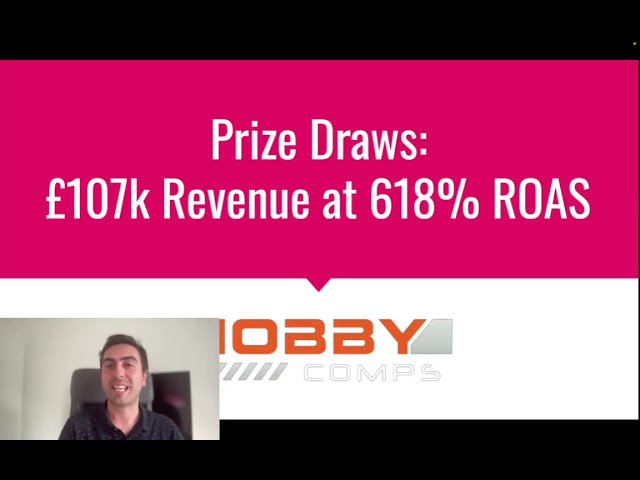
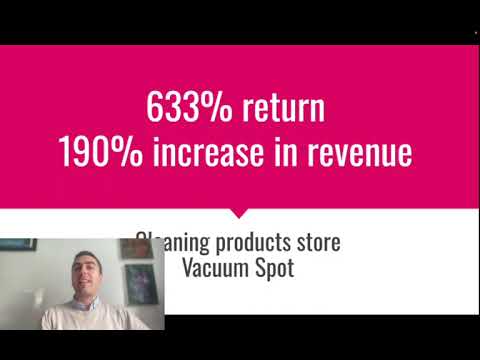
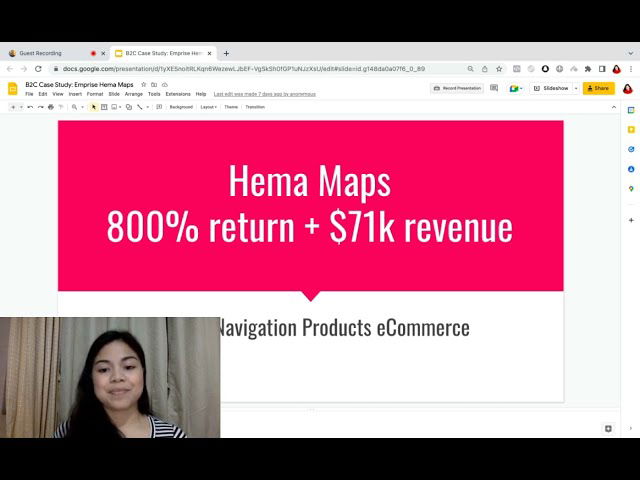
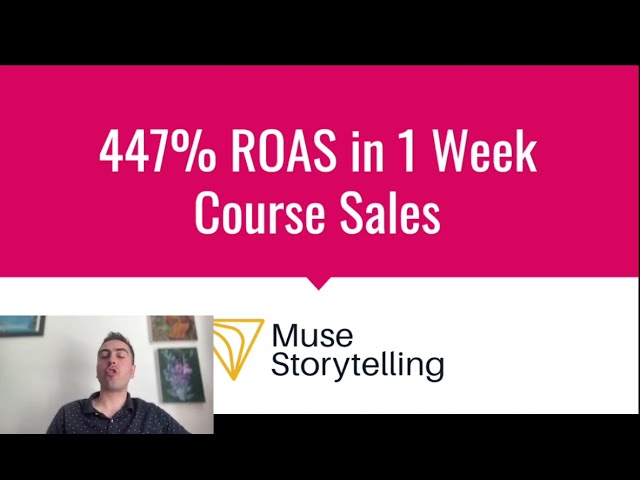
The first thing everyone looks at is Return On Ad Spend (ROAS) or a big, juicy revenue figure. An agency will splash "£107k Revenue at 618% ROAS!" across their website (yes, that's one of ours, but bear with me). It looks impressive. It feels safe. But on its own, it’s a dangerously misleading metric.
Why? Because it tells you nothing about profit.
A 6x ROAS sounds great, right? But what if the business's gross margin is only 15%? They spend £1, they make £6 back in revenue. But after cost of goods, shipping, and all the rest, that £6 in revenue is only £0.90 in gross profit. They've spent £1 to make 90p. They're losing money on every single sale, and the agency is cheering about a "6x ROAS" while the business slowly bleeds out. I've seen it happen.
Conversely, a B2B SaaS company might only see a 2x ROAS in the first month. Looks terrible next to the 6x, doesn't it? But their gross margin is 90%, and the customer they acquired for £1,000 (generating £2,000 in initial revenue) is on a subscription. That customer will stick around for 4 years and pay them a total of £48,000. That "terrible" 2x ROAS was actually the start of a 48x return. Which business would you rather be?
This is why the only numbers that actually matter are Customer Acquisition Cost (CAC) and Lifetime Value (LTV). You have to know what a customer is truly worth to you in profit over their entire relationship with your business. Once you know that, you know what you can afford to spend to acquire one.
The calculation isn't that difficult. It goes like this:
First, find your Average Revenue Per Account (ARPA) per month. Let's say it's £200.
Second, what's your Gross Margin percentage? After all your costs to deliver the service/product, what's left? Let's say it's 75%.
Third, what's your monthly customer churn rate? What percentage of customers do you lose each month? Let's say it's 5%.
The LTV formula is: (ARPA * Gross Margin %) / Monthly Churn Rate
So: (£200 * 0.75) / 0.05 = £150 / 0.05 = £3,000.
In this scenario, every customer you sign up is worth £3,000 in gross margin to you. A healthy LTV:CAC ratio is at least 3:1. This means you can afford to spend up to £1,000 to acquire a customer who is worth £3,000. Suddenly, a £50 cost-per-lead doesn't seem so scary if your sales team can close 1 in 10 of those leads. You'd be spending £500 to make £3,000. That's the math that lets you scale aggressively and intelligently.
A good agency case study won't just flaunt a ROAS figure. It will talk about CAC, and it will demonstrate that the agency understands the client's business model. They'll show they've built a system for acquiring customers profitably. Any agency that can't have this conversation with you isn't a strategic partner; they're just a media buyer who will happily spend your money for a percentage.
To make this real for you, I've put together a small calculator. Play around with the numbers for your own business. Figure out what your LTV is, and then you'll have the most powerful tool possible for evaluating any agency's performance claims.
LTV & Allowable CAC Simulator
Adjust your business metrics to calculate your Customer Lifetime Value (LTV) and see what you can truly afford to spend to acquire a new customer while maintaining a healthy 3:1 LTV:CAC ratio.
I'd say you need to check for strategic depth, not just tactical execution...
Once you're armed with your real numbers, the next step is to read between the lines of the case study. You're not just hiring someone to press buttons in Ads Manager. If that's all you wanted, you could hire a freelancer for a few hundred quid a month. You're hiring a partner to help you grow. That means they need to think like a business owner, not just an advertiser.
Early in my career, I'd run campaigns with brilliant targeting and creative, getting loads of cheap clicks, but the clients weren't seeing sales. The penny dropped when I realised the problem wasn't the ad; it was the entire system after the click. The landing pages were confusing, the copy was weak, the offer was rubbish. I could be the best media buyer in the world, but if the funnel was broken, the campaigns would fail. That's when we shifted from just running ads to engineering entire conversion systems.
A great case study will reflect this full-funnel thinking. It won't just say "we lowered CPC by 20%." It will tell a story about a strategic shift. Did they identify the true customer pain point? Did they help the client refine their offer? Did they rebuild the landing page? This is the difference between a tactician and a strategist.
The most important thing to diagnose is the customer's "nightmare." Forget demographics like "males aged 25-40". That's useless. You need to know their specific, urgent, expensive problem. For one of our legal tech SaaS clients, the nightmare wasn't a generic need for 'document management'. It was the visceral fear of a partner missing a court filing deadline and exposing the firm to a multi-million-pound malpractice lawsuit. Their ICP isn't a job title; it's a state of professional terror.
A case study from a top-tier agency should show that they uncovered this nightmare and built the entire campaign around solving it. The ad copy, the landing page, everything should speak directly to that pain.
Then there's the offer. This is the biggest failure point I see. Most B2B companies are still using a "Request a Demo" button as their main call to action. It's the most arrogant, high-friction thing you can ask of a busy executive. It screams "let me waste an hour of your time selling to you." It's a conversion killer.
A good agency will challenge this. They'll help you create a high-value, low-friction offer that provides instant value and makes the prospect sell themselves on your solution. Instead of a demo, it might be a free, automated tool, an interactive calculator, or a short video course that solves a small piece of their problem for free. For us, it's a free 20-minute strategy session where we audit a prospect's failing ad accounts. We solve a real problem upfront to earn the right to solve the bigger one.
When you read a case study, use this framework to deconstruct it. Are they just talking about ad metrics, or are they talking about fundamentally improving the business's conversion system?
Case Study Deconstruction Framework
Layer 1: The Customer Nightmare (The 'Why')
Does the case study clearly define the specific, urgent, and expensive problem the end customer was facing? Or does it just state a generic business goal like "increase leads"?
Layer 2: The Strategic Intervention (The 'How')
Does it detail a full-funnel solution? Look for evidence of work on the offer, landing page copy/design, and audience messaging, not just ad campaign settings.
Layer 3: The Tangible Outcome (The 'What')
Are the results tied to real business metrics like profitable CAC, increased LTV, or sales-qualified leads? Or are they superficial metrics like clicks, impressions, or unqualified leads?
You probably should scrutinise the 'how'...
This brings us to the mechanics of the campaign. A case study that glosses over the "how" is hiding something. It's either because they don't really know why it worked, or because the process was so basic it's not worth mentioning. You need to see the thinking behind the execution.
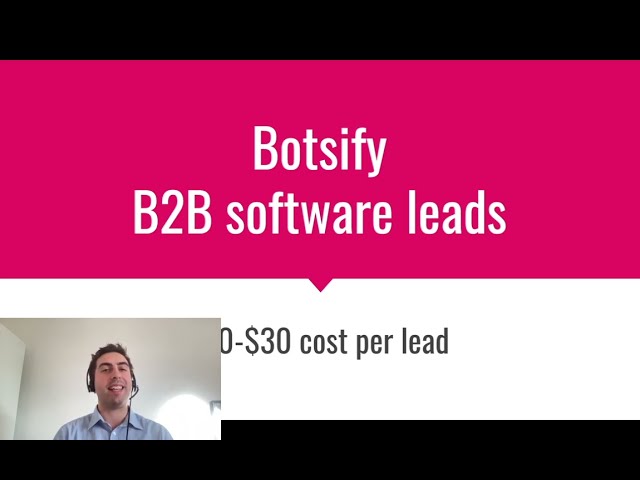
First, the choice of platform. Why did they choose LinkedIn over Meta? Or Google Search over TikTok? There must be a solid, strategic reason. For a B2B client trying to sell high-ticket software to CTOs in the finance industry, LinkedIn is a no-brainer because of its specific job title and industry targeting. We ran a campaign like this and got qualified leads for $22 a pop, a bargain when the LTV is in the tens of thousands. If an agency had proposed running that on TikTok, I'd have shown them the door.
Conversely, if you're selling a subscription box for dog owners, Meta (Facebook/Instagram) is perfect because of its powerful interest targeting capabilities. A good case study will explain this logic. It'll say something like, "The client's customers were actively searching for solutions, so we prioritised Google Search to capture high-intent traffic," or "The client's product solved a problem people didn't know they had, so we used Meta's prospecting tools to create demand with problem-aware creative."
Second, the targeting strategy. How did they reach the right people? "We used lookalike audiences" is not an answer. Which lookalikes? A lookalike of "all website visitors" is broad and often useless. A lookalike of "highest value previous customers" is pure gold. A good agency prioritises audiences based on their position in the funnel. They start with the highest-intent audiences first—people who have abandoned their cart, for example—and work their way out to colder prospecting audiences. Look for this level of detail. Do they mention layering interests? Targeting specific member groups on LinkedIn? Using customer lists? This is the craft of paid advertising, and it should be on display.
Third, the creative and messaging. This is arguably the most important part. You can have the best targeting in the world, but if your ad is boring, irrelevant, or unclear, no one will click. A case study should ideally show you the ads. Failing that, it should explain the messaging strategy. Did they use a Problem-Agitate-Solve framework to tap into customer pain? Did they use a Before-After-Bridge to paint a picture of transformation?
For example, you don't sell "fractional CFO services." You sell a good night's sleep to a founder who's terrified of a cash flow crisis. Your ad should reflect that. It should agitate the pain: "Are your cash flow projections just a shot in the dark? Are you one bad month away from a payroll crisis?" Then it provides the solution. This is the level of psychological insight that separates great campaigns from the mediocre ones that just list product features.
A case study that includes these details shows you an agency that has a repeatable process, not just a series of one-off wins. They have a system for diagnosing problems and implementing solutions, which is exactly what you should be paying for.
You'll need to verify the context and relevance...
This might be the most overlooked aspect of evaluating a case study. You need to ask yourself: "Is this result relevant to *my* business?" An agency that achieved a 10x ROAS for a fast-fashion eCommerce brand selling £20 t-shirts might be completely out of their depth trying to market your £50k industrial machinery.
The business models are completely different. The B2C brand has a short sales cycle, an emotional purchase trigger, and relies on high volume. The B2B machinery company has a 9-month sales cycle, a committee of buyers, a logical purchase trigger, and relies on a handful of high-value deals. The strategies required are worlds apart. You can't just apply the same playbook.
So, look for case studies in your niche or a closely related one. If you're a B2B SaaS founder, look for other B2B SaaS case studies. If they've got them, great. It shows they understand your world. If all they have are eCommerce examples, be very sceptical. It doesn't mean they're a bad agency, but it does mean they'll be learning how to market your type of business on your dime.
Another piece of context is the starting point. Did the agency take a brand-new business from £0 to £100k? That's a "Launch" campaign. Or did they take a business that was stuck at £50k/month and scale it to £250k/month? That's a "Scaling" campaign. Or did they take an account that was burning £10k/month with a negative ROI and make it profitable? That's a "Turnaround" campaign.
These are three very different challenges. A turnaround requires deep diagnostic skill to find and fix what's broken. We once took a client with a £100 CPA and brought it down to £7. That was a detailed review of their funnel, offer, and tracking. Scaling requires a deep understanding of how to manage budgets and fight audience saturation. Launching requires a knack for creating initial momentum from a standing start. An agency might be great at one but not the others. The case study should give you a sense of the situation they walked into. If it doesn't, you should ask.
Understanding Campaign Context
A great result means different things depending on the starting point. Here’s what to look for in different types of case studies:
The client was burning cash with unprofitable ads. The funnel was broken, and the previous agency was failing.
The client had a working formula but had hit a ceiling. They couldn't increase spend without their CAC skyrocketing.
A new product or company with no brand recognition, no pixel data, and no existing customer base. A cold start.
And finally, be wary of the red flags...
As you go through these documents, you'll start to notice patterns. Some of them are big, flashing red lights that should make you very cautious.
Vagueness is the biggest red flag. Statements like "we significantly improved results" or "drove substantial growth" are meaningless. They're filler. If they can't attach a specific, quantifiable number to a claim, you should assume the number wasn't impressive.
Lack of a timeline is another. A case study that says "We generated £500k in revenue" is hiding an important detail. Was that over one month or two years? The difference is enormous. A good case study will always specify the time period over which the results were achieved.
An obsessive focus on superficial metrics. We have a case study for a luxury brand where we got them "10 Million Views." It sounds amazing, right? But for that specific campaign, the goal was pure brand awareness for a launch. For 99% of businesses, "views" is a worthless metric. It doesn't pay the bills. If a case study for a business that needs to make sales is bragging about impressions, reach, or clicks, it's because they probably failed to generate any actual sales.
No mention of challenges. Every single campaign has problems. Ads stop working, audiences get saturated, tracking breaks. It's part of the job. A case study that presents a perfect, rosy picture of non-stop success is probably not telling you the whole story. I have more respect for an agency that says, "We faced a 50% increase in CPMs in month three, and here's how we pivoted our creative strategy to overcome it." That shows resilience and problem-solving skills, which are far more valuable than a lucky streak.
Finally, a subtle point. After you've done your research, reviewed their case studies, and had an initial call where they've hopefully given you some free, valuable advice, you should have a pretty good gut feeling. Tbh, if someone gets through all that with us—they've seen our detailed case studies, had a free account audit—and then asks to speak to one of our existing clients for a reference, it's an instant red flag for us. It signals a fundamental lack of trust. That kind of relationship rarely works out well. The proof should be in the work they show you and the expertise they demonstrate. If that's not enough, they're probably not the right fit for you, and you're not the right fit for them.
I've detailed my main recommendations for you below:
Case Study Audit Blueprint
Use this matrix as a checklist when reviewing any agency case study to ensure you're making a decision based on substance, not just style.
| Evaluation Area | What to Look For | Main Question | Red Flag |
|---|---|---|---|
| 1. Unit Economics | Evidence of profitable customer acquisition (CAC vs. LTV), not just revenue or ROAS. | Does this case study prove the agency can make their client money profitably? | Obsession with ROAS; no mention of margins or CAC. |
| 2. Strategic Depth | Discussion of the customer's core problem, the offer, and the landing page strategy. | Did they fix the whole system, or just run ads at a broken funnel? | Only talks about ad-level metrics like CTR or CPC. |
| 3. The How | Specific details on platform choice, targeting logic, and creative/messaging angles. | Do they have a repeatable process, or did they just get lucky? | Vague descriptions like "optimised targeting". |
| 4. Relevance & Context | Success with similar business models, niches, or challenges (Turnaround, Scale, Launch). | Have they solved *my* kind of problem before? | All case studies are from completely different industries. |
At the end of the day, a case study is just a starting point. It gets an agency a foot in the door. The real test is the first conversation. Do they ask informed questions about your business? Do they immediately start offering valuable, specific ideas, or do they just give you a generic sales pitch? Do they talk more about their custom process or your profit margins?
This is why we offer a free initial consultation where we actually get into a potential client's ad account and review their strategy with them. It gives them a real taste of the expertise they'd be getting. By the end of that call, they know whether we're the real deal or not, far better than any PDF ever could.
Doing this level of analysis is hard work. It takes time and a certain level of expertise to spot the gaps. If you're feeling out of your depth trying to sort the good from the bad, it might be worth considering getting some expert help. A good partner doesn't just run your ads; they provide the strategic clarity you need to grow confidently.
Hope this was helpful. If you'd like to have a chat and get a second pair of eyes on your own situation or on an agency you're considering, feel free to book in a free, no-obligation consultation with us.
Regards,
Team @ Lukas Holschuh
Cite this Q&A Guide
If referencing this research, data, or strategy in your publication, please use the attribution below.

Lukas Holschuh
Founder, Growth & Advertising Consultant
Great campaigns fail without expertise. Lukas and his team provide the missing strategy, optimizing your entire advertising funnel—from ad creatives and copy to landing page design.
Backed by a proven track record across SaaS, eLearning, and eCommerce, they don't just run ads; they engineer systems that convert. A data-driven partnership focused on tangible revenue growth.