TLDR;
- Your Ideal Customer Profile isn't a demographic; it's a specific, expensive problem state. Stop targeting companies with generic employee ranges and start targeting the nightmare that keeps a specific person awake at night.
- You can't know if your ads are profitable without knowing your numbers. The most important calculation is your Customer Lifetime Value (LTV). This tells you your maximum allowable Customer Acquisition Cost (CAC) and stops you from optimising for cheap, useless leads. I've included an interactive LTV calculator below to help you with this.
- The "Request a Demo" button is where B2B ad spend goes to die. Your offer must provide immediate, undeniable value for free. This could be a free trial, an interactive tool, or a free audit. Solve a small problem to earn the right to solve the big one.
- Brand awareness campaigns on platforms like Meta are a trap. You're paying to reach the people least likely to ever buy from you. Always optimise your campaigns for a conversion objective like leads or sales from day one.
- There's a clear system for structuring and testing audiences, from broad interests down to hyper-specific retargeting. It's not a guessing game.
Hi there,
Thanks for reaching out. It sounds like you're at that point many startups hit: you've got something built, and now you need to figure out how to get it in front of the right people without setting your funding on fire. Paid advertising can feel complex, but it's a powerful tool if you approach it systematically.
I'm happy to give you some initial thoughts and guidance based on what I've seen work and, more often, what I've seen fail for the startups we've partnered with. A lot of agencies will jump straight into talking about platforms and bidding strategies, but that's the final part of the puzzle. Great campaigns fail all the time because the foundations are faulty. So let's start there.
Your ICP is a Nightmare, Not a Demographic
First things first, let's talk about who you're actually selling to. I'd be willing to bet you've got a document somewhere that defines your Ideal Customer Profile (ICP) with lines like companies in the finance sector with specific employee ranges or marketing managers in certain age brackets. You should probably just bin it.
That kind of sterile, demographic-based profile tells you nothing of value. It leads to generic ads that speak to no one, and you end up wasting your budget trying to reach thousands of people who couldn't care less about your product. To stop burning cash, you have to define your customer by their pain. Not just any pain, but their specific, urgent, expensive, career-threatening nightmare.
Your ICP isn't a person; it's a problem state. Your job is to become an expert in that problem state. A head of engineering isn't just a job title; she's a leader who lies awake at 3 a.m. terrified that her best developers are about to quit out of sheer frustration with a broken workflow. The founder of a legal tech SaaS we worked with wasn't selling document management; they were selling a solution to the nightmare of a partner missing a critical filing deadline and exposing their firm to a multi-million-pound malpractice suit.
See the difference? One is a job title. The other is a story with high stakes. When you understand the nightmare, your messaging writes itself. You stop selling features and you start selling a solution to a problem that's causing real, tangible stress.
So how do you find this nightmare? You have to do the work. Talk to your first few customers. If you don't have any, talk to people you think should be customers. Ask them what their biggest frustration is at work. What tasks do they hate? What keeps them from getting a promotion? What would make them look like a hero to their boss? Listen to the exact words they use. Read forums in your niche. Look at the negative reviews for your competitors' products. The nightmare is in there.
Once you've isolated that nightmare, you can figure out where these people actually live online. It’s not about just targeting finance as an interest on Facebook. It's about finding the niche signals. Do they listen to specific podcasts on their commute, like Acquired? Do they read industry newsletters they actually open, like Stratechery? Are they paying for SaaS tools you can target, like HubSpot or Salesforce? Are they members of specific professional groups online? Do they follow specific influencers on LinkedIn?
This intelligence isn't just data; it's the blueprint for your entire targeting strategy. If you don't do this work first, you have no business spending a single pound on ads.
You'll need to know the math that actually matters
Once you know whose nightmare you're solving, you need to know what solving it is worth to your business. The biggest mistake I see startups make is obsessing over low-level metrics like Cost Per Click (CPC) or even Cost Per Lead (CPL). They'll say they got their CPL down to £10, which sounds great until you find out none of those leads ever convert into paying customers.
The real question isn't how low can my CPL go, but how high a CPL can I afford to acquire a truly great customer? The answer lies in its counterpart: Customer Lifetime Value (LTV).
Without knowing your LTV, you're flying blind. You have no way of knowing if your ad spend is a profitable investment or a donation to platform shareholders. Most early-stage founders guess at this, but you can calculate a pretty solid estimate with just a few core numbers about your business.
The basic formula is as follows:
LTV = (Average Revenue Per Account * Gross Margin %) / Monthly Churn Rate
Let's break that down with an example for a hypothetical SaaS startup:
- Average Revenue Per Account (ARPA): What do you make per customer, per month on average? Let's say it's £200.
- Gross Margin %: What's your profit margin on that revenue after accounting for costs of service such as server costs and support staff? For SaaS, this is often high. Let's say it's 80%.
- Monthly Churn Rate: What percentage of customers do you lose each month? This is critical. Let's say it's 5%.
Now, let's do the math:
LTV = (£200 * 0.80) / 0.05
LTV = £160 / 0.05 = £3,200
In this example, every new customer you sign up is worth £3,200 in gross margin to your business over their lifetime. This number changes everything.
Now you have the truth. With a £3,200 LTV, you can start making intelligent decisions. A healthy rule of thumb for sustainable growth is a 3:1 LTV to Customer Acquisition Cost (CAC) ratio. This means you want to spend no more than a third of your LTV to acquire a customer.
Allowable CAC = LTV / 3 = £3,200 / 3 = ~£1,066
You can afford to spend up to £1,066 to acquire a single new customer and still have a very healthy, scalable business model. Now, let's take it one step further. What if your sales process converts 1 in 10 qualified leads into a paying customer representing a 10% lead-to-customer rate?
Allowable CPL = Allowable CAC * Lead-to-Customer Rate = £1,066 * 0.10 = £106.60
Suddenly, that £75 lead you got from a highly targeted LinkedIn campaign doesn't seem expensive anymore, does it? It looks like a bargain. Meanwhile, the founder chasing £5 leads from a broad Facebook audience is wondering why their business isn't growing. They're getting leads, but they're the wrong leads, and they can't afford to acquire the right ones because they don't know their numbers.
This is the math that unlocks aggressive, intelligent growth. It frees you from the tyranny of cheap, low-quality leads and gives you the confidence to invest in channels that deliver real customers. To make this more tangible for you, I've put together a small calculator based on this framework. Play around with your own numbers and see what your allowable CAC and CPL look like.
LTV & Allowable Acquisition Cost Calculator
Enter your business's unit economics to understand what you can truly afford to spend on advertising.
I'd say you should choose your battleground carefully
With a clear idea of whose nightmare you're solving and what you can afford to pay to acquire them as a customer, the next question is where to find them. This is where most people jump straight to asking whether they should use Facebook or Google without thinking about the underlying mechanics of each platform.
It really boils down to one thing: is your ideal customer actively searching for a solution to their problem right now, or are they completely unaware that a solution like yours even exists?
A) If they are actively searching (Problem Aware) -> Google Search Ads
This is the lowest-hanging fruit. If someone is typing software for lead generation or an AI implementation service into Google, they have a clear intent to buy. They have the nightmare, and they're looking for the cure. Your job is simply to show up with a relevant ad that directs them to a page that solves their problem.
For a medical job matching SaaS client, we were able to reduce their cost per user acquisition from a painful £100 down to just £7, largely by refining their ad strategy to focus on high-intent search queries. We stopped bidding on broad, informational terms and focused only on queries that signalled someone was looking to buy, not just learn. The volume was lower, but the quality was infinitely better, and the business became profitable on ads for the first time.
This is about capturing existing demand. It's often the best place for a startup to start because the feedback loop is fast, and you're talking to people who are already halfway to making a purchase decision.
B) If they aren't searching (Problem Unaware) -> Social Media / Display Ads
This is a different game entirely. Here, you're not capturing demand; you're creating it. Your ideal customer might be scrolling through LinkedIn or Instagram with no intention of buying anything. Your ad has to interrupt them, educate them about the nightmare they might not even be fully aware of, and present your solution as the answer.
The platform choice here depends heavily on that ICP work you did earlier.
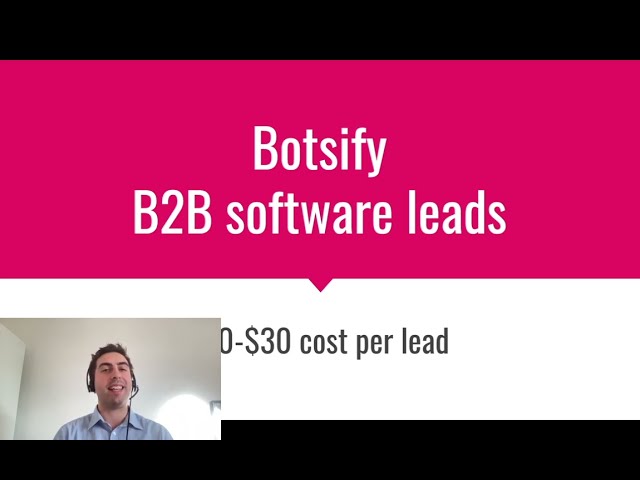
If you need to reach specific decision-makers in specific industries, your best option is almost always LinkedIn Ads. The B2B targeting is unparalleled. You can get incredibly granular, but it comes at a price as platform costs are much higher. This is where knowing your allowable CPL is not just useful, it's mandatory. We run many campaigns on LinkedIn that generate B2B leads for around $22, but they are profitable because the leads are high-quality decision-makers.
To do this effectively, you need to think in layers. Don't just target a job title. Layer multiple criteria to build a precise picture of your ICP.
LinkedIn Ads Targeting Layering Framework
Layer 1: Company Parameters (Mandatory Boundary)
Target Company Size (e.g., 51–200, 201–500 employees) AND Target Industry (e.g., Financial Services, Software Development).
Layer 2: Role Authority (Seniority + Function)
Job Functions (e.g., Information Technology, Finance) AND Seniority (e.g., Director, VP, CXO, Owner).
Layer 3: Explicit Intent & Skills (Optional Precision)
Member Groups OR Specific Skills listed on profile (e.g., Cloud Architecture).
If your audience is a bit broader, perhaps small business owners or prosumers, then Meta (Facebook/Instagram) can be incredibly effective and much cheaper. For one B2B software client, we generated 4,622 registrations at just $2.38 each using Meta Ads. The targeting is less precise than LinkedIn's so your ad creative and copy have to do more of the heavy lifting to call out and pre-qualify your audience.
But there's a huge trap here. A lot of people starting out on Meta will choose reach or brand awareness campaign objectives. This is an uncomfortable truth, but when you select these, you are giving the algorithm a very specific command to find the largest number of people for the lowest possible price.
The algorithm does exactly what you asked. It seeks out the users inside your targeting who are least likely to click, least likely to engage, and least likely to ever buy anything. Why? Because those users are not in demand. Their attention is cheap. You are actively paying the world's most powerful advertising machine to find you the worst possible audience for your product.
Awareness is a byproduct of making sales, not a prerequisite for it. From day one, your campaigns should be set to optimise for a meaningful conversion event—a lead, a trial sign-up, or a purchase. This tells the algorithm to go and find people who look and act like the people who actually take the action you want them to take. It costs more per impression, but you're fishing in a much better pond.
You probably should delete the "Request a Demo" button
Now we arrive at what is, without a doubt, the most common failure point in all of B2B advertising: the offer. You can have the perfect ICP, nail your LTV calculation, and pick the right channel, but if your offer is weak, your entire funnel will collapse.
The "Request a Demo" button is perhaps the most arrogant call to action ever conceived. It presumes that your prospect, a busy decision-maker whose nightmare you're supposedly solving, has nothing better to do than book a 30-minute slot in their calendar to be sold to. It's high-friction, low-value, and instantly positions you as just another commoditised vendor begging for their time.
As a startup, you have to do better. Your offer's only job is to deliver a moment of undeniable value—an aha moment that makes the prospect sell themselves on your solution. You must solve a small, real problem for free to earn the right to solve the whole thing.
For a SaaS founder, this is your unfair advantage. The gold standard is a free trial with no credit card details required or a freemium plan. Let them use the actual product. Let them feel the transformation from their current painful state to a better one. When the product itself proves its value, the sale becomes a formality. I've helped SaaS clients massively increase their trial sign-ups simply by removing the credit card requirement upfront. You stop generating marketing qualified leads for a sales team to chase; you start creating product qualified leads who are already convinced.
If you're not a SaaS company, you are not exempt. You must bottle your expertise into a tool, content, or an asset that provides instant, tangible value.
- For a marketing agency, this could be a free, automated SEO audit that shows them their top 3 keyword opportunities.
- For a data analytics platform, a free data health check that flags the top issues in their database.
- For a corporate training company, a free 15-minute interactive video module on handling difficult conversations that a new manager can use immediately.
- For us, as an advertising consultancy, it's a 20-minute strategy session where we audit a company's failing ad campaigns and give them an actionable plan, completely free of charge.
The impact of shifting from a high-friction request a demo button to a high-value sandbox offer is not marginal. It's transformative. It fundamentally changes the economics of your entire funnel.
The Math of a Better Offer
Assuming a monthly ad budget of £2,000 at an average Cost Per Click (CPC) of £4.00 representing 500 clicks per month:
By improving the offer, your effective Cost Per Lead decreases significantly and you get four times the leads, all without increasing your ad spend by a single penny.
You'll need a message they can't ignore
Once you have a high-value offer, you need to wrap it in a message that speaks directly to the nightmare of your ICP. Good ad copy isn't about being clever; it's about being clear and empathetic. It shows the customer you understand their world and their problem better than anyone else.
There are a few proven frameworks that work well, depending on what you're selling.
For a high-touch service business, you can use the Problem-Agitate-Solve framework. You don't sell fractional CFO services; you sell a good night's sleep. Your ad copy would sound something like this:
"(Problem) Are your cash flow projections just a shot in the dark? (Agitate) Are you one bad month away from a payroll crisis while your competitors are confidently raising their next round? (Solve) Get expert financial strategy for a fraction of a full-time hire. We build dashboards that turn uncertainty into predictable growth."
For a B2B SaaS product, the Before-After-Bridge framework is incredibly powerful. You're not selling a FinOps platform; you're selling the feeling of relief.
"(Before) Your AWS bill just arrived. It’s 30% higher than last month, and your engineers have no idea why. Another fire to put out. (After) Imagine opening your cloud bill and smiling. You see where every dollar is going, and waste is automatically eliminated. (Bridge) Our platform is the bridge that gets you there. Start a free trial and find your first £1,000 in savings today."
Even for high-ticket physical products, you have to attack the obsession with features head-on. Don't just state the spec; state its consequence. Give the so what factor.
"Our new mass spectrometer has a 0.001% margin of error. So what? So your lab can publish results with unshakeable confidence, securing more funding and attracting top talent that other labs can only dream of."
The common thread here is that none of these examples lead with the product. They lead with the customer's problem. They show deep empathy for the nightmare and position the product or service as the logical, compelling solution.
I'd say you need a system for testing and scaling
Alright, so you've got your foundations sorted: you know the nightmare, you know your numbers, you've picked a channel, you have a killer offer, and you've drafted some compelling copy. Now, and only now, are you ready to actually start running ads.
The biggest mistake I see here is what I call random acts of advertising. People boost a post here, try a random interest there, and wonder why nothing works. You need a structure. A system for testing audiences that allows you to see what's working, what's not, and double down on the winners.
When I audit Meta ad accounts, this is the prioritisation I generally follow. The principle is simple: the further along in the funnel an audience is, the better it will usually perform. This applies to most platforms.
Audience Testing Funnel Architecture
Here’s how you should think about prioritising your audience tests:
Top of Funnel (ToFu) - Prospecting Cold Audiences:
This is where you find new people. For a new ad account, you'll start here.
- 1. Detailed Targeting: This is your bread and butter initially. Use the interests, behaviours, and competitor pages you identified during your ICP research. Group them into logical themes. For example, if you sell a project management tool for developers, you might have one ad set targeting agile software development interests and another targeting followers of developer platforms.
- 2. Lookalike Audiences: Once you have enough data, you can create lookalike audiences. These are people who look like your best customers. You should prioritise creating lookalikes based on your most valuable conversion events first. Start with a lookalike of your actual customers, then work your way up the funnel to people who started a trial and those who added items to a cart.
- 3. Broad Targeting: This is for when your account has a lot of conversion data. You essentially remove all detailed targeting and trust the platform's algorithm to find the right people based on its history. This can work incredibly well but is a good way to burn cash if you try it too early.
Middle & Bottom of Funnel (MoFu/BoFu) - Retargeting Warm/Hot Audiences:
These are people who have already interacted with you in some way. They are your most valuable audiences and will almost always give you the best Return on Ad Spend (ROAS).
- Hottest (BoFu): People who abandoned their checkout or added a product to the cart but didn't buy. They were seconds away from converting. A simple ad reminding them to complete their purchase can be hugely profitable.
- Warm (MoFu): People who visited your website, viewed specific product or pricing pages, or watched a significant portion of your video ads. They've shown interest but aren't as close to converting. You might show them a different ad, perhaps a customer testimonial or a case study, to build more trust.
- Previous Customers (BoFu): Don't forget these. Depending on your business, you might want to upsell them, cross-sell them, or just exclude them to avoid wasting money.
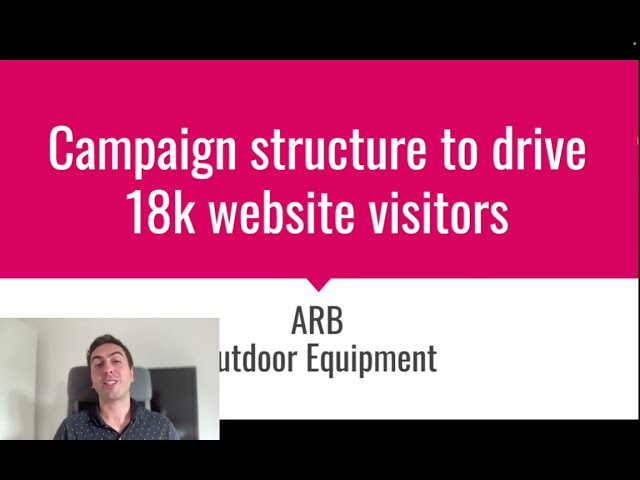
The goal is to have a long-term campaign for each stage of this funnel. Inside your prospecting campaign, you systematically test different interest and lookalike audiences. When an audience has spent twice your target CPA without a conversion, you turn it off and test a new one. The winners get more budget. Your retargeting campaign runs continuously, showing specific messages to people based on how they've interacted with you.
This isn't a set-it-and-forget-it process. It's a continuous cycle of testing, learning, and optimising. But with a clear structure, it stops being a gamble and starts being a predictable system for growth.
This is the main advice I have for you:
I know this is a lot to take in. To make it more concrete, I've broken down the entire process into a diagnostic blueprint. This is the exact sequence of operations my team and I follow when we start working with a new startup. Think of it as your roadmap for the next 90 days.
Startup Paid Ads Action Blueprint
A prioritised roadmap to move from foundational strategy to profitable campaign execution. Follow these stages in order.
| Stage | Common Failure Point | Diagnostic Action Item | Expected Impact |
|---|---|---|---|
| 1. ICP Definition | Targeting broad demographics and job titles. | Interview 5-10 potential customers to identify a specific, urgent, and expensive nightmare. Map their watering holes online. | Highly Relevant Targeting |
| 2. Unit Economics | Optimising for cheap CPLs without knowing LTV. | Calculate your LTV, a 3:1 LTV:CAC ratio, and your true allowable CAC and CPL. Use the calculator above. | Profitable Ad Scaling |
| 3. Offer & Funnel | High-friction request a demo buttons burning budget on cold traffic. | Brainstorm and build a high-value, low-friction offer like a free trial or free audit to replace demo requests. | -75% Cost Per Lead |
| 4. Ad Execution | Random acts of advertising with no systematic testing structure. | Set up campaigns structured by funnel stage. Systematically test audiences, starting with detailed targeting. | Predictable Growth System |
Following this process might feel slower than just jumping into the ads manager and hitting go, but it's the difference between building a sustainable growth engine and just gambling. The principles are straightforward, but the execution requires expertise, time, and a relentless focus on the entire system from the ad creative to the landing page copy to the final conversion.
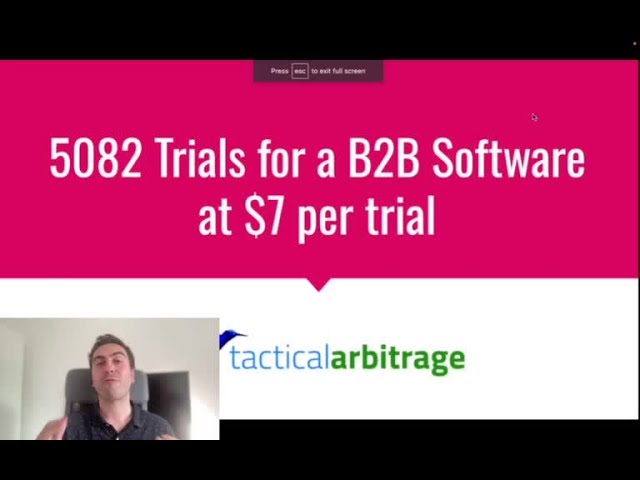
This is what we do. We don't just run ads; we engineer the entire system that converts traffic into revenue. We've worked with numerous software and tech startups, like one where we drove 5,082 trial sign-ups at just $7 each, and another where we took them from a £100 CPA down to a profitable £7 CPA. It's possible, but it requires a holistic approach.
If you've found this initial guidance helpful and you'd like to discuss how these principles could be applied specifically to your startup, we offer a free, no-obligation initial consultation. We can review your current strategy if you have one and dig into the specifics of your business to give you a clearer picture of what's possible.
Either way, I hope this has given you a solid framework to start with. Get the foundations right, and you'll be in a much stronger position than most.
Regards,
Team @ Lukas Holschuh
Cite this Q&A Guide
If referencing this research, data, or strategy in your publication, please use the attribution below.

Lukas Holschuh
Founder, Growth & Advertising Consultant
Great campaigns fail without expertise. Lukas and his team provide the missing strategy, optimizing your entire advertising funnel—from ad creatives and copy to landing page design.
Backed by a proven track record across SaaS, eLearning, and eCommerce, they don't just run ads; they engineer systems that convert. A data-driven partnership focused on tangible revenue growth.