TLDR;
- Most agency case studies are marketing fluff. They use superficial metrics like 'impressions' and big ROAS numbers without context to look good. Your job is to see through this.
- A good case study is a story about solving a business problem, not just an ads problem. Look for a clear 'before' state, a specific diagnosis, and a transparent 'after' state.
- The most important piece of advice is to ignore headline numbers and focus on the unit economics. An agency that talks about Customer Lifetime Value (LTV) and allowable Customer Acquisition Cost (CAC) understands profitable scaling. An agency that only talks about a low Cost Per Lead (CPL) will probably just send you junk.
- This guide includes a calculator to help you figure out your own LTV and what you can actually afford to pay for a new customer. This is the number that really matters.
You’re looking for an agency, so you start digging through their case studies. And almost immediately, you get that sinking feeling. They’re all the same. Huge, flashy numbers, talk of ‘skyrocketing engagement’, and a 10x Return on Ad Spend (ROAS) that seems almost too good to be true. It probably is.
The problem is that most case studies aren't written to inform you. They're written to sell you. They are carefully crafted marketing assets designed to hide the messy reality of advertising and show the agency in the best possible light. They are the equivalent of a social media influencer's holiday snaps – you're only seeing the highlight reel, not the delayed flight or the food poisoning.
You're running a real business. You're bogged down, you're juggling a dozen things at once, and you need a partner who can genuinely make your life easier and your business more profitable. You don't need empty metrics; you need operational efficiency and a return you can actually take to the bank. So, let’s bin the marketing nonsense and talk about how you can dissect these documents to find a team that actually knows what they’re doing.
Why do most agency case studies feel like a total waste of time?
Let's be completely honest. An agency has one goal with a case study: to sign you as a client. This means they will cherry-pick their absolute best-performing client, likely one that was already on a winning trajectory, and present the results in the most flattering way imaginable. They're not lying, necessarily, but they are masters of strategic omission.
You’ll see them boast about generating "10 million impressions" for a luxury brand. So what? How many of those impressions turned into customers? I’ve seen campaigns hit massive impression numbers by showing ads to people in countries with no disposable income. The numbers look great on a slide deck, but they do absolutely nothing for the client's bottom line. It’s the digital equivalent of putting a billboard in the middle of the desert.
Then there’s the classic ROAS trap. A "10x ROAS" sounds incredible, and for some businesses, it is. We’ve achieved that for clients like a subscription box company we worked with. But the number on its own is meaningless without context. What was their profit margin? If the margin is only 20%, a 10x ROAS means they are still losing money on every sale once you factor in the cost of goods, shipping, and staff. The agency looks like a hero, but the business owner is quietly going broke.
A lot of these case studies also conveniently forget to mention the starting point. They show you a graph that goes straight up and to the right, but they don't tell you they took on a client with a viral product and a £200,000 per month ad budget. Of course they got results. That’s not skill; that's just aiming a fire hose at a target. It has absolutely no relevance to you as a boutique gift shop owner trying to scale past your first 1,000 customers on a tight budget.
The real damage of these dodgy case studies is that they distract from the one thing that actually matters: an agency's ability to think. A good agency isn't just a group of people who are good at clicking buttons in Google Ads. They are business consultants who use advertising as a tool to solve deeper problems. The case study is your first and best chance to see how their brains work. You just need to know what to look for.
So, what should I actually be looking for in a case study?
A genuinely insightful case study isn’t a victory lap. It’s a diagnostic report. It should read less like an advert and more like a detective story. It walks you through a complex business problem and shows you, step-by-step, how the agency applied a logical system to solve it. When my team and I write a case study, we structure it around this narrative, because it's the only way to demonstrate true expertise.
You need to break it down into four parts: The 'Before' State, The 'Diagnosis', The 'Execution', and The 'After' State.
1. The 'Before' State: What was the actual business problem?
A weak case study will say something like, "Client X wanted to increase sales." That’s not a problem; it’s a wish. A strong case study diagnoses a specific, painful business bottleneck. It sounds more like this:
- "The client, a football startup, was getting tons of organic interest but their sales team was completely overwhelmed by unqualified messages. They were spending hours every day on low-quality chats with people who weren't ready to buy, while serious customers were left waiting."
- "A B2B software client had a high Cost Per Lead, but the bigger issue was that 90% of those leads never converted into a sale. Their pipeline was full of junk, and their sales team's morale was at rock bottom."
- "An eCommerce client was getting plenty of traffic to their website, but their Average Order Value (AOV) was stagnant. They were selling lots of low-margin items, making it impossible to scale their ad spend profitably."
See the difference? These are real, operational problems. They are about workflow, efficiency, and profitability, not just "more traffic." If a case study can’t clearly articulate the business pain in the first couple of paragraphs, the agency probably never understood it in the first place. They just saw a nail and started hammering.
2. The 'Diagnosis' & 'Strategy': Why did they do what they did?
This is where you separate the tacticians from the strategists. A tactician will say, "We launched a new set of Facebook ads." A strategist will explain *why* that was the right or wrong move. The diagnosis is the most important part of the entire case study.
Did the agency identify that the core issue wasn't the ads at all, but a dreadful landing page? I had a client once, a SaaS business, who was burning through cash. Everyone told them they needed better ad creative. But during our initial audit, we realised the real problem was their offer. They were demanding prospects "Request a Demo," which is a huge commitment for cold traffic. The friction was immense. Our strategy wasn’t to make new ads; it was to scrap the 'Request a Demo' offer and build a free, interactive tool that delivered instant value. The ads were fine; the business offer was broken.
A good case study should talk about this diagnostic process. It should show that the agency looked at the entire funnel – from the ad copy to the landing page, the checkout process, and even the email follow-up sequence. They should be able to explain their overarching strategy. Was it to increase customer LTV so they could afford to spend more on acquisition? Was it to pre-qualify leads more aggressively to save the sales team's time? The strategy gives you a window into their problem-solving ability.
3. The 'Execution': What did they *actually* do?
Once the strategy is clear, the execution details should fall into place. This section needs to be specific. Vague statements like "we optimised the campaigns" are a major red flag. It's like a chef saying their secret ingredient is "food."
You want to see the details. For example:
- Instead of: "We improved their targeting."
Look for: "We identified that their ICP wasn't a demographic ('mums aged 30-45'), but a problem state ('new parents feeling overwhelmed and isolated'). We shifted targeting away from broad interests and towards users in specific parenting groups and followers of key parenting influencers, using ad copy that spoke directly to their feelings of exhaustion." - Instead of: "We created new ad creatives."
Look for: "We ran a split test between polished studio-shot product photos and a series of user-generated content (UGC) style videos. The UGC videos, which showed real customers unboxing and using the gift boxes, outperformed the studio shots with a 200% higher click-through rate and a 40% lower Cost Per Purchase." - Instead of: "We optimised the landing page."
Look for: "The original landing page was a generic product grid. We built a new page with a 'Gift Finder Quiz' that guided users to the perfect product based on their occasion and recipient. This single change increased the conversion rate from 1.5% to 4% and lifted the Average Order Value by 25%."
The specifics matter. They prove the agency has a process for testing and a deep understanding of what actually moves the needle.
4. The 'After' State: The real numbers, with context.
Finally, we get to the results. But again, the headline number is the least interesting part. A good case study will provide a dashboard of metrics that tell the whole story.
It won’t just say "10x ROAS." It will say: "Achieved a 10x blended ROAS across all campaigns, scaling monthly ad spend from £5k to £30k. This was possible because our funnel optimisations increased the sitewide conversion rate from 1% to 3.5%, and the AOV increased by £15. The Cost Per Acquisition dropped from £50 to a stable £25, which was well within their target based on a 4:1 LTV:CAC ratio."
That single paragraph tells you everything. It shows they can scale, that they improved the underlying business metrics (conversion rate, AOV), and that they measure success against the metrics that actually matter for profitability (LTV:CAC). It shows they are running the business's growth, not just an ad account. That’s the kind of partner you want.
How do I decode the numbers so I don't get fooled by superficial metrics?
This is where you need to put your cynical hat on and become a meticulous analyst. The numbers in a case study are your best clues, but you need to know how to interpret them. Let's break down the common culprits and what you should be looking for instead.
ROAS (Return On Ad Spend): The Great Deceiver
As we've touched on, ROAS is probably the most abused metric in digital marketing. It's simply Revenue / Ad Spend. A £10,000 revenue from £1,000 ad spend is a 10x ROAS. Sounds great. But what if the Cost of Goods Sold (COGS) for those products was £8,000? Add the £1,000 ad spend, and your total cost is £9,000. You've made £1,000 in gross profit. Now, subtract the agency's fee, shipping costs, software costs... and you're likely in the red. The agency gets to slap a "10x ROAS" sticker on their website while you're losing money.
When you see a ROAS figure, your first question should be: What is the business's gross margin? A good agency should know this, or at least be thinking about it. For a typical eCommerce business with a 50% gross margin, you need a ROAS of at least 2x just to break even on the ad spend and COGS. To actually be profitable, you need to be aiming for 3x, 4x or higher.
The second question is: Is this ROAS scalable? It's easy to get a high ROAS on a tiny budget by only targeting your most die-hard existing customers. I could get a 50x ROAS by spending £10 targeting a list of people who have bought from you five times already. The real test is whether they can maintain a profitable ROAS as they increase the spend and reach out to colder audiences. A case study that shows a 3.5x ROAS while scaling spend from £2k/month to £25k/month is far more impressive than one showing a 15x ROAS on a £200 budget.
CPL (Cost Per Lead) & CPA (Cost Per Acquisition): Cheaper is Not Better
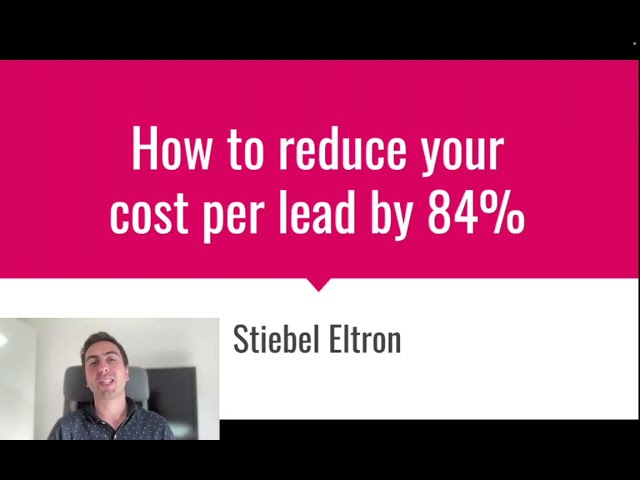
For businesses that generate leads or sell products, the cost to acquire a lead or customer is a big deal. Many agencies will brag about how they "slashed the CPL by 80%." I’ve done this for clients before, like reducing a £100 CPA to £7 for a medical job matching SaaS. But you have to be careful. More often than not, a dramatically lower CPL is a giant red flag.
Why? Because the easiest way to get cheap leads is to reduce friction and lower the qualification bar. You remove fields from a lead form, you target broader audiences, you run ads with click-baity copy. You get a flood of leads, the CPL plummets, and the agency celebrates. But two weeks later, your team is pulling their hair out because they're wasting all their time on calls with people who have no budget, no authority, and no real interest. You're not paying for leads; you're paying for endless frustrations.
Your question for CPL shouldn't be "How low can you get it?" but "What was the lead-to-customer conversion rate?" A case study that says, "We increased the CPL from £50 to £150, but because these leads were so much better qualified, the client's final Cost Per Acquisition dropped by 50% and their sales team closed deals in half the time" demonstrates a sophisticated understanding of business efficiency. They're solving your "bogged down" problem, not making it worse.
Superficial Metrics vs. Sanity Metrics: The Agency Litmus Test
Red Flags: The Superficial Metrics Trap
- × High ROAS (in isolation): Often hides poor profit margins or isn't scalable. Looks great, but can bankrupt you.
- × Low CPL (Cost Per Lead): Usually means low-quality, unqualified leads that waste your team's precious time and destroy morale.
- × Impressions & Reach: The ultimate superficial metric. Proves your ad was seen, but not that anyone cared or that it was even the right person.
- × Clicks & CTR: Means the ad was enticing, but says nothing about the quality of the traffic or if it converted. A high CTR with a low conversion rate is a waste of money.
Green Flags: The Sanity Metrics You Need
- ✓ LTV:CAC Ratio: The gold standard. Shows the agency understands profitable, long-term growth. A ratio of 3:1 or better is the goal.
- ✓ Qualified CPL / CPA: Focuses on the cost to acquire a lead or customer who actually meets your criteria. They value your time as much as your money.
- ✓ Conversion Rate & AOV Lift: Shows they improved the core mechanics of your business, not just the ads. This is where real value is created.
- ✓ Payback Period: How many months does it take to recoup the cost of acquiring a customer? A major metric for cash flow management that only true growth partners discuss.
LTV:CAC Ratio: The One Metric That Rules Them All
This brings us to the holy grail of growth metrics: the ratio of Customer Lifetime Value (LTV) to Customer Acquisition Cost (CAC). If an agency case study mentions this, you should pay very close attention. It’s a massive green flag that they operate on a much higher strategic level than 99% of their competitors.
LTV is the total profit you can expect to make from a single customer over the entire time they do business with you. CAC is the total cost to acquire that customer (not just ad spend, but sales and marketing costs too). A healthy business model typically has an LTV that is at least 3 times its CAC (a 3:1 ratio).
Why is this so important? Because it tells you what you can *afford* to pay to get a new customer. Once you know your LTV, you are freed from the tyranny of chasing cheap clicks and low CPAs. If you know a customer is worth £500 to you over their lifetime, paying £100 to acquire them is a no-brainer. You'd do that all day long. A competitor who doesn't know their numbers will panic at a £100 CPA and pull their spend, leaving the field wide open for you to dominate.
An agency that leads with LTV:CAC analysis is an agency that understands how to build a sustainable, scalable business. They're not just renting you traffic; they are engineering a growth engine. To help you get a handle on your own numbers, I’ve built a simple calculator below based on the models we use for our eCommerce clients.
eCommerce LTV & Allowable CAC Calculator
Figure out what a customer is actually worth to you, and what you can afford to pay to get a new one.
What if their case studies are all for massive companies or a different industry?
This is a common and fair question. You run a boutique gift shop, so a case study about a £100m B2B SaaS company feels completely irrelevant. Or is it? This is where you need to look past the industry label and focus on the *type of thinking* the agency demonstrates.
I’ve worked with clients across SaaS, eLearning, and eCommerce. On the surface, selling a software subscription is nothing like selling a women's apparel. But the underlying principles of growth are almost identical. It all comes down to a few core things: understanding customer psychology, building a funnel that converts, and managing the unit economics. An expert doesn't just know how to run Facebook ads for fashion brands; they know how to apply the fundamental laws of direct response marketing to *any* business.
Think of it like this: a world-class chef can probably cook an amazing meal whether they're in a Michelin-starred kitchen or on a camping stove. They understand the principles of heat, flavour, and texture. A line cook who has only ever made burgers will be lost if you ask them to make a fish dish. You want to hire the chef, not the line cook.
So, when you're reading that B2B SaaS case study, ignore the jargon and look for the transferable skills. Ask yourself:
- Do they demonstrate a system for diagnosing problems? The way they broke down the B2B client's sales funnel is likely the same process they'd use to analyse your customer journey.
- Do they talk about customer psychology? The reasons a CTO buys software are different from why a person buys a gift, but the process of identifying pain points, agitating them, and presenting a solution is universal. Did they show an understanding of their audience's deepest fears or desires?
- Do they focus on unit economics? LTV:CAC, payback period, and gross margin are universal business languages. If they show they managed these levers for a SaaS client, it's a huge indicator they can do the same for your eCommerce store. The numbers are different, but the financial discipline is the same.
- Did they solve an operational bottleneck? Maybe they built an automation for the SaaS client to pre-qualify leads. That shows they can think about your business as a whole system. They might be able to suggest an automation that streamlines your fulfillment process, saving you hours every week. That’s far more valuable than just getting you a few extra sales.
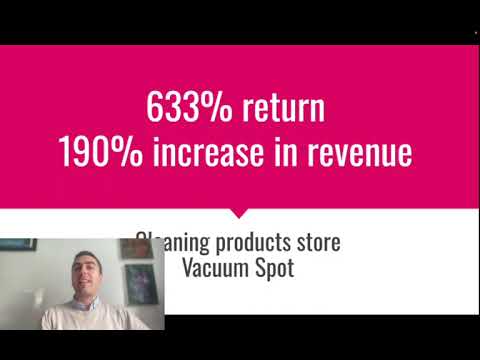
Sometimes, an agency with zero experience in your niche but a deep understanding of full-funnel optimisation is a much better bet than a self-proclaimed "gift shop specialist" who only knows how to run basic Shopify ads. The specialist will know the common tactics for your industry, but the generalist expert will be able to invent new strategies and find growth opportunities that the specialist would never see. For example, the principles we used to achieve a 691% return for a women's apparel client weren't specific to fashion; they were about rigorous creative testing and building a multi-stage retargeting system that could be applied to any eCommerce brand.
How can I use the case study to prepare for the first call with them?
The case study is not just an evaluation tool; it's your secret weapon for the introductory call. This is your chance to turn the tables and interview them, not the other way around. A good agency will love this. They’ll be thrilled to talk to an educated buyer who asks probing questions. A bad agency, one that relies on fluff and charm, will fall apart.
Your job is to take their perfect, polished story and poke holes in it. Not to be difficult, but to see what's underneath. Pick one of their flagship case studies and prepare a list of questions that go a level deeper than the text.
Below is your script:
If they brag about ROAS:
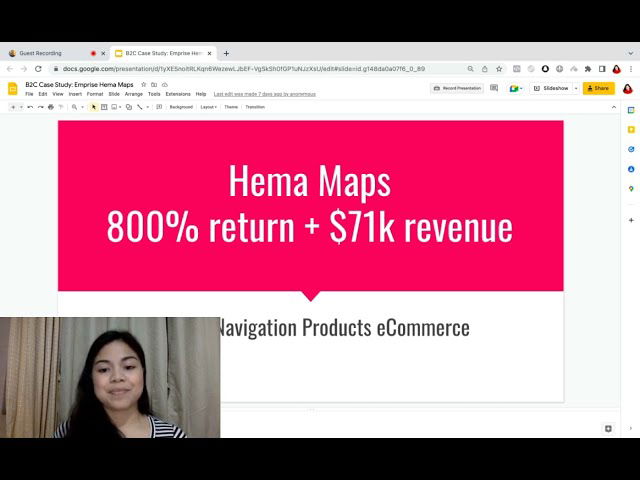
"I was really impressed with the 8x ROAS you achieved for the Maps & Navigation client. To help me understand that in context, can you tell me what their approximate gross margin was on those products? And was that 8x ROAS a short-term campaign result, or were you able to maintain that as you scaled their monthly spend?"
What you're listening for: Do they have a ready answer about margins? Do they talk about the trade-off between ROAS and scale? An expert will say something like, "That's a great question. Their margin was around 60%, so an 8x ROAS was extremely profitable. As we scaled spend from $10k to $50k a month, the ROAS settled at a very healthy 4.5x, but their total profit grew by 300%." A salesperson will say, "Uh, I'm not sure about the margin, but the revenue was $71k!"
If they brag about reducing CPA/CPL:
"Your case study on the student recruitment campaign mentioned reducing the cost per booking by 80%. That's a huge improvement. How did that impact the quality of the students being booked? Did you track the downstream metrics, like show-up rate or course completion, to ensure you weren't just generating cheaper, lower-quality bookings?"
What you're listening for: Do they immediately talk about quality? A top-tier agency will respond, "Absolutely. That was our main concern. Initially, the cheaper bookings had a slightly lower show-up rate, so we added an extra qualification step in the funnel. It pushed the cost per booking up by about 10%, but the final cost per *attended* student was still 70% lower than the original baseline." This shows they think about the full business impact, not just the top-line ad metric.
If they talk about funnel optimisation:
"You mentioned you 'redesigned the funnel' for one of your clients. Can you walk me through the specific hypothesis you were testing with the new design? What was the original conversion rate, what did you get it to, and what was the single biggest change that you believe made the difference?"
What you're listening for: Specifics. Can they articulate a clear, data-driven hypothesis? Do they know their numbers cold? An expert will sound like a scientist: "Our hypothesis was that the lack of social proof on the checkout page was causing cart abandonment. We A/B tested a version with customer testimonials and trust badges right below the 'buy' button. The original page converted at 2.2%, and the new version hit 3.1%. The testimonials were the clear winner." A waffler will say, "We just made it look more modern and user-friendly."
These questions cut right through the marketing gloss. They force the agency to demonstrate their thought process. If they can answer them confidently and with detail, you're likely talking to a team that knows their stuff. If they get defensive or vague, it's a huge red flag that the person who wrote the case study is the only one in the company who knows what happened.
Is there a final checklist I can use to grade these case studies?
Absolutely. It can be a lot to remember, especially when you're busy. When you’re sifting through agency websites, it’s useful to have a simple framework to quickly sort the promising from the pointless. Think of it as a quick audit. Pull up their best case study and run it through this filter.
This isn't about finding a perfect score; it's about seeing where the agency's focus lies. Do they consistently hit the 'Green Flags,' showing a deep understanding of business growth? Or are they a sea of 'Red Flags,' indicating they are probably just a glorified media buying service that will spend your money without much strategic thought?
I've detailed my main recommendations for you below in a simple table. Use it as your guide.
Agency Case Study Audit: Red Flag vs. Green Flag
A quick reference for grading an agency's case studies. The more green flags you see, the more likely they are a strategic partner rather than just an ad vendor.
| Evaluation Area | 🚩 Red Flag (Tactician) | ✅ Green Flag (Strategist) |
|---|---|---|
| The Problem | "Client wanted to increase sales." (Vague wish) | "Client's sales team was wasting 50% of their day on unqualified leads." (Specific business pain) |
| The Metrics | Focus on impressions, clicks, reach, and un-contextualised ROAS. | Focus on LTV:CAC, qualified CPL/CPA, payback period, and conversion rate lift. |
| The Solution | "We launched a new ad campaign." (Focus on tactics) | "We rebuilt their offer and landing page first, then drove targeted traffic." (Focus on the full funnel) |
| The Story | A perfect, linear story of success with no challenges mentioned. | Mentions tests that failed and lessons learned. Shows a real-world process of iteration. |
| The Scope | Only discusses work done inside the ad platform. | Discusses landing page CRO, email automation, offer creation, and operational efficiency. |
| Transparency | Hides budget, timeline, and client's starting point. | Is open about the ad spend required, how long it took to get results, and the challenges faced. |
In the end, choosing an agency is a big decision. You're not just hiring a contractor; you're bringing a partner into your business who can have a massive impact on your growth and your own personal workload. The case study is your first filter. It’s your best tool for weeding out the agencies that talk a good game from the ones that can actually deliver.
Don't be swayed by flashy design or impressive-sounding numbers. Look for the story. Look for the thinking. Look for a partner who demonstrates that they understand that you're not just trying to buy more clicks; you're trying to build a better, more efficient, and more profitable business. An agency that gets that is worth its weight in gold.
If you've done this analysis and found an agency that looks promising, the final step is to talk to them. See if that strategic thinking they showed in their case study holds up in a real conversation about your business. If you'd like to see how we apply this full-funnel, diagnostic approach in practice, I offer a free, no-obligation consultation where we can review your current strategy and see where the real bottlenecks and opportunities are. Sometimes a 20-minute chat is all it takes to find the path forward.
Cite this Article
If referencing this research, data, or strategy in your publication, please use the attribution below.

Lukas Holschuh
Founder, Growth & Advertising Consultant
Great campaigns fail without expertise. Lukas and his team provide the missing strategy, optimizing your entire advertising funnel—from ad creatives and copy to landing page design.
Backed by a proven track record across SaaS, eLearning, and eCommerce, they don't just run ads; they engineer systems that convert. A data-driven partnership focused on tangible revenue growth.